
Underground service locating and utility scanning across Melbourne
Most of our work is in Melbourne. We locate cables, pipes, voids and tanks for builders, trades, engineers and councils across the city and its suburbs every week.
Aus-Scan provides underground service locating, GPR scanning and service plans across metropolitan Melbourne. We check the Before You Dig Australia (BYDA) plans, find and mark the services on site, and send a report at the end of every job.
Melbourne isn't one locating job repeated across a map. The ground, the age of the services and the kind of work change as you move out from the city, and we plan each job around that. We've split the metro area into regions so you can see what we typically do near you: Melbourne CBD and Inner, Melbourne West, Melbourne North, Melbourne East and Melbourne South-East, plus Wyndham on the way to Geelong. Each has its own page, linked below. Whichever region you're in, the process for booking is the same.
Builders and trades call this work different things: service locating, underground locating, underground scanning, utility scanning, or simply tracing pipes and cables. Across Melbourne it comes down to the same thing. We find what's in the ground with an electromagnetic locator and ground penetrating radar, mark it out in the standard colours, and record it in a report, whether the job is a laneway in the CBD or a new estate on the city's edge.
In the city and inner suburbs, services are packed tightly under footpaths, laneways and roads, and many have been replaced or abandoned over the decades. Further out, the established middle-ring suburbs bring a steady run of residential jobs, where the risk is often a private service that was never drawn on any plan. In the industrial precincts of the west and south-east, sites carry heavy power, process pipework and old private networks. On the urban fringe, new estates have newer, better-recorded services, but the private connections inside each lot still need finding. That's why the same driveway job can take very different amounts of care in Fitzroy and in Cranbourne, and why we ask about the site before we arrive.
Who owns what also changes across the city. Councils, road authorities and utilities each look after their own networks, and metro water is supplied by Greater Western Water, Yarra Valley Water or South East Water, depending on the suburb. BYDA brings those asset owners' plans together, but the plans only show what the owners have recorded, and they stop at the property boundary. Anything on the private side, such as power to a shed, a sewer branch or a stormwater line, is up to the site to find. We read the BYDA responses before we get to site, so we know which asset owners to expect and where their records say the services run. Then we check those records against what's actually in the ground.
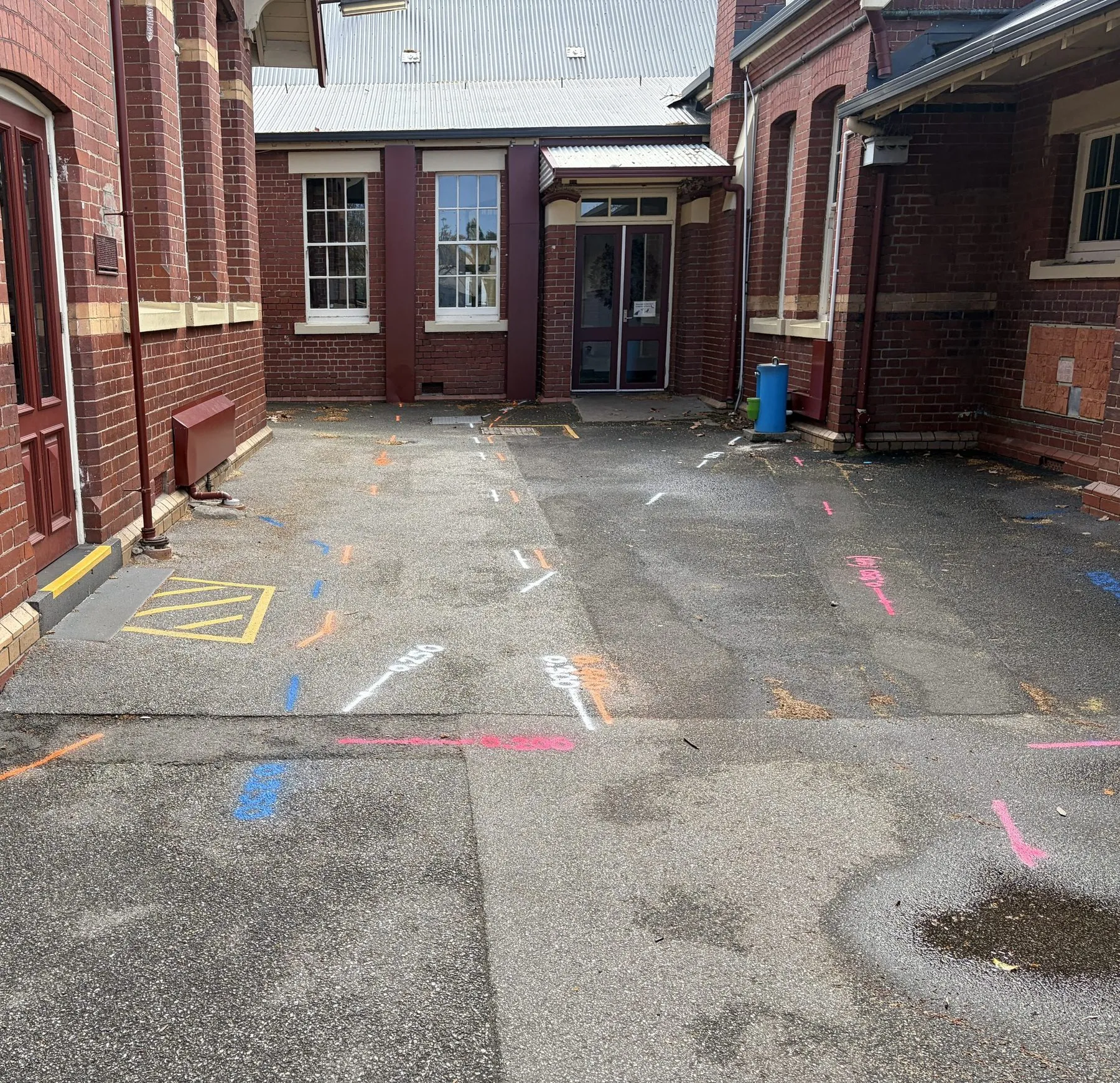
Our method stays the same wherever the job is. We order and read the BYDA plans, trace conductive services with an electromagnetic locator, use ground penetrating radar for plastic pipes, voids and anything without a signal, and mark it all out in the standard colours with depths where we can measure them. You get a photo report or a full service plan at the end, depending on what the job needs. If the job needs a quality-level plan for a designer or engineer, we can supply one; if the crew just needs to dig safely tomorrow, a clear mark-out and photo report usually does the job.
Most of our Melbourne work comes from builders, civil contractors, plumbers, electricians, pool builders, landscapers, fencers, surveyors and geotechnical engineers, along with councils and facility managers. Some book us for one job; others call us every time a crew is about to break ground. Either way, the brief is the same: find what's down there, mark it clearly and tell you what we couldn't confirm.
Typical jobs in Melbourne
- Mark-outs for footpath, road and kerb works across inner and middle-ring suburbs
- Crane pad and outrigger scans for city and inner-suburban building sites
- Pools, extensions, fences and retaining walls on established residential blocks
- Trenching, bores and plant upgrades in industrial and logistics precincts
- Service plans for designers, surveyors and engineers before a project is drawn up
Getting to you
We work across Melbourne every week. Call with the site address and we'll give you the earliest time we can be there.
Ready to book? Talk to us about your site.
Call 0423 229 332What we locate here.
Service Locating
Trace live cables and pipes for position, depth and type.
Service Locating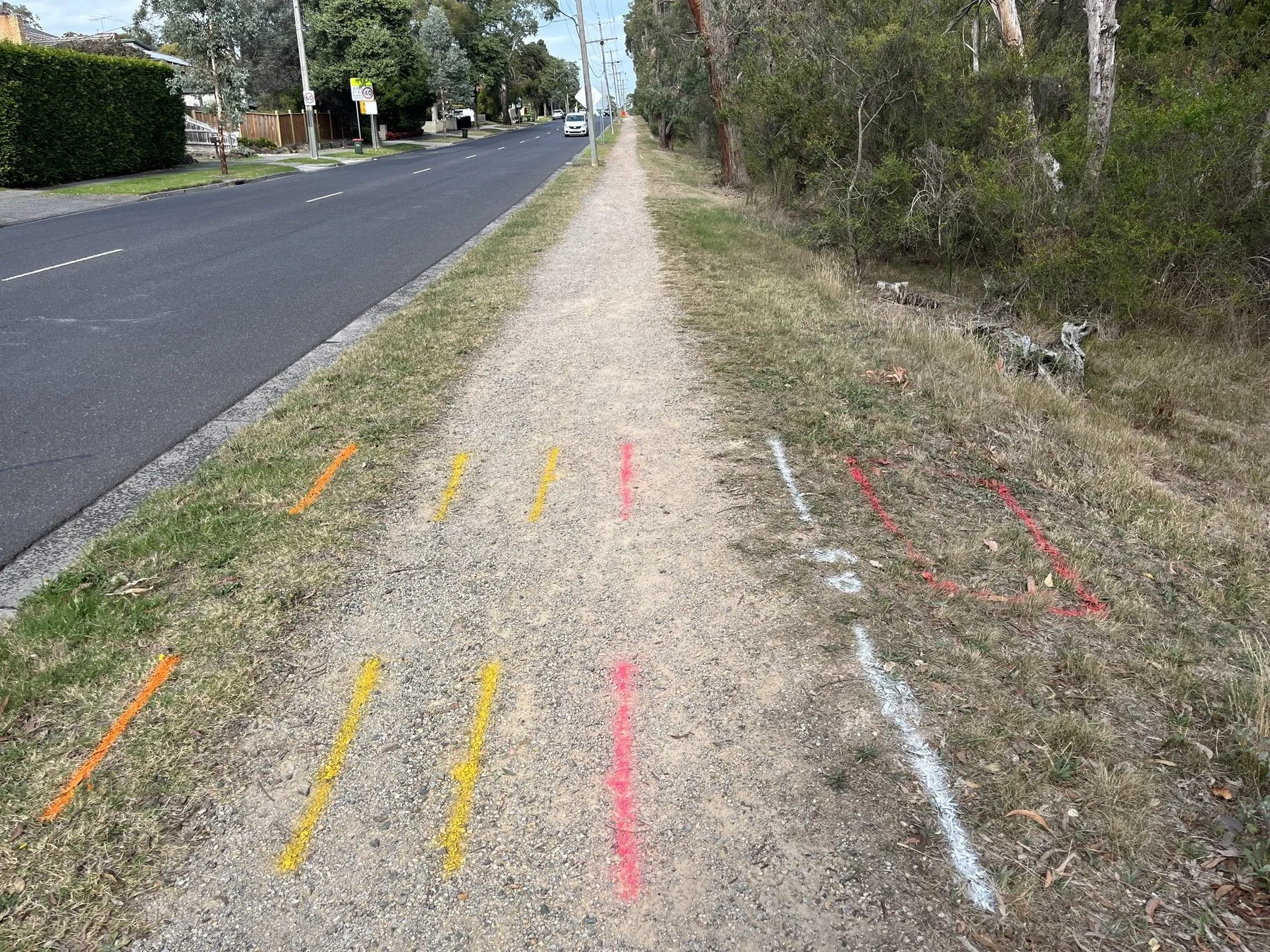
GPR Scanning
Find what EM can't: plastic pipes, footings, voids and wet ground.
GPR Scanning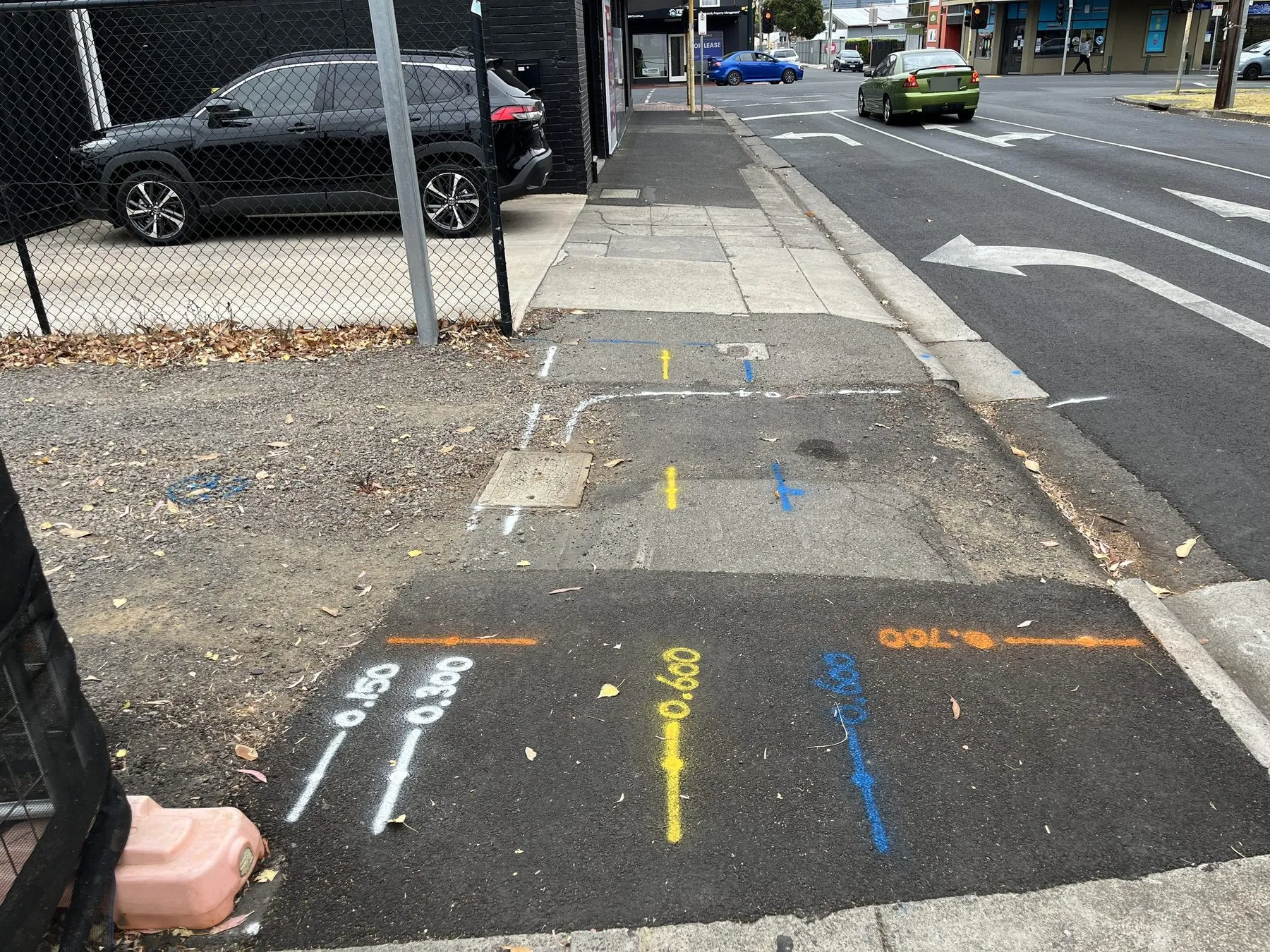
Plans & Reports
A photo report on every job, or a detailed plan with quality levels.
Plans & Reports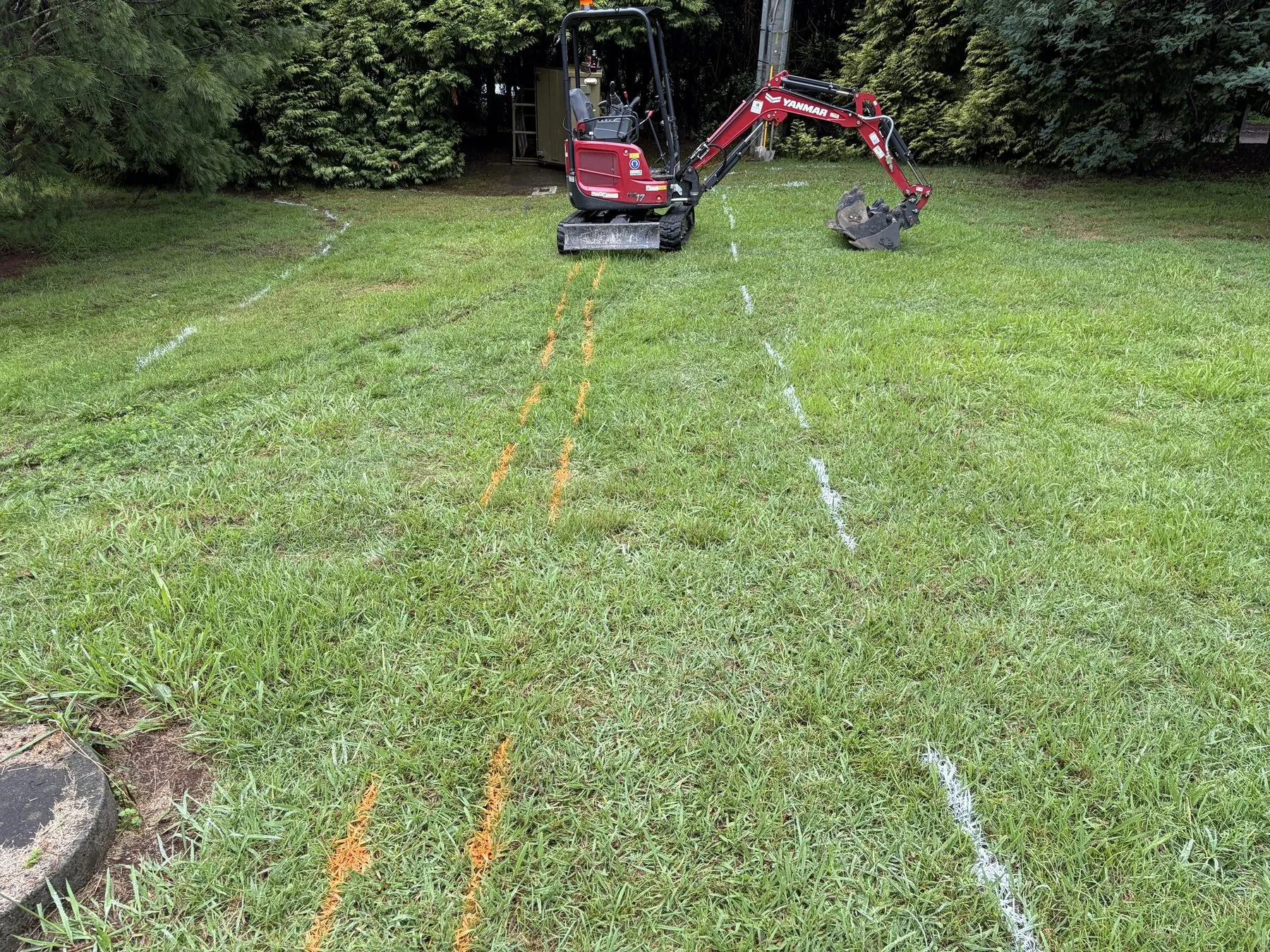
Crane Scans & Void Detection
Check outrigger pads for voids and soft ground before the lift.
Crane Scans & Void Detection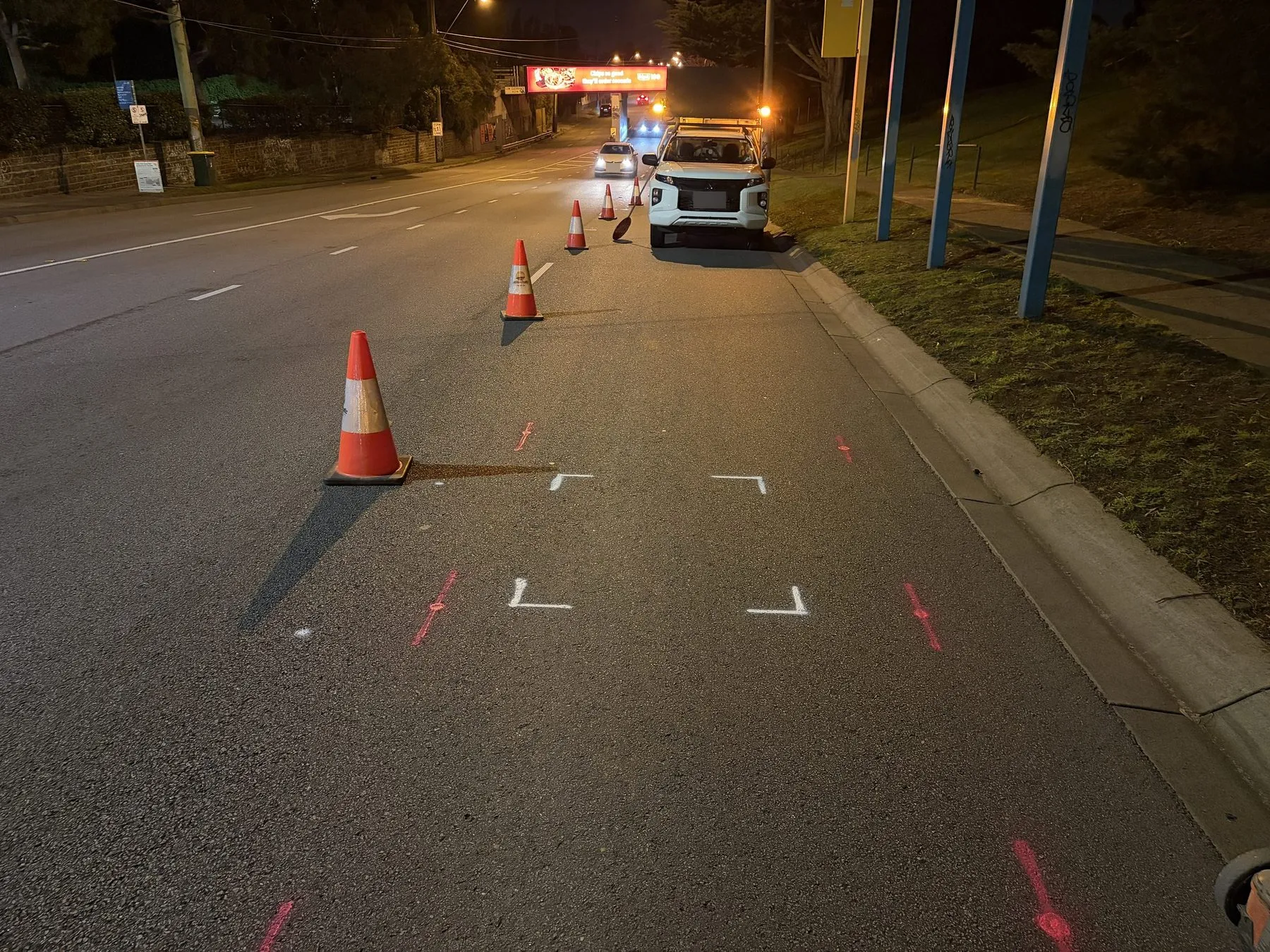
Service Avoidance
Service-clear spots for bore holes, test pits and DCP tests.
Service AvoidanceCommon questions.
Do I need a locator if I already have BYDA plans?
Usually, yes. Before You Dig Australia (BYDA) plans show roughly where each asset owner thinks their services run, and they stop at your property boundary. A locator finds where the services actually are on the day, including private services such as power to a shed or a water line to a tank, which never appear on BYDA plans.
What does service locating cost?
It depends on the size of the site, how many services there are, the method needed (EM locating, GPR or both), the type of report and travel time. Call us with the address and the scope of your works and we'll give you a price.
How long does a locate take?
A typical residential locate takes one to two hours on site. Larger commercial or civil sites can take a day or more. We'll give you an idea of timing when you call.
What do the paint colours mean?
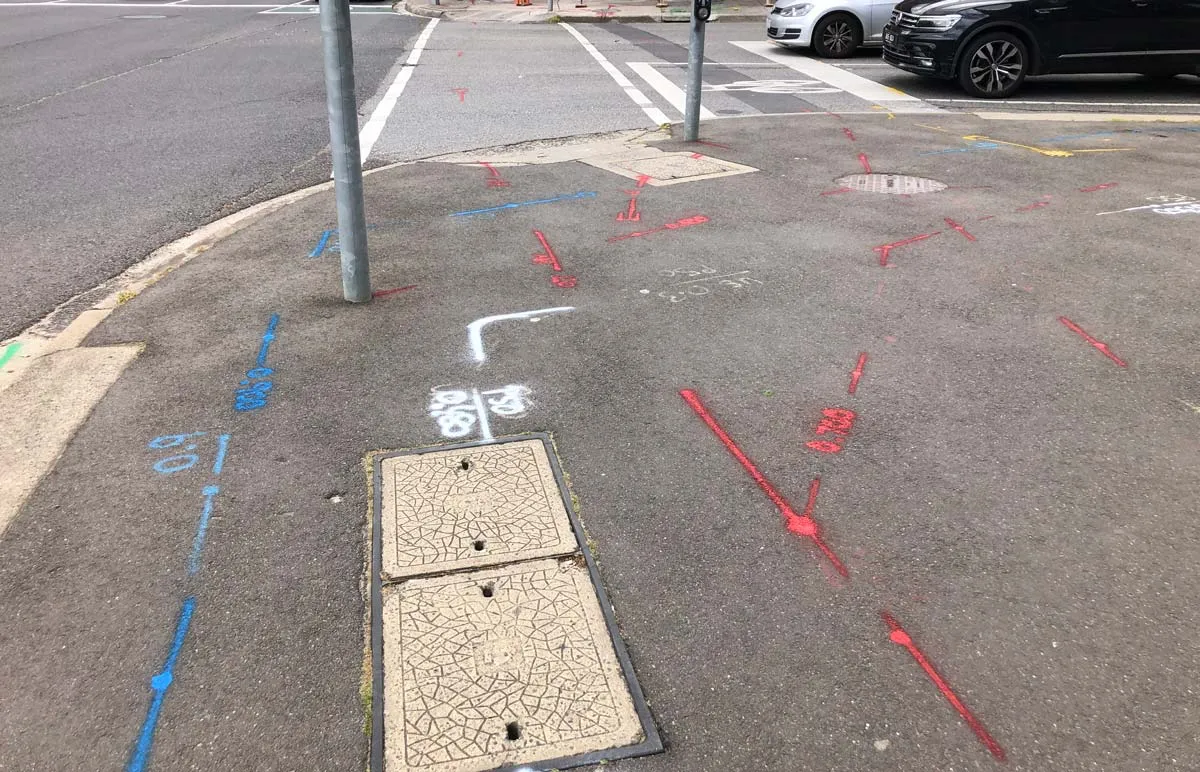
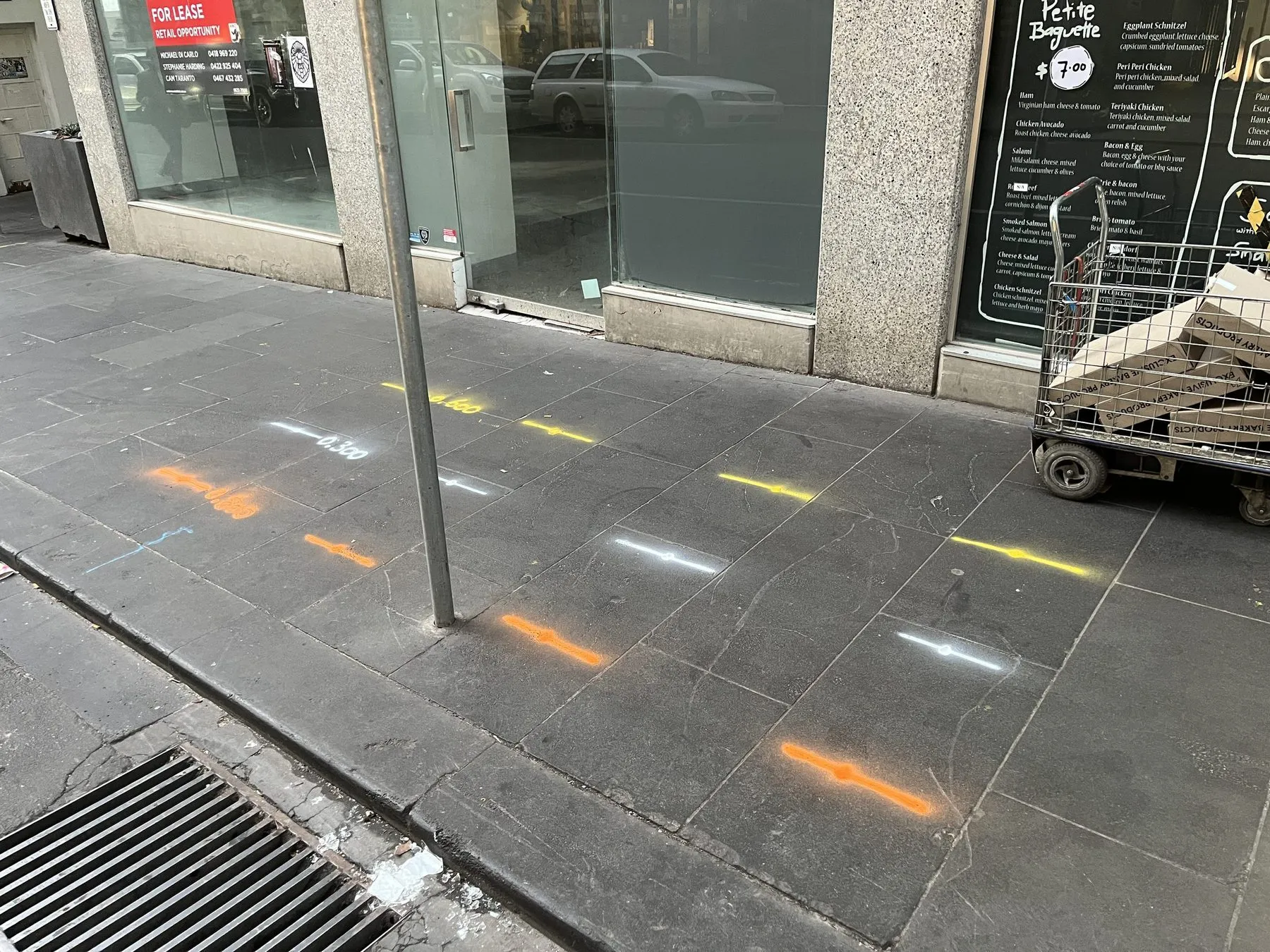
We mark services in the standard Australian colours from AS 5488: orange for electricity, yellow for gas, blue for water, green for storm water, brown for sewer, red for fire services, purple for recycled water, white for communications, and pink for a service we've found but can't identify. Depths are written beside the marks.
What's in the report?
Every job ends with a report. As standard that's a photo report of the services marked on site. If you need it, we supply a detailed plan of the services located, with the depth, material and quality level of each one.
Is underground scanning the same as service locating?
Mostly, yes. Service locating, underground locating, utility scanning and tracing pipes and cables all describe finding what's buried before you dig. In practice we use two tools together: an electromagnetic locator to trace conductive cables and pipes, and ground penetrating radar to scan for plastic pipes, voids and other things a locator can't follow.
We also cover.