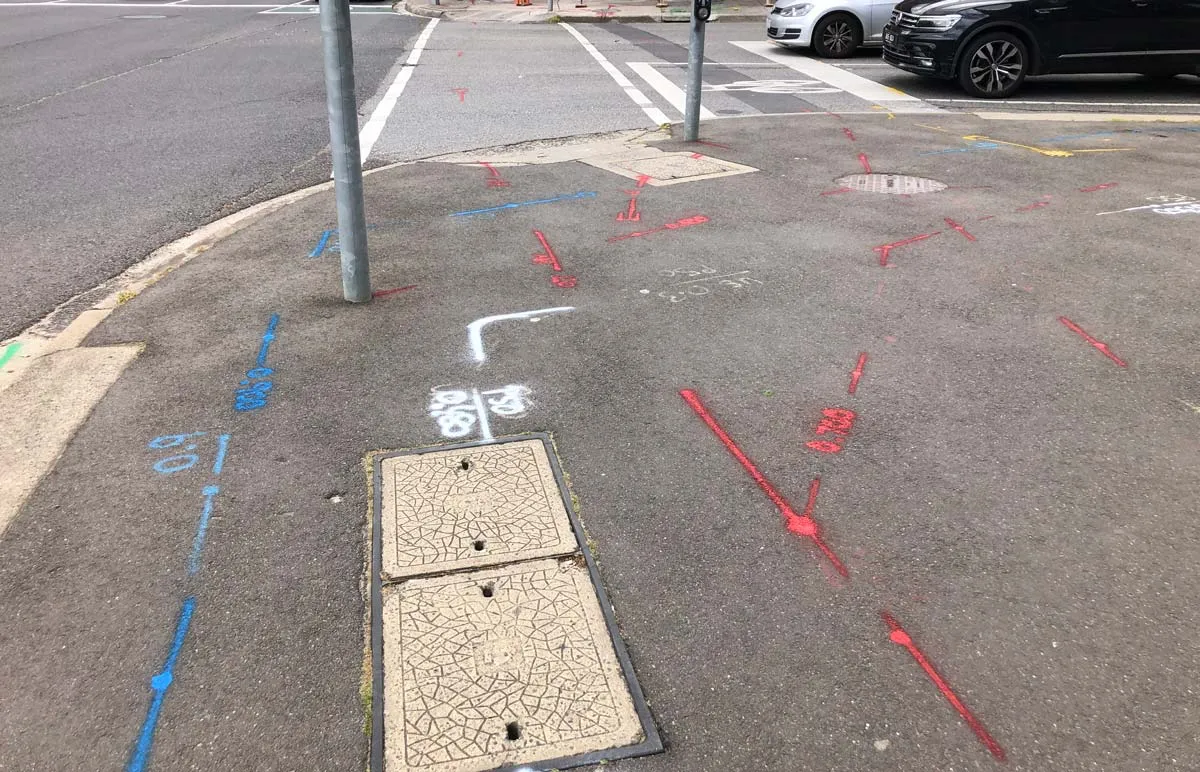

Concrete scanning before you core, cut or drill
A core hole through a slab can go straight through a post-tension tendon, a live conduit or a bar the engineer needs. We scan the concrete first and mark what's inside it, so the hole goes where it's safe.
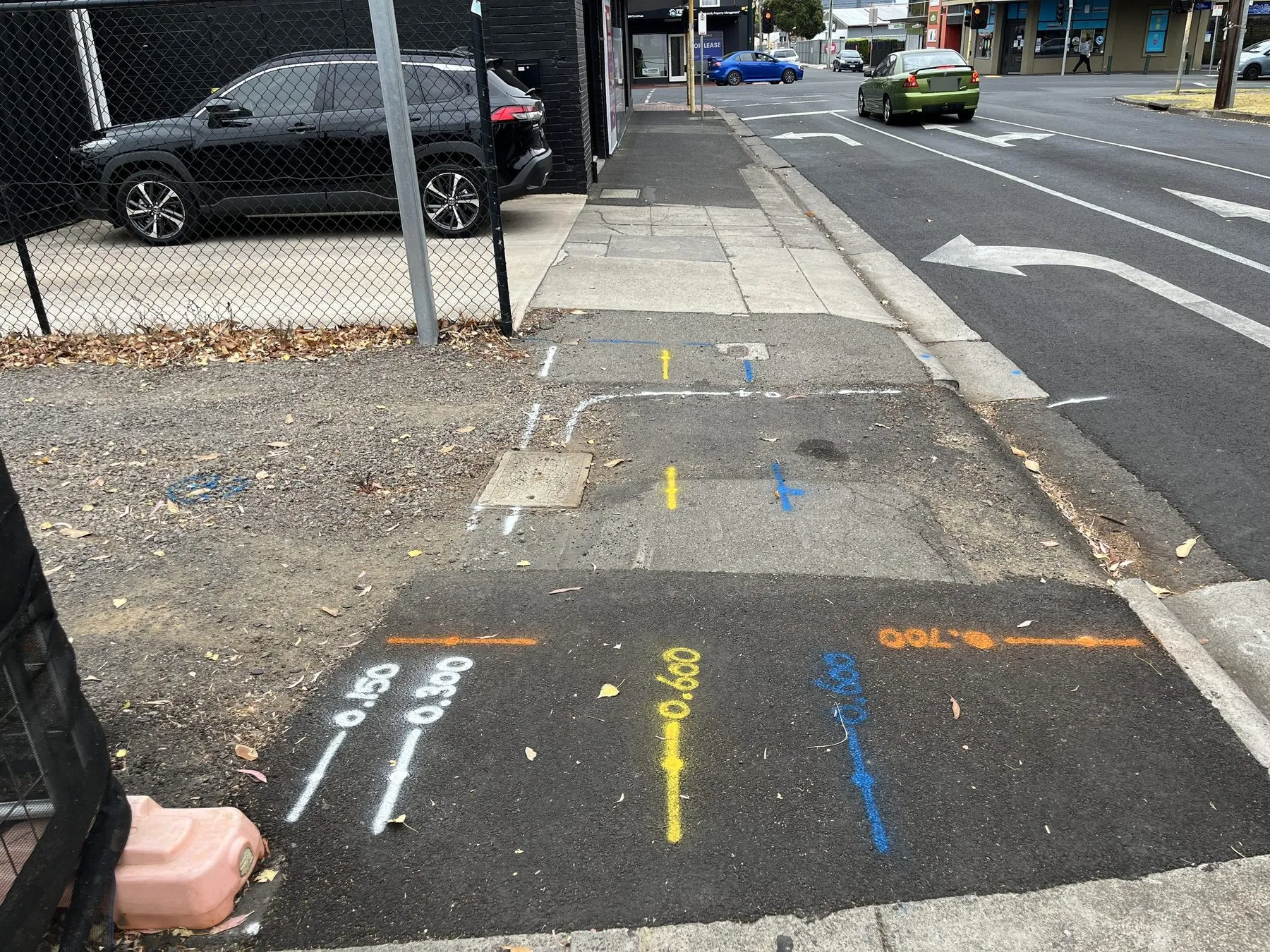
Aus-Scan provides concrete scanning across Melbourne for builders, electricians, plumbers and concreters. We scan slabs, walls and columns with a GSSI ground penetrating radar (GPR) before coring, cutting, drilling or anchoring, mark the reinforcing, post-tension tendons, conduits, pipes and voids we find on the surface, and supply a report.
Why it matters
- Cutting a post-tension tendon can damage the slab and put the people near it at risk, and it isn't something you can patch afterwards
- Electrical conduits and plumbing are often cast into slabs and walls with no reliable record of where they run
- Coring through main reinforcing can weaken the structure and leave you waiting on an engineer before work can continue
- Voids and honeycombing inside the concrete can't be seen from the surface and change where it's safe to fix or anchor
- In apartment and commercial refurbishments, a wrong hole can mean damage to a neighbour's services or the floor below
Done properly, start to finish.
GPR through the concrete
We scan with a GSSI ground penetrating radar set up for concrete. It reads reflections from the steel, tendons, conduits, pipes and voids inside slabs, walls and columns.
Marked on the surface
We mark what we find directly on the concrete, around your planned core, cut or anchor positions, so the operator can see where to drill and where to stay clear.
Reported for the job file
You get a report with photos of the marked areas and notes on what we found, including anything we couldn't confirm, to keep with the job or pass to your engineer.
Honest about the limits
Results depend on the slab's thickness and condition. Dense or layered reinforcing can mask what sits below it, and moisture in the concrete reduces what radar can see. We'll tell you on site what we can and can't confirm.
Inner suburbs and beyond
We scan concrete for apartment and commercial refurbishments in inner suburbs such as St Kilda, Collingwood and South Yarra, and in the Melbourne CBD, where floors are often post-tensioned or full of services. We also scan concrete in Geelong, Ballarat and across Victoria.
Ready to book? Talk to us about your site.
Call 0423 229 332What we'll use.
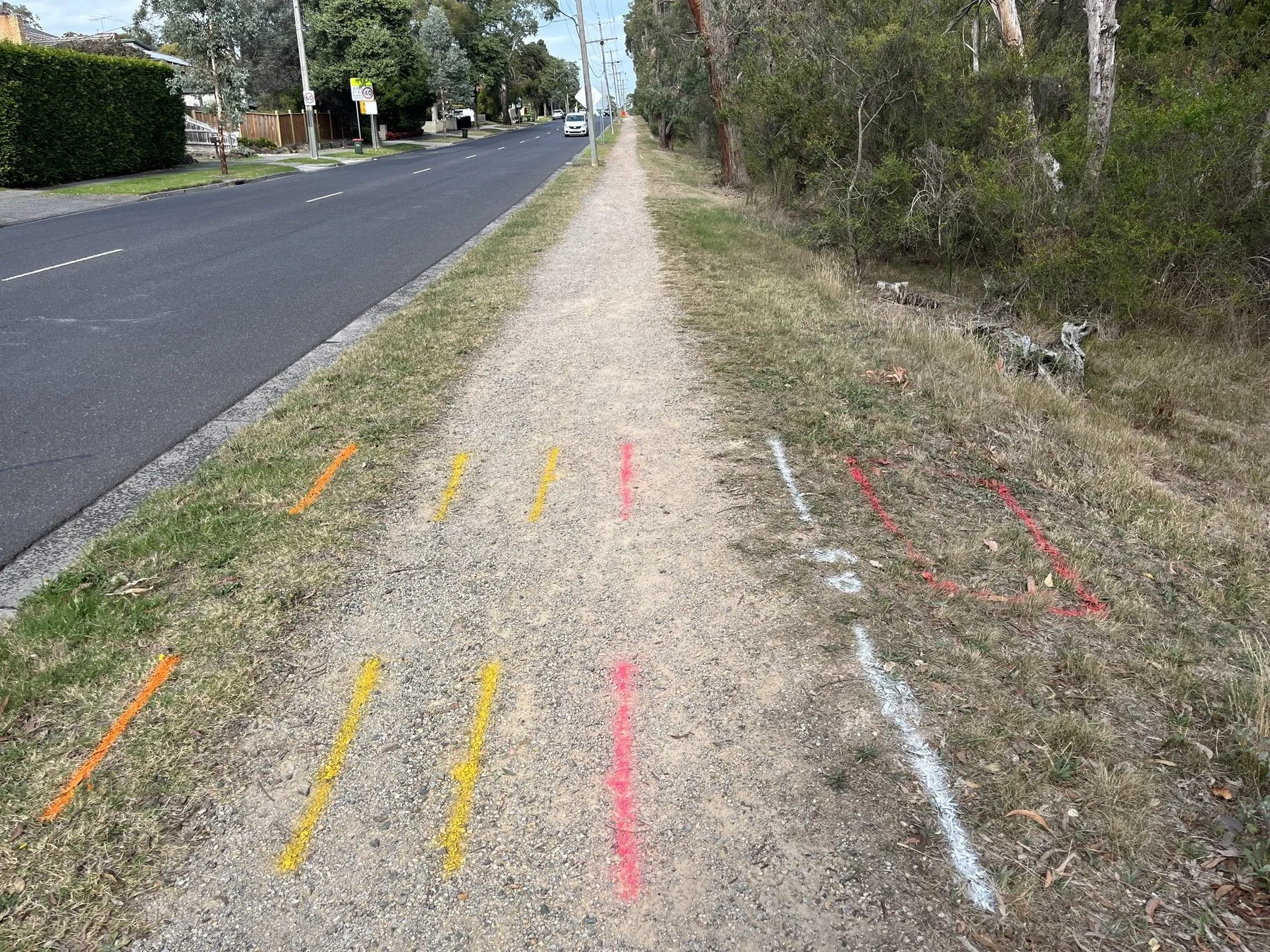
More on what we find.
Common questions.
How deep can GPR see?
It depends on the ground. In dry, sandy soil GPR can see a few metres down. In wet ground or heavy clay the signal is absorbed much faster and the useful depth drops a long way. We'll tell you upfront if your site's conditions are likely to limit it.
Why doesn't GPR work everywhere?
Radar signals are absorbed by moisture and clay, and scattered by rubble and reinforcing. GPR isn't suited to every site, but it's an essential tool alongside electromagnetic locating.
Can you find plastic pipes?
Often, yes. A cable locator can't trace plastic pipes unless they have a tracer wire, but ground penetrating radar can detect them in suitable ground. That's why we use both methods together.
Is underground scanning the same as service locating?
Mostly, yes. Service locating, underground locating, utility scanning and tracing pipes and cables all describe finding what's buried before you dig. In practice we use two tools together: an electromagnetic locator to trace conductive cables and pipes, and ground penetrating radar to scan for plastic pipes, voids and other things a locator can't follow.
Do I need a locator if I already have BYDA plans?
Usually, yes. Before You Dig Australia (BYDA) plans show roughly where each asset owner thinks their services run, and they mostly stop at your property boundary. A locator finds where the services actually are on the day, including private services such as power to a shed or a water line to a tank, which don't typically appear on BYDA plans.
What does service locating cost?
It depends on the size of the site, how many services there are, the method needed (EM locating, GPR or both), the type of report and travel time. Call us with the address and the scope of your works and we'll give you a price.