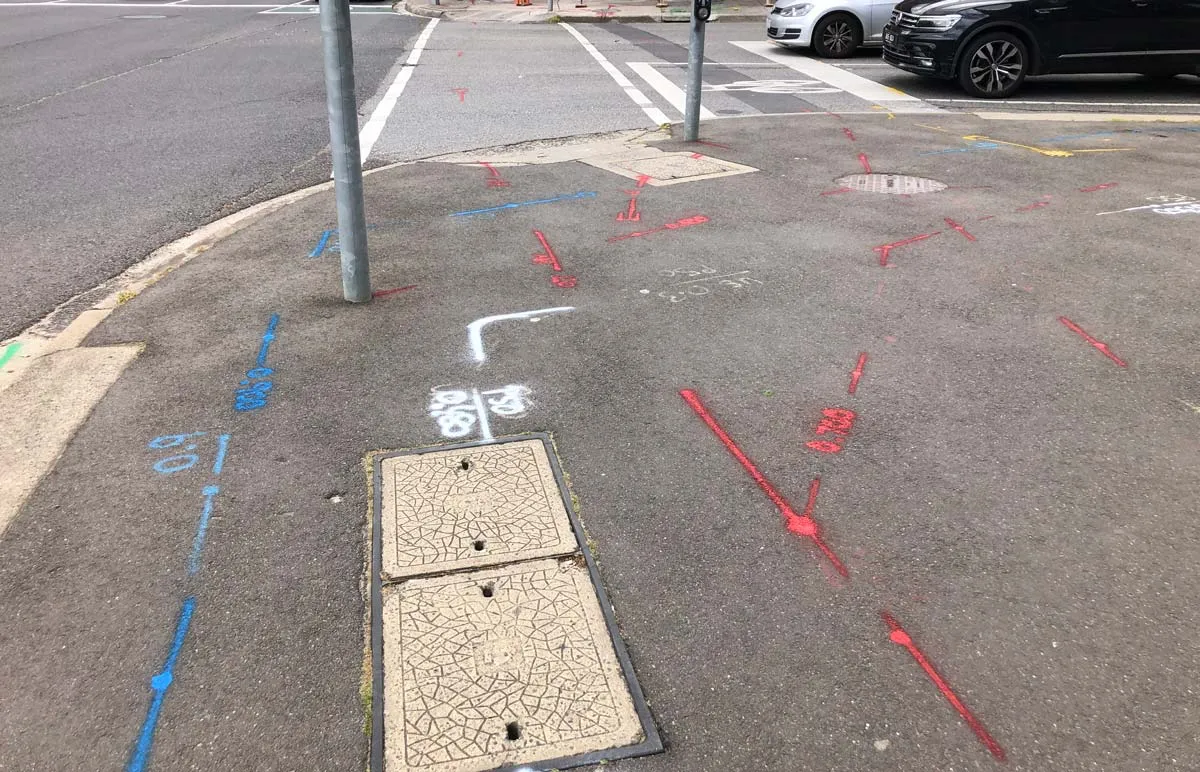

Underground service locating in Melbourne's west
Melbourne's west runs from old inner-west streets to big industrial estates and new housing on the fringe. We locate services for builders, trades, facility managers and engineers right across it.
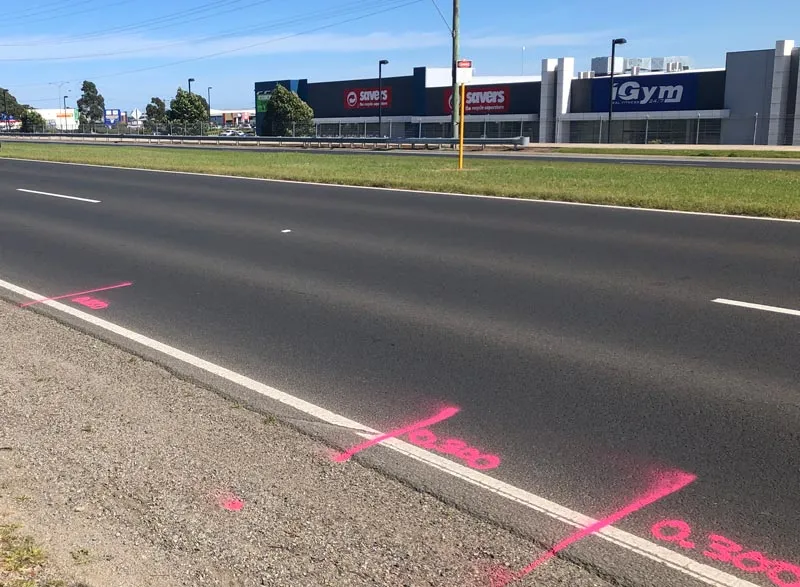
Aus-Scan provides underground service locating, GPR scanning and service plans across Melbourne's western suburbs, from Footscray and Williamstown out to Derrimut and Caroline Springs. We use the Before You Dig Australia (BYDA) plans, locate and mark the services on site, and send a report at the end of every job.
A lot of the work in the west happens inside the fence line of industrial sites. Derrimut, Laverton, Brooklyn, Sunshine and the estates along the freeways are full of warehouses, distribution centres and manufacturing plants, and those sites keep changing: new loading docks, extra hardstand, bollards, racking, drainage upgrades and plant. Almost everything that matters on these jobs is private. High-voltage feeds to substations, gas to process plant, fire services, stormwater and trade waste lines run across the site, and none of it appears on BYDA plans, which stop at the boundary. On a working site we fit in around forklifts, trucks and shifts, and we mark out the work zone so it stays readable once traffic starts moving again.
Older industrial land adds another layer. Sites in Brooklyn, Sunshine, Altona and around Footscray may have been through several owners and uses, and each one left services behind. Records are often missing or wrong, and redundant lines sit beside live ones. We trace what carries a signal with the electromagnetic locator and use ground penetrating radar for plastic pipes and services that can't be traced. On land with a long commercial history, GPR is also how we look for old underground fuel or oil tanks before a sale, demolition or redevelopment. A plan from that locate gives the site a record it may never have had, which is useful the next time someone needs to dig. Tank investigations tend to come up when land changes hands, so tell us about any history of fuel storage on site when you book.
Rail is part of the landscape out here, with lines and level crossings running through Footscray, Sunshine, St Albans, Deer Park, Laverton and Williamstown. Works near rail corridors usually come with their own access rules and asset owners, so tell us if your site is beside the line. We'll work from the BYDA responses, locate what we can on the ground you're allowed to work on, and record anything near the corridor clearly in the report. Where works sit on the boundary of a road or rail reserve, the asset owners listed in the BYDA responses are the ones to talk to about conditions, and we can locate to the edge of the area you've been cleared to work in.
The housing side of the west has changed fast. Footscray, Yarraville, Seddon and Williamstown have older weatherboards and terraces being renovated, extended or knocked down for townhouses, where the risk is usually an old private service nobody remembers. Further out, Caroline Springs, Deer Park and the newer parts of Derrimut are growth areas where services are more recent, but every lot still has private connections, and landscaping, fencing and driveway works can catch them. We see both kinds of job in a normal week. Townhouse builders in particular often need to know where the existing house's services run before demolition, so the new connections can be planned before the old ones are cut.
Councils here are Maribyrnong, Brimbank and Hobsons Bay, and Greater Western Water supplies water and sewer across the west. Council road and footpath works, nature strip trenching and crossover permits all come with their own conditions, and a clear mark-out with depths makes those conversations easier. Our report shows what we found and where, so it can go straight to the council, the principal contractor or the engineer. If you're working on the nature strip or in the road, we can locate the services across the full width of the work zone, not just inside the property.
Typical jobs in Melbourne West
- Locates inside warehouse and factory sites before new slabs, pits, bollards, racking footings or yard drainage
- Tracing private power, gas and water across industrial sites in Derrimut, Laverton, Brooklyn and Sunshine
- Service plans for facility managers and engineers on sites with poor or missing as-built records
- Underground tank scans on older commercial and industrial land before sale, demolition or redevelopment
- Pools, extensions, fences and townhouse developments in Footscray, Yarraville, Altona and Williamstown
- Mark-outs for driveways, crossovers and landscaping in newer estates around Caroline Springs and Deer Park
- Crane and heavy plant set-up scans on industrial sites before lifts and deliveries
- Locates for new crossovers, nature strip trenching and stormwater connections on residential streets
Getting to you
We work across Melbourne's west every week. Call with the site address, and the site contact if it's a gated industrial site, and we'll give you the earliest time. Industrial sites often need an induction or a site contact on arrival, so let us know what's required.
Ready to book? Talk to us about your site.
Call 0423 229 332What we locate here.
Service Locating
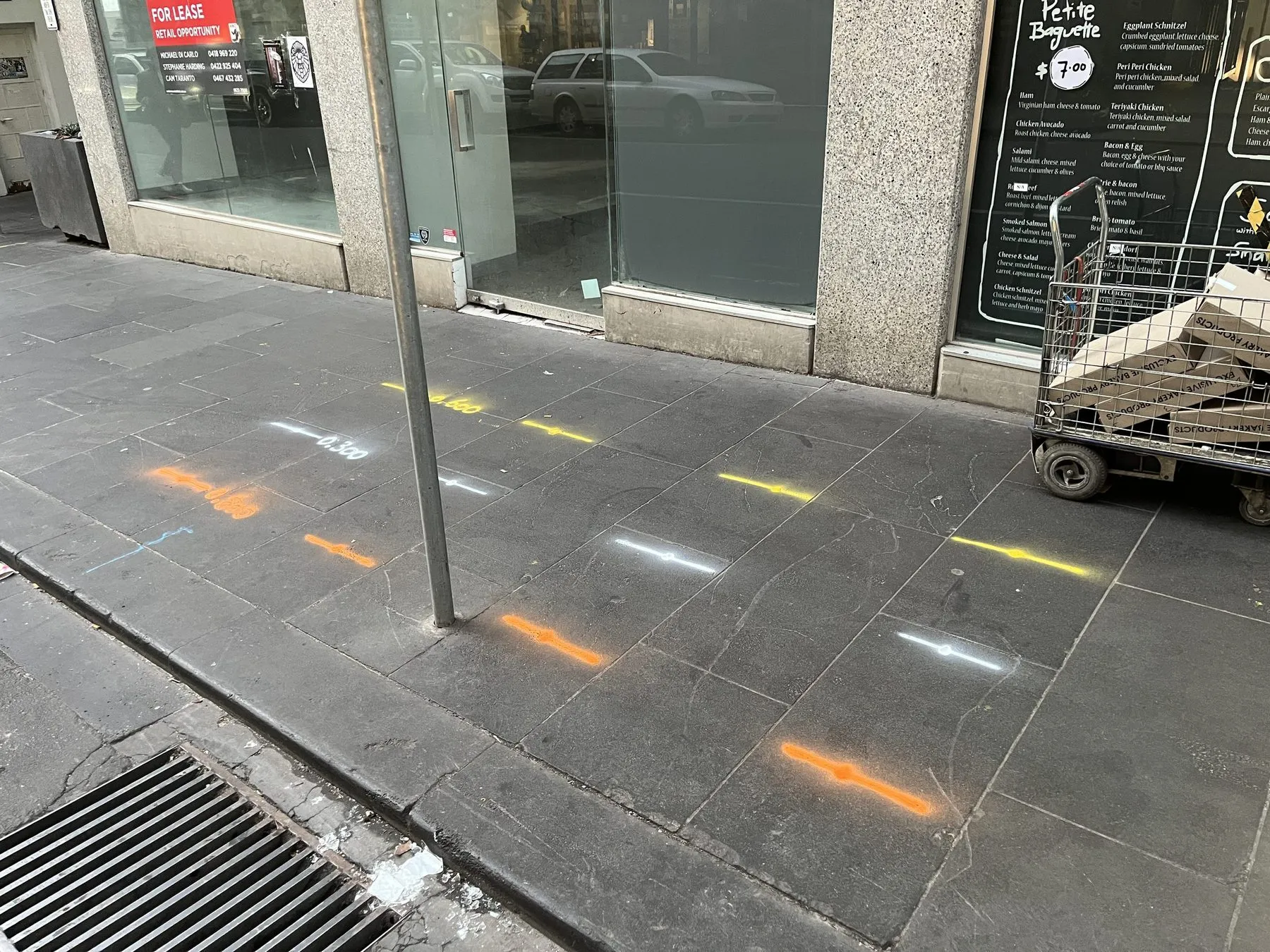
Trace live cables and pipes for position, depth and type.
Service Locating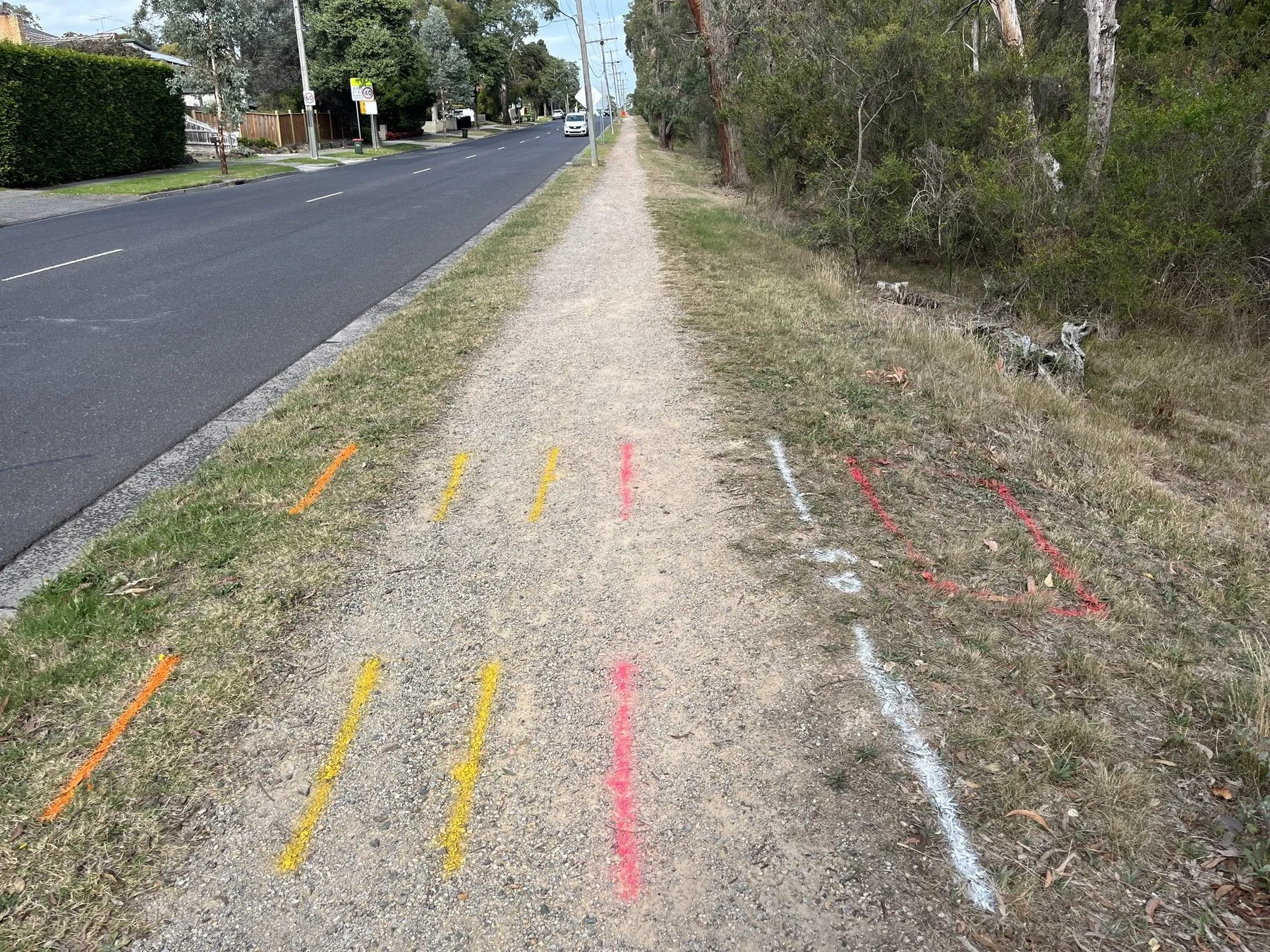
GPR Scanning
Find what EM can't: plastic pipes, footings, voids and wet ground.
GPR Scanning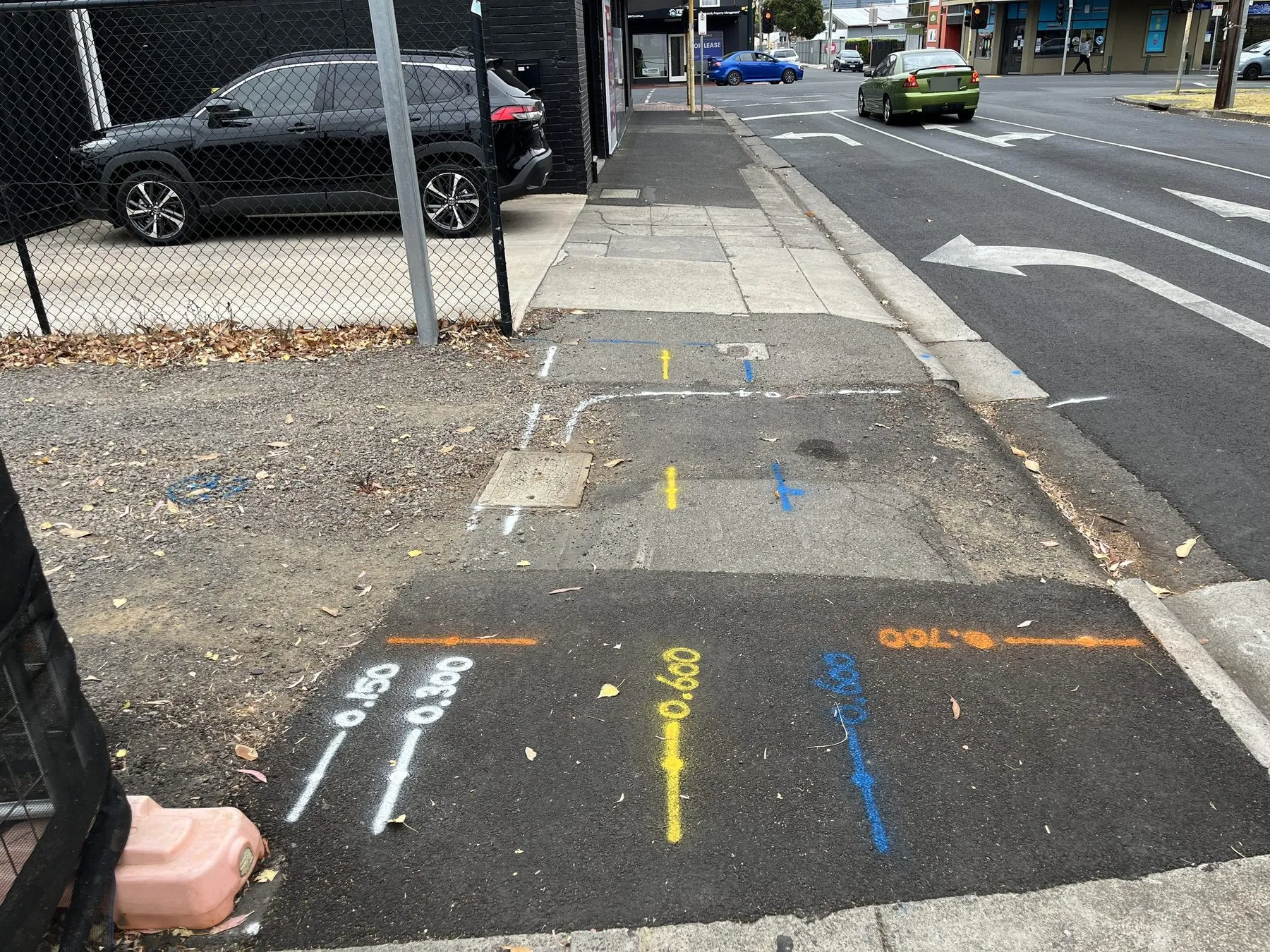
Plans & Reports
A photo report on every job, or a detailed plan with quality levels.
Plans & Reports
Underground Tank Detection
Find the position, depth and extent of old fuel and oil tanks.
Underground Tank DetectionCommon questions.
Do I need a locator if I already have BYDA plans?
Usually, yes. Before You Dig Australia (BYDA) plans show roughly where each asset owner thinks their services run, and they stop at your property boundary. A locator finds where the services actually are on the day, including private services such as power to a shed or a water line to a tank, which never appear on BYDA plans.
What does service locating cost?
It depends on the size of the site, how many services there are, the method needed (EM locating, GPR or both), the type of report and travel time. Call us with the address and the scope of your works and we'll give you a price.
How long does a locate take?
A typical residential locate takes one to two hours on site. Larger commercial or civil sites can take a day or more. We'll give you an idea of timing when you call.
What do the paint colours mean?
We mark services in the standard Australian colours from AS 5488: orange for electricity, yellow for gas, blue for water, green for storm water, brown for sewer, red for fire services, purple for recycled water, white for communications, and pink for a service we've found but can't identify. Depths are written beside the marks.
What's in the report?
Every job ends with a report. As standard that's a photo report of the services marked on site. If you need it, we supply a detailed plan of the services located, with the depth, material and quality level of each one.
Is underground scanning the same as service locating?
Mostly, yes. Service locating, underground locating, utility scanning and tracing pipes and cables all describe finding what's buried before you dig. In practice we use two tools together: an electromagnetic locator to trace conductive cables and pipes, and ground penetrating radar to scan for plastic pipes, voids and other things a locator can't follow.
We also cover.