
Underground service locating in Melbourne's south-east
The south-east combines some of Melbourne's biggest manufacturing and logistics precincts with fast-growing suburbs in Casey. We locate services for both, from Moorabbin and Clayton down to Frankston and out to Cranbourne.
Aus-Scan provides underground service locating, GPR scanning and service plans across Melbourne's south-east, including Dandenong, Keysborough, Moorabbin, Frankston, Berwick and Cranbourne. We check the Before You Dig Australia (BYDA) plans, locate and mark the services on site, and send a report at the end of every job.
Dandenong and the surrounding industrial land are one of Melbourne's major manufacturing areas. Dandenong South, Keysborough, Moorabbin and the Kingston industrial estates are lined with factories, food plants, fabrication shops, warehouses and distribution centres. When those sites put in new machinery, extend a building, add a loading dock or replace hardstand, they need to know what's under the slab and the yard. Most of it is private: power to plant, gas, compressed air, fire services, trade waste and stormwater, none of which shows on BYDA plans. Many of these sites run long shifts, so we plan the locate around production and mark out zones that stay visible once trucks and forklifts are back in the yard. On a working factory floor or yard, we also mark out the work zone so it's easy to read once the locate is finished and operations resume.
Manufacturing sites in particular tend to grow in stages, each with its own contractor and its own idea of where services went. As-built drawings are often missing or out of date, and live lines run beside redundant ones. We trace what we can with an electromagnetic locator, scan with ground penetrating radar for plastic and non-conductive lines, and can produce a service plan that the site keeps on file. That plan is often worth as much on the next project as on this one. Where a site has several buildings built over different decades, the plan shows how the services connect between them, which the original drawings rarely do. Where a site has had a fuel or chemical store in the past, GPR can also help show whether anything was left buried.
The logistics side of the south-east keeps growing along the freeways and arterial roads, with big new warehouses and depots alongside older industrial stock. New sites usually have better records, but tie-ins to existing networks, new crossovers and works in the road reserve still need a locate. Older depots and former service station sites can also hold underground fuel tanks, which we look for with GPR before sale, demolition or redevelopment. Works around the Monash, EastLink and South Gippsland corridors often involve road reserves and multiple asset owners, and we read all of their BYDA responses before we arrive.
Casey is the residential growth engine of the region. Cranbourne, Berwick, Narre Warren and the estates around them have new streets and new homes going in constantly, and the work doesn't stop at handover. Owners add pools, sheds, fences, driveways and solar, and each of those can cross a private service between the house and the street. Closer in, Clayton, Springvale, Cheltenham and Mentone are older suburbs where houses are being replaced with townhouses and units, and Frankston mixes residential renewal with commercial and civic projects around its centre. For builders, a clear mark-out across the front of the lot before fencing, driveway or landscaping crews start is a cheap way to keep the job moving. Frankston's older streets near the bay add another mix of renovation and replacement work, much like the middle-ring suburbs further north.
Councils here are Greater Dandenong, Kingston, Frankston and Casey, and South East Water supplies water and sewer across the region. Each council has its own process for road reserve and crossover works, and the asset owners on your site are listed in the BYDA responses, which we read before we arrive. On site we locate and mark what's actually there, and the report records it for the builder, the engineer or the council. For industrial clients who need a record that lasts, we can supply a service plan with depths and AS 5488 quality levels instead of a photo report.
Typical jobs in Melbourne South-East
- Factory and warehouse upgrades in Dandenong South, Keysborough, Moorabbin and Kingston industrial estates
- Tracing private power, gas, compressed air and process lines across manufacturing sites
- Service plans for plant and facility managers who need a record of what's under their site
- Driveways, fences, pools, sheds and solar trenches in growth suburbs around Cranbourne, Berwick and Narre Warren
- Townhouse redevelopment in established suburbs such as Cheltenham, Mentone, Springvale and Clayton
- Underground tank scans on older service station, depot and industrial sites
- Crane and heavy plant pad scans before machinery deliveries and lifts on factory sites
Getting to you
We work across Melbourne's south-east every week. Call with the site address, and the site contact for industrial jobs, and we'll give you the earliest time. Industrial sites often need an induction or a site contact on arrival, so let us know what's required.
Ready to book? Talk to us about your site.
Call 0423 229 332What we locate here.
Service Locating
Trace live cables and pipes for position, depth and type.
Service Locating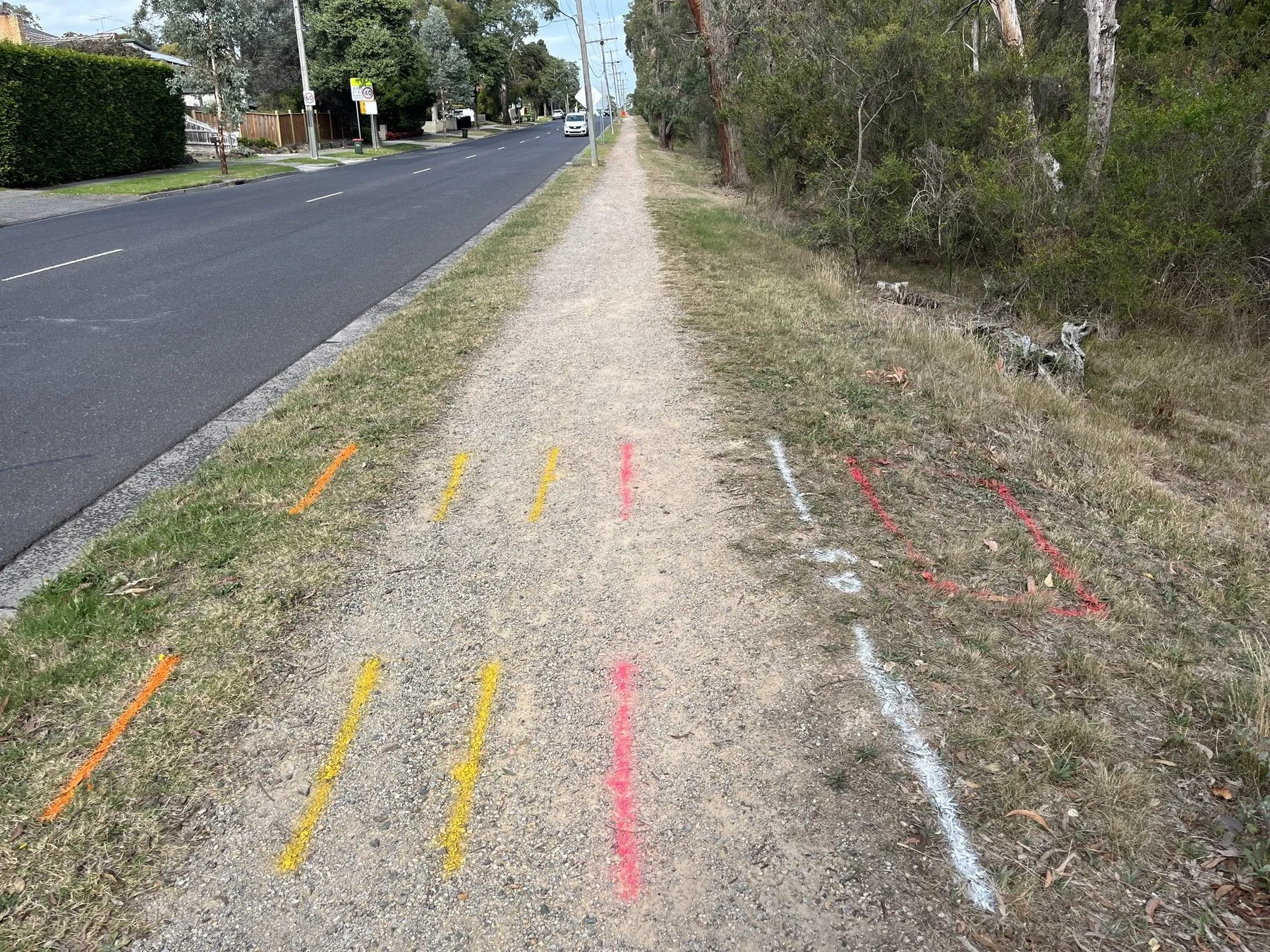
GPR Scanning
Find what EM can't: plastic pipes, footings, voids and wet ground.
GPR Scanning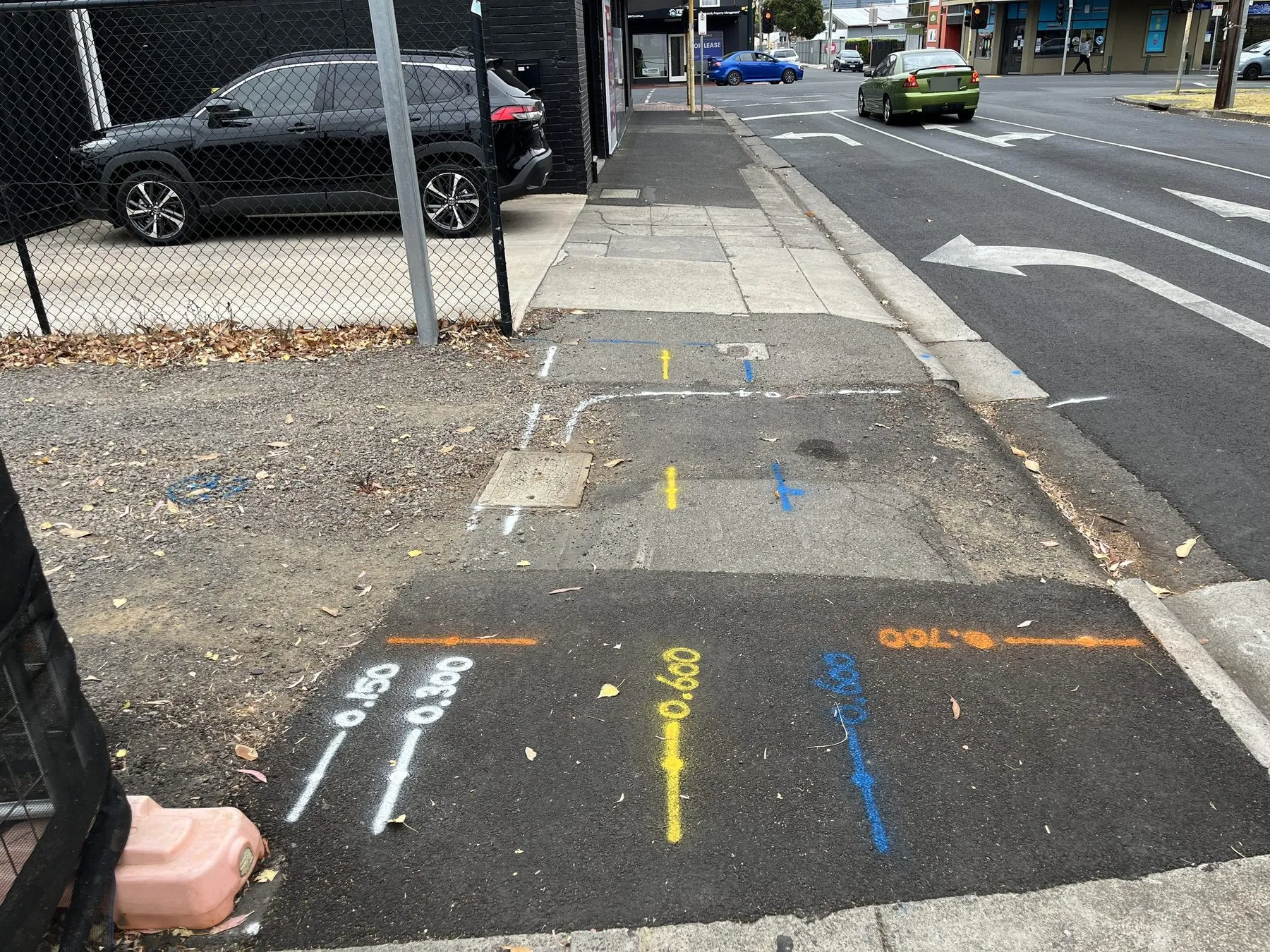
Plans & Reports
A photo report on every job, or a detailed plan with quality levels.
Plans & Reports
Underground Tank Detection
Find the position, depth and extent of old fuel and oil tanks.
Underground Tank DetectionCommon questions.
Do I need a locator if I already have BYDA plans?
Usually, yes. Before You Dig Australia (BYDA) plans show roughly where each asset owner thinks their services run, and they stop at your property boundary. A locator finds where the services actually are on the day, including private services such as power to a shed or a water line to a tank, which never appear on BYDA plans.
What does service locating cost?
It depends on the size of the site, how many services there are, the method needed (EM locating, GPR or both), the type of report and travel time. Call us with the address and the scope of your works and we'll give you a price.
How long does a locate take?
A typical residential locate takes one to two hours on site. Larger commercial or civil sites can take a day or more. We'll give you an idea of timing when you call.
What do the paint colours mean?
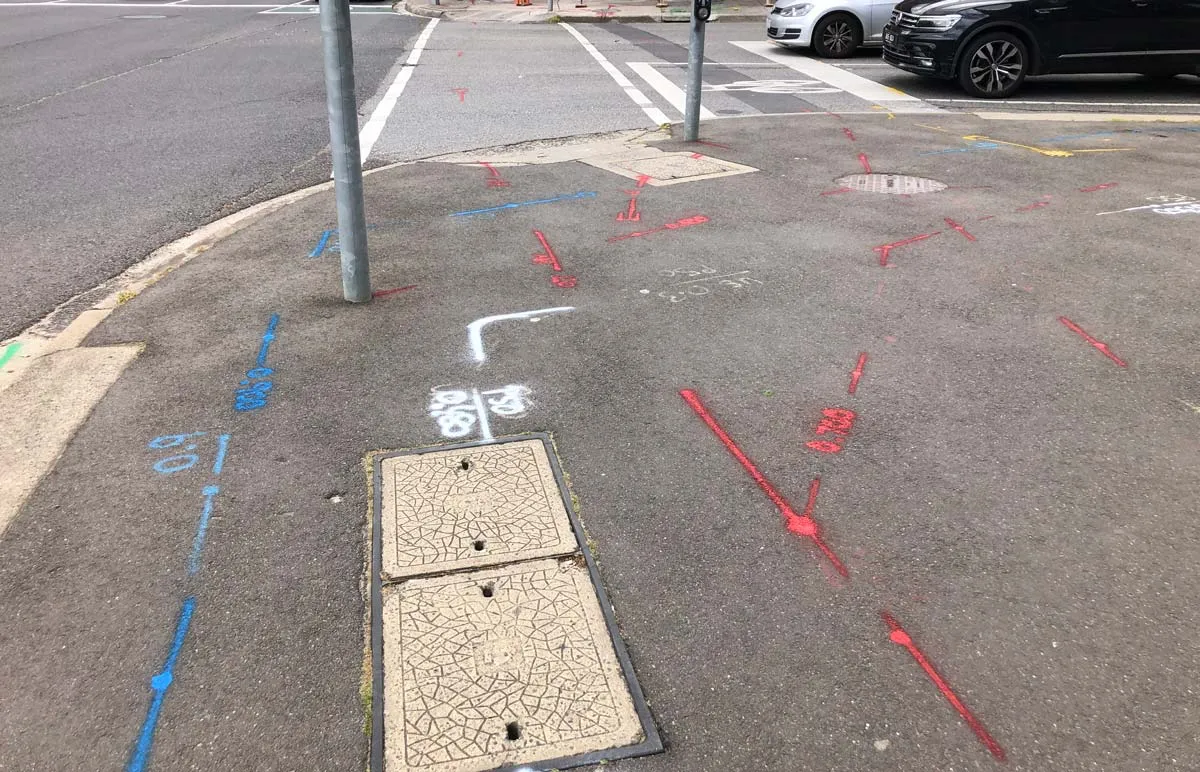
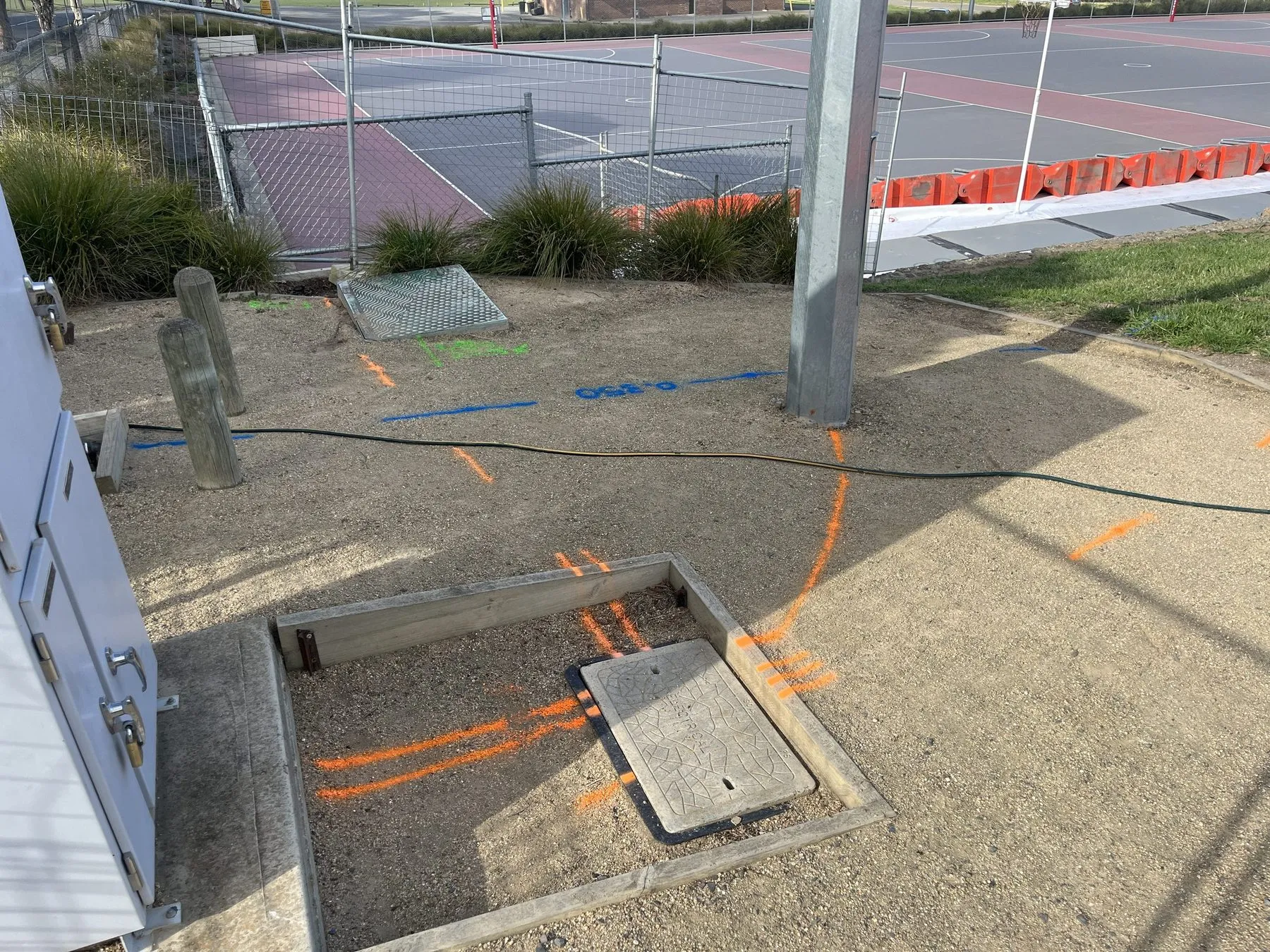
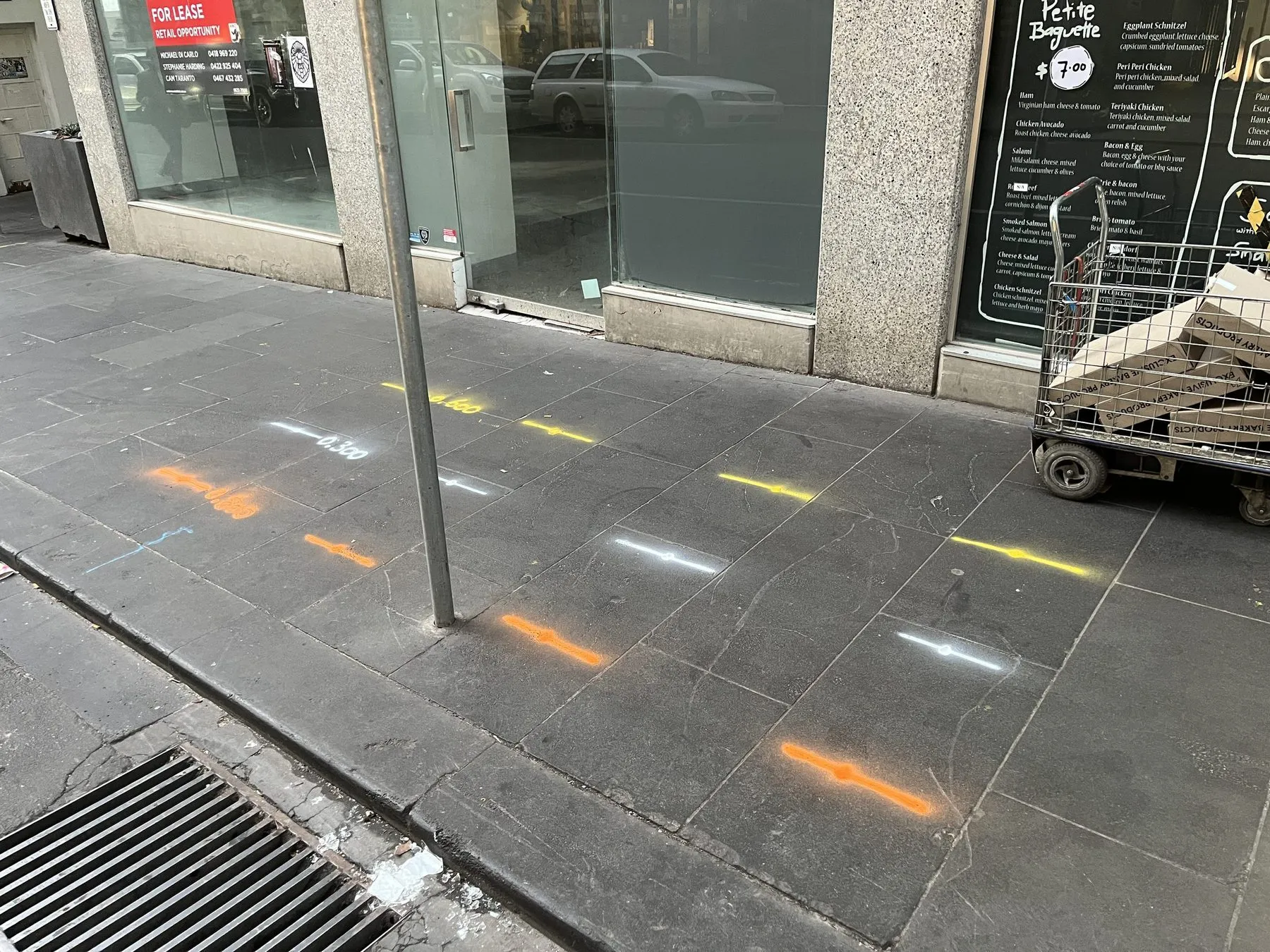
We mark services in the standard Australian colours from AS 5488: orange for electricity, yellow for gas, blue for water, green for storm water, brown for sewer, red for fire services, purple for recycled water, white for communications, and pink for a service we've found but can't identify. Depths are written beside the marks.
What's in the report?
Every job ends with a report. As standard that's a photo report of the services marked on site. If you need it, we supply a detailed plan of the services located, with the depth, material and quality level of each one.
Is underground scanning the same as service locating?
Mostly, yes. Service locating, underground locating, utility scanning and tracing pipes and cables all describe finding what's buried before you dig. In practice we use two tools together: an electromagnetic locator to trace conductive cables and pipes, and ground penetrating radar to scan for plastic pipes, voids and other things a locator can't follow.
We also cover.