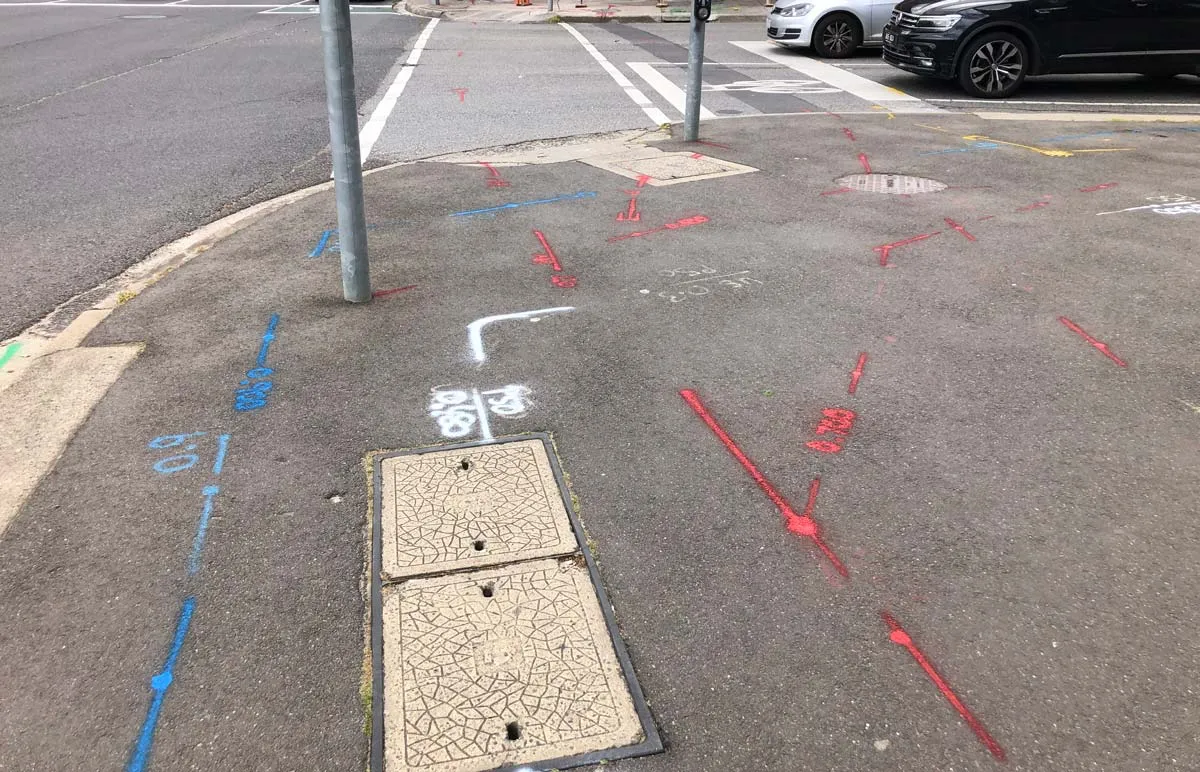

Underground service locating in Ballarat
We cover Ballarat from our Geelong base and from Melbourne. We locate underground cables, pipes, voids and tanks for builders, trades and engineers across the city, from the heritage streets of Ballarat Central to the growth suburbs of Alfredton, Delacombe and Lucas.
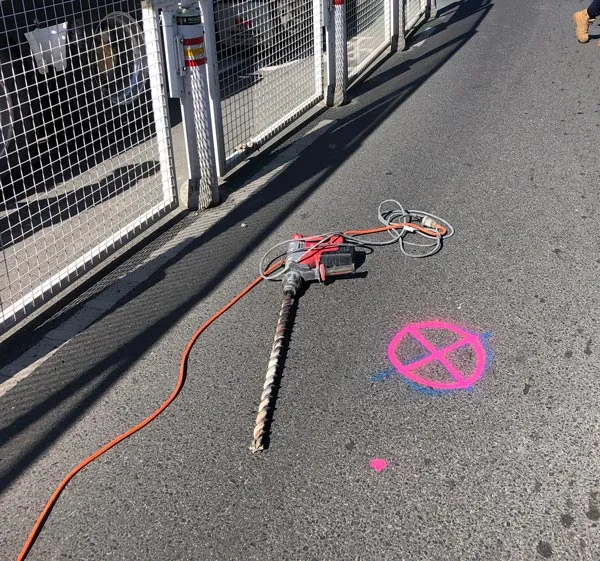
Aus-Scan provides underground service locating, GPR scanning and service plans across Ballarat, including Ballarat Central, Wendouree, Alfredton, Delacombe, Sebastopol and Lucas. We order Before You Dig Australia (BYDA) plans, locate and mark services on site, and send a report when we're done.
Ballarat is one of Victoria's largest regional cities, and it has the full range of locating work you'd expect from a city that size: commercial and civic projects in the centre, industrial and trade sites, and a steady flow of residential work through the suburbs. We treat a Ballarat job the way we'd treat any city site, with the same planning, gear and reporting. Jobs range from a single trench on a suburban block to large commercial sites where many services need locating and plotting on a plan. Because Ballarat is a regional trip for us, we plan each visit to cover as much of a site as we can in one go, and we're happy to line up several Ballarat jobs on the same day.
Ballarat Central and the older suburbs around it have some of the best-known heritage streetscapes in the state, with grand 19th-century buildings, wide streets and laneways behind them. In the older parts of any city, services have usually been added, upgraded and rerouted many times. Old and new can sit side by side under the same footpath, and what's on record doesn't always match what's there. Redevelopment, the reuse of older buildings, and footpath or road works in these streets all need a careful locate before anyone digs. Heritage buildings also limit where you can dig and how much disruption is acceptable, so knowing exactly where the services are before trenching starts helps keep the work small and tidy.
Much of the city's growth has been on its western side, where Alfredton, Delacombe and Lucas have filled with new estates. That brings subdivision works and new connections, and then the jobs that follow new houses: fences, driveways, landscaping, pools, sheds and solar. Services in a new estate go in stage by stage, and each owner adds private services that won't appear on BYDA plans, so a quick look at the plans isn't enough before an auger or excavator goes in. Bigger commercial and community sites that come with growth add more trenching, more connections and more contractors working near live services at the same time.
Between the centre and the growth areas are established suburbs like Wendouree, Sebastopol, Mount Clear, Mitchell Park and Ballarat North. The work here is mostly renovations, extensions, subdivisions of larger blocks and units built behind existing houses. Subdividing an older block often means finding the services that cross it to the back of the lot, such as sewer, water, stormwater and power to sheds and outbuildings, and working out what will need to move before the new driveway and connections go in. With units behind an existing house, the new driveway, sewer connection and power supply all have to get past the existing services to reach the back of the block, so a locate before design saves surprises during construction.
In Ballarat the council is the City of Ballarat, water and sewer belong to Central Highlands Water, and the electricity network is run by Powercor. We order BYDA plans for those networks, then locate each service on site with an electromagnetic locator, using GPR for plastic pipes and other services that can't be traced. Everything is marked out in the standard colours and written up in a photo report, or a detailed service plan if your engineer or designer needs one. If something unexpected turns up, such as a service that isn't on the plans, we mark it and note it in the report so the next trade knows it's there. For geotechnical drillers and environmental consultants, we also service-clear bore hole and test pit locations so investigation work can start without drilling through a live service.
Typical jobs in Ballarat
- Redevelopment and footpath works around heritage buildings in Ballarat Central
- Fences, driveways, pools and sheds in the Alfredton, Delacombe and Lucas estates
- Unit developments and subdivisions of older blocks in Wendouree, Sebastopol and Ballarat North
- Solar, battery and EV charger trenching for new homes in the western growth suburbs
- Locating before road and footpath works in established streets
- Service avoidance for geotechnical bore holes and test pits
- Crane pad scans for commercial building sites
- Service plans for designers and engineers
Getting to you
Ballarat is a regional trip for us, reached from our Geelong base or from Melbourne, so jobs here are planned ahead and travel is part of the quote. If you have several Ballarat sites coming up, tell us about them together and we'll try to cover them on the same trip. Call with the address and we'll give you the earliest time.
Ready to book? Talk to us about your site.
Call 0423 229 332What we locate here.
Service Locating
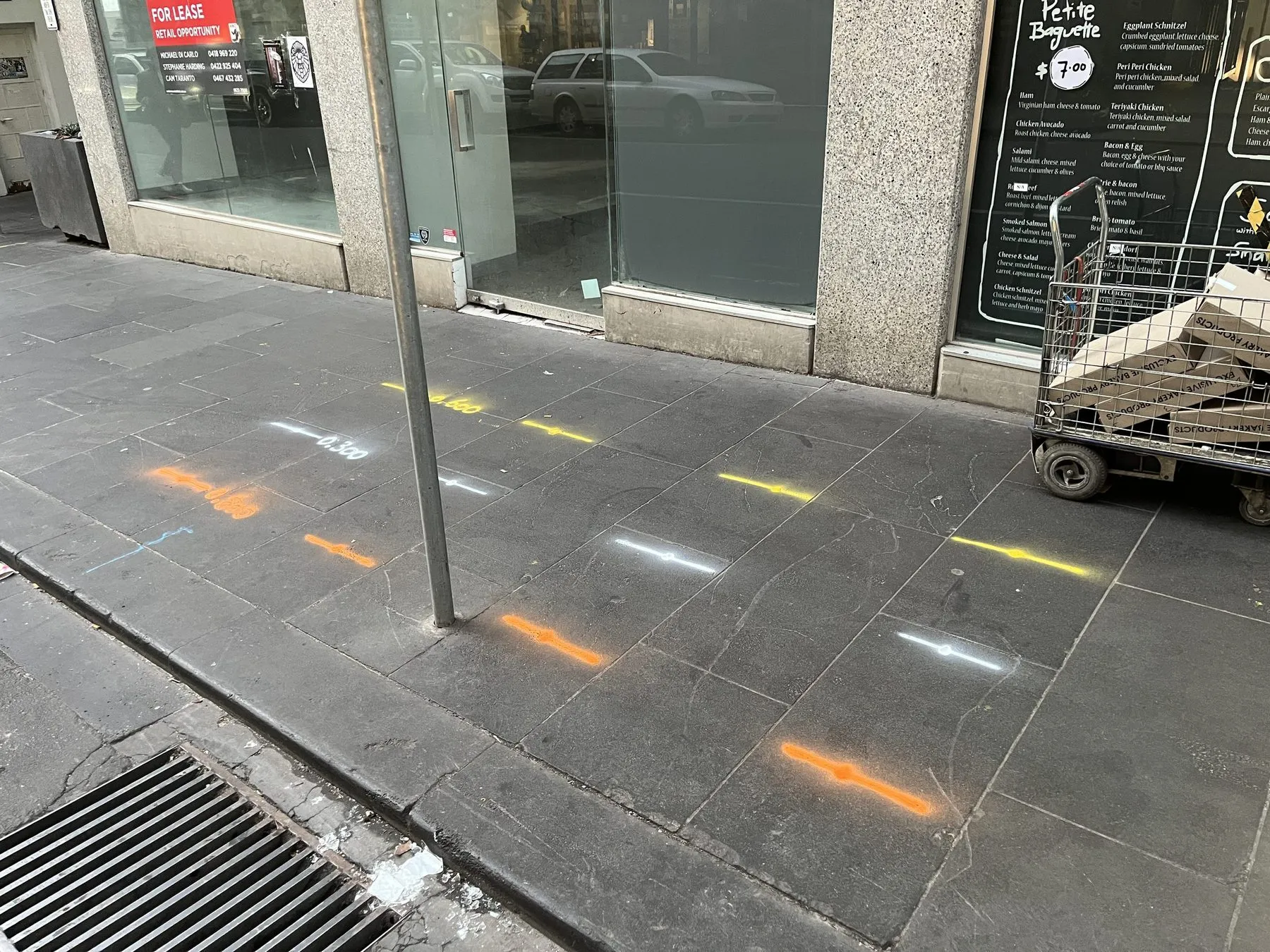
Trace live cables and pipes for position, depth and type.
Service Locating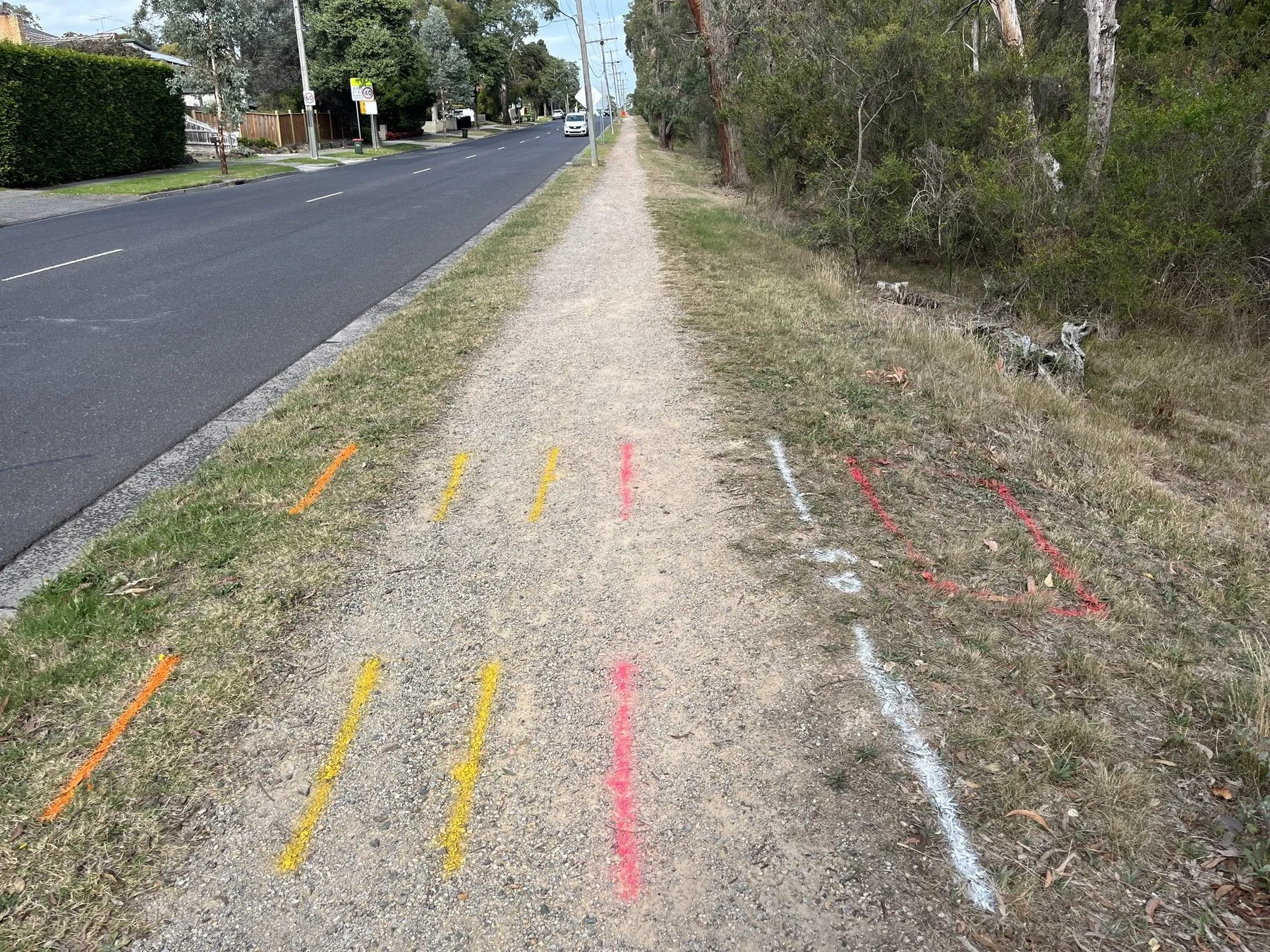
GPR Scanning
Find what EM can't: plastic pipes, footings, voids and wet ground.
GPR Scanning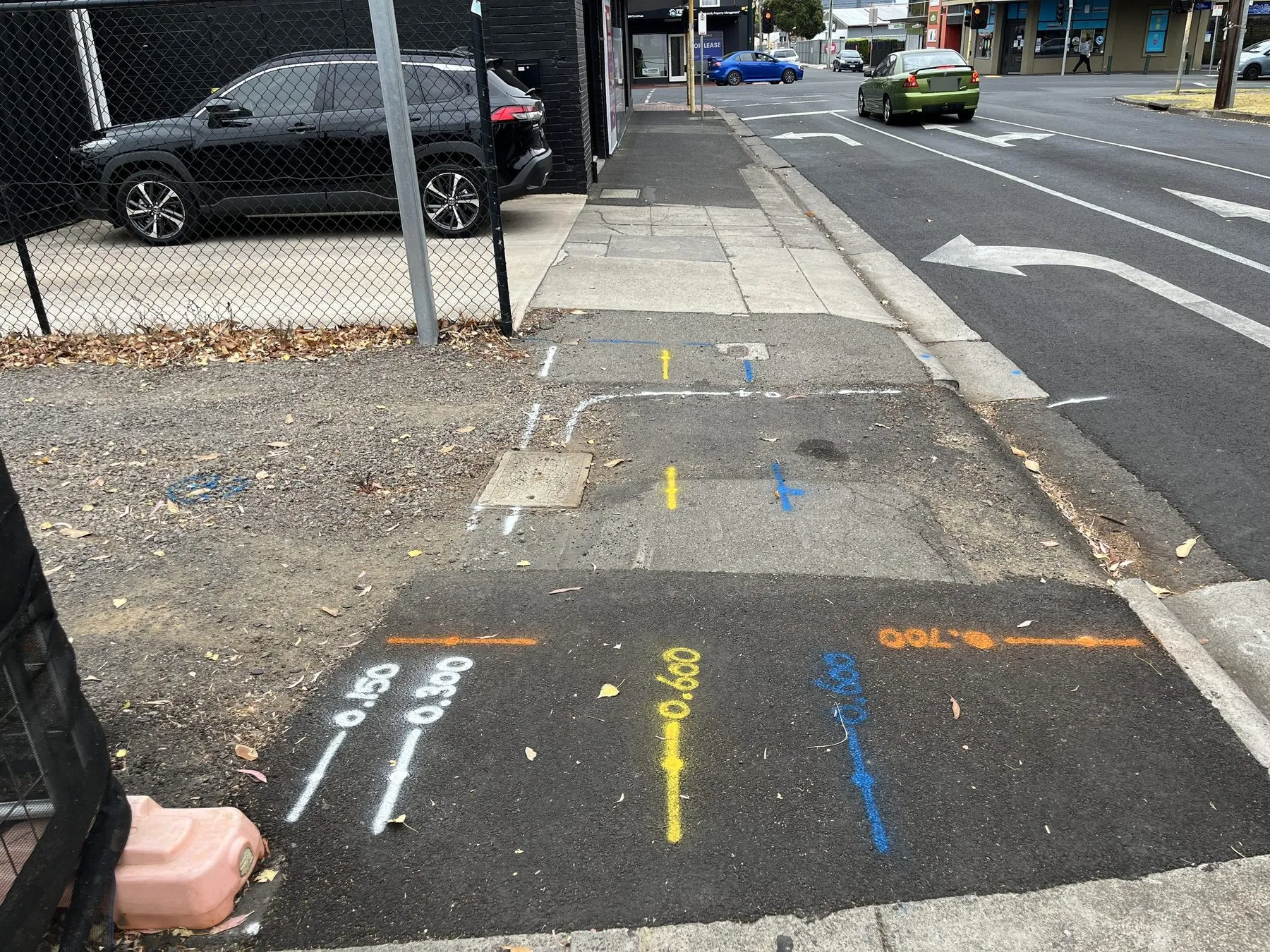
Plans & Reports
A photo report on every job, or a detailed plan with quality levels.
Plans & Reports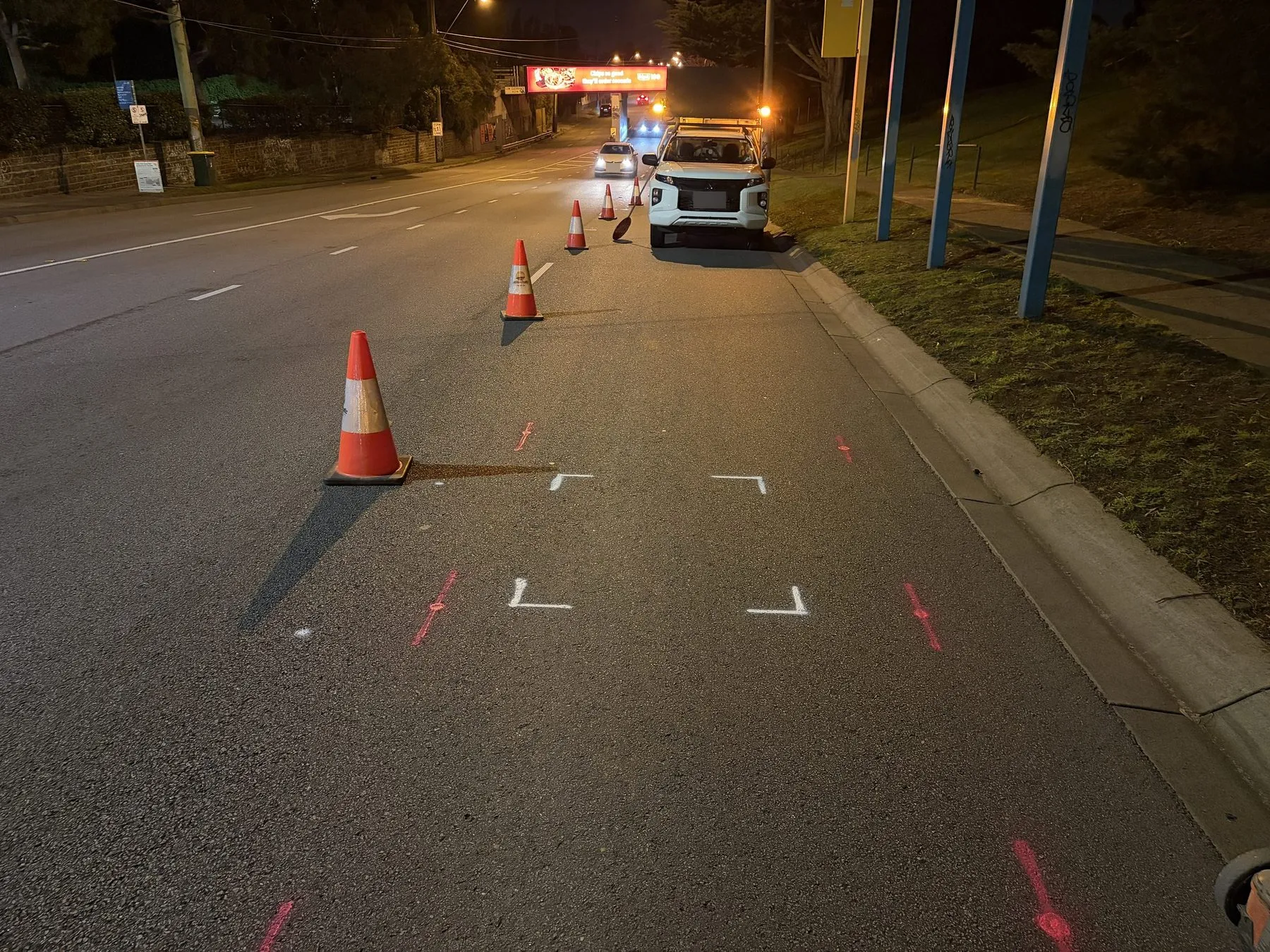
Service Avoidance
Service-clear spots for bore holes, test pits and DCP tests.
Service Avoidance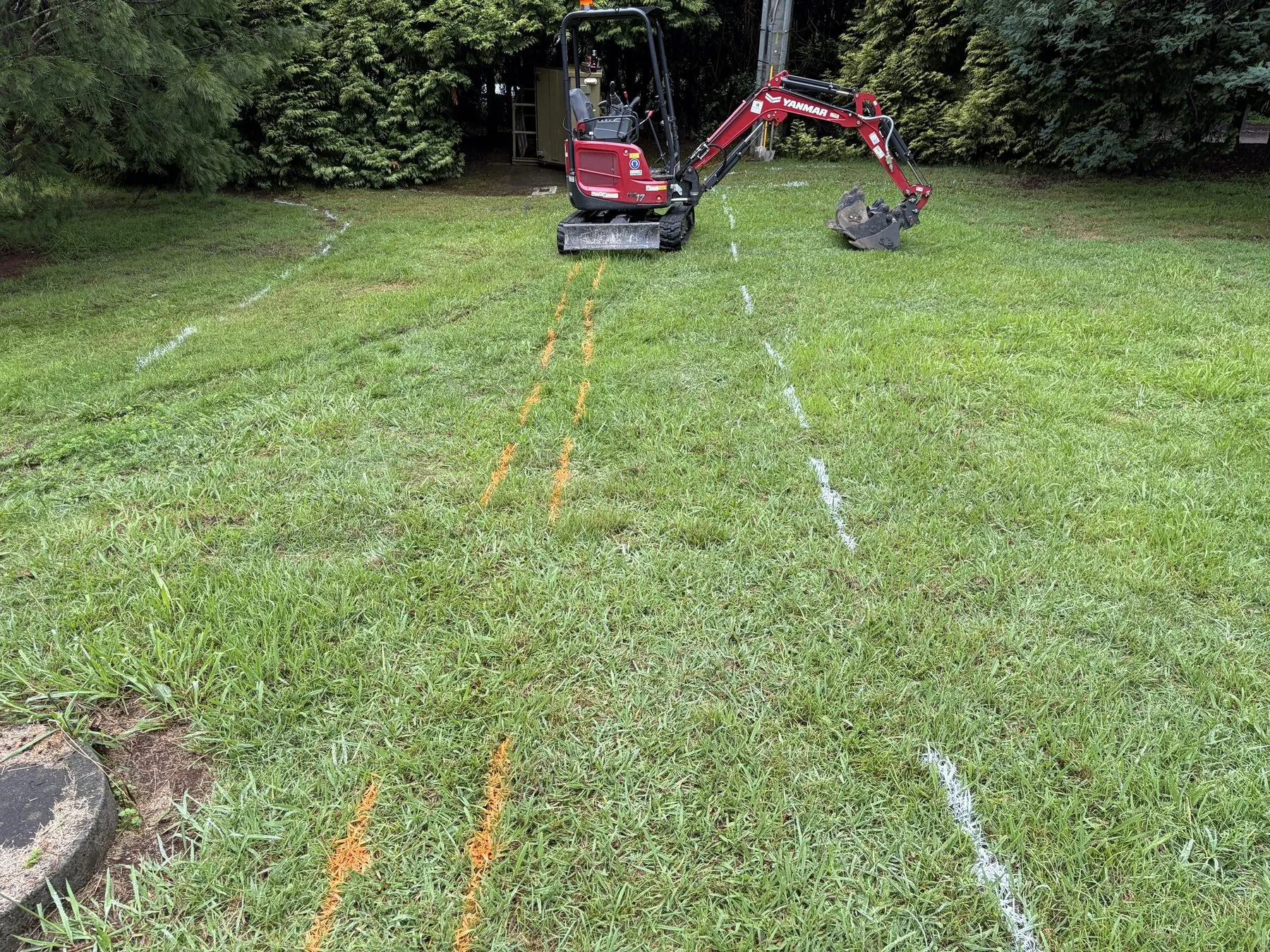
Crane Scans & Void Detection
Check outrigger pads for voids and soft ground before the lift.
Crane Scans & Void DetectionCommon questions.
Do I need a locator if I already have BYDA plans?
Usually, yes. Before You Dig Australia (BYDA) plans show roughly where each asset owner thinks their services run, and they stop at your property boundary. A locator finds where the services actually are on the day, including private services such as power to a shed or a water line to a tank, which never appear on BYDA plans.
What does service locating cost?
It depends on the size of the site, how many services there are, the method needed (EM locating, GPR or both), the type of report and travel time. Call us with the address and the scope of your works and we'll give you a price.
How long does a locate take?
A typical residential locate takes one to two hours on site. Larger commercial or civil sites can take a day or more. We'll give you an idea of timing when you call.
What do the paint colours mean?
We mark services in the standard Australian colours from AS 5488: orange for electricity, yellow for gas, blue for water, green for storm water, brown for sewer, red for fire services, purple for recycled water, white for communications, and pink for a service we've found but can't identify. Depths are written beside the marks.
What's in the report?
Every job ends with a report. As standard that's a photo report of the services marked on site. If you need it, we supply a detailed plan of the services located, with the depth, material and quality level of each one.
Is underground scanning the same as service locating?
Mostly, yes. Service locating, underground locating, utility scanning and tracing pipes and cables all describe finding what's buried before you dig. In practice we use two tools together: an electromagnetic locator to trace conductive cables and pipes, and ground penetrating radar to scan for plastic pipes, voids and other things a locator can't follow.
We also cover.