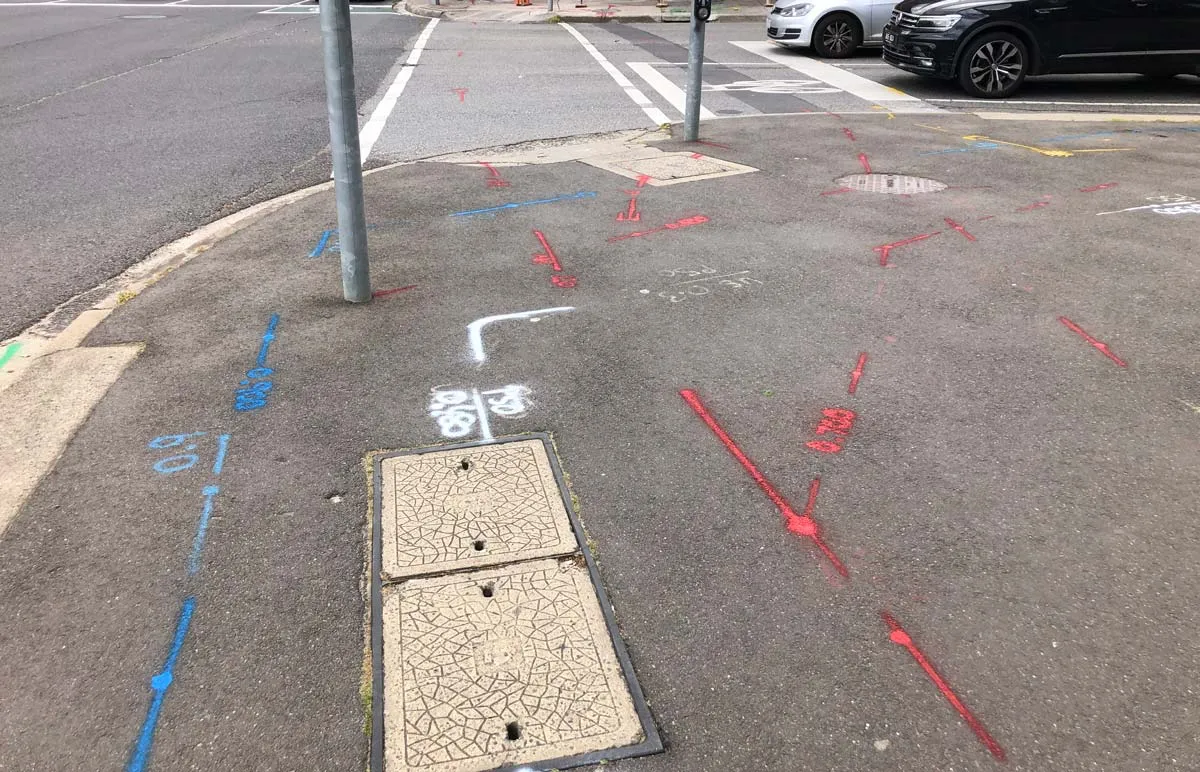

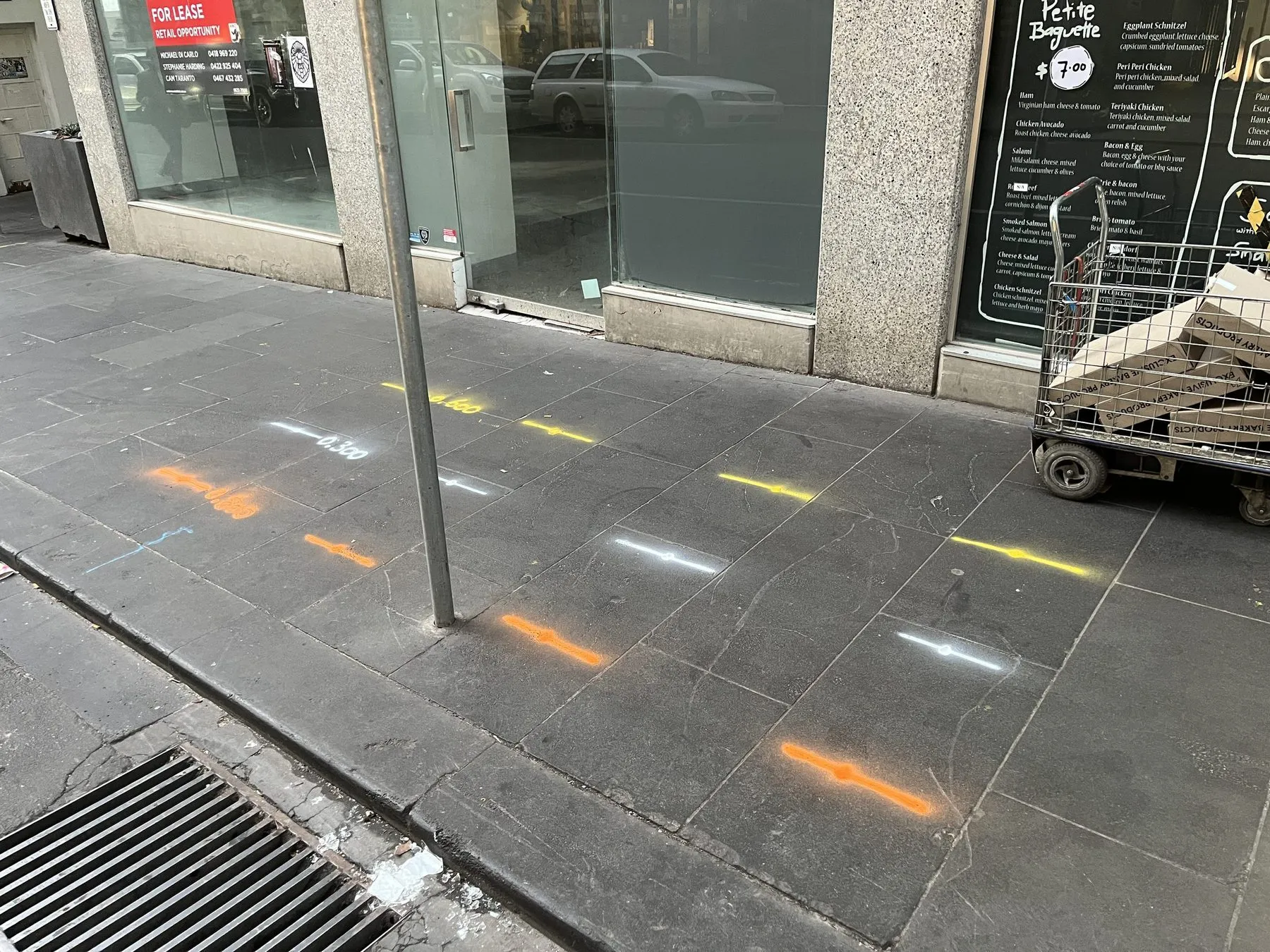
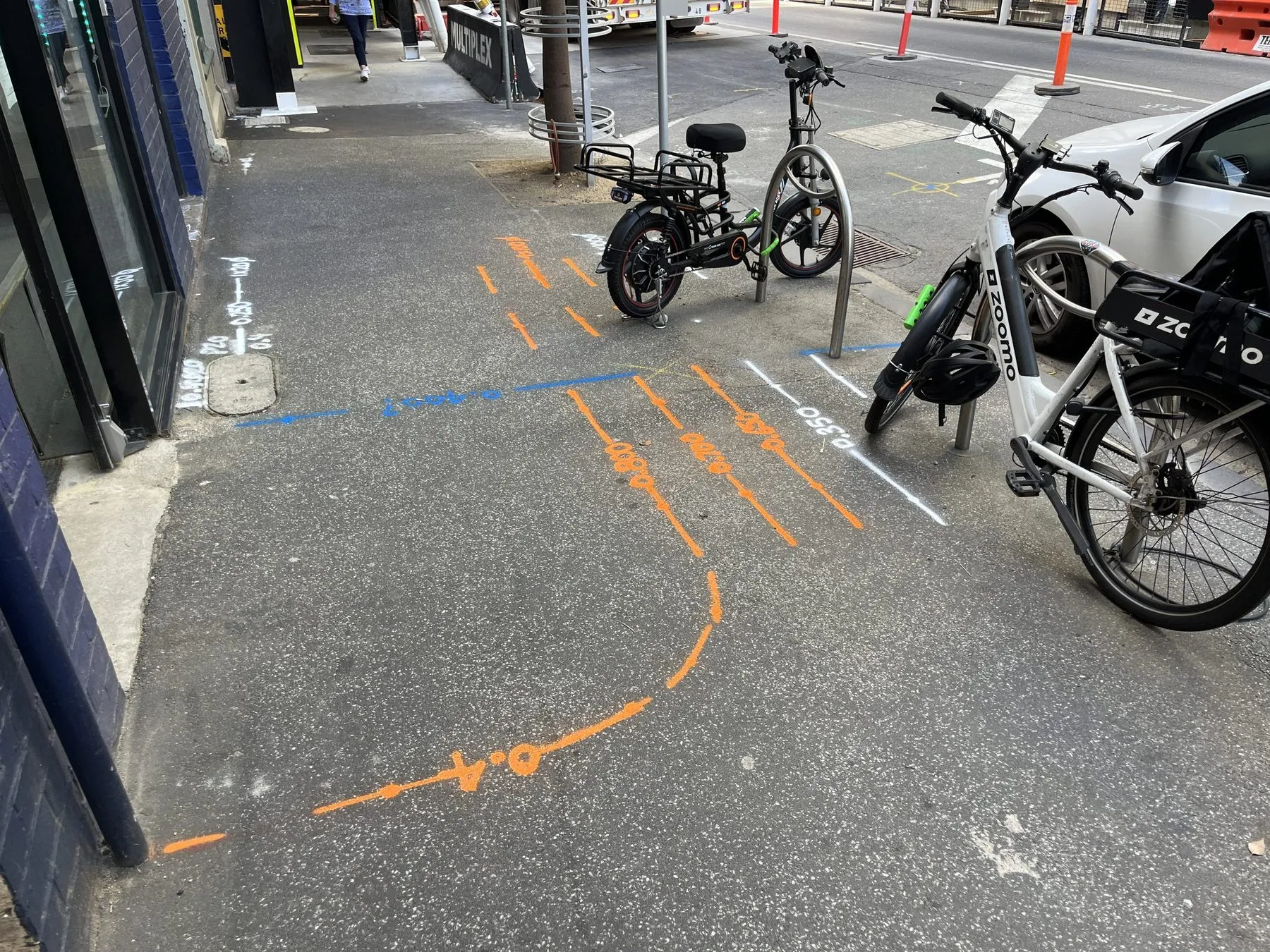
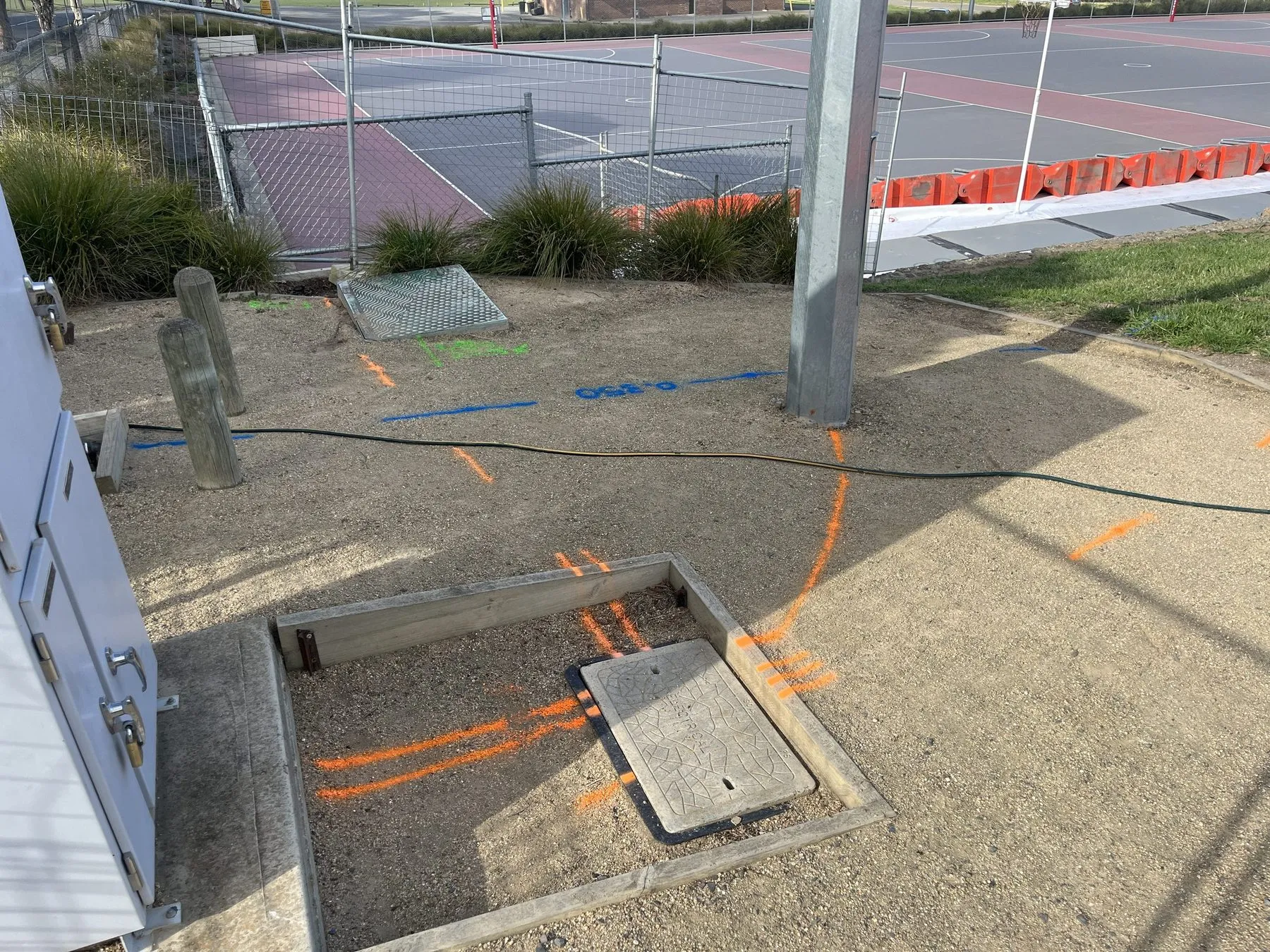
We find underground cables and pipes before you dig. Using Before You Dig Australia (BYDA) plans and a Radiodetection RD8200 locator, we pinpoint each service, record its depth, material and diameter where we can, and mark it out on the ground.
How we locate services
Service locating is the most common work we do. Before we arrive we order BYDA plans for your site, which show roughly where each asset owner thinks their services run.
On site we trace conductive pipes and cables with our Radiodetection RD8200. We do this by connecting to a service directly, clamping around it, or putting a signal into the ground with the transmitter, then following that signal with the receiver to find the service’s position and depth.
Where a service can’t be traced electromagnetically, such as a plastic water or gas line with no tracer wire, we back it up with ground penetrating radar.
Tracing pipes and cables
Service locating is also called underground locating, or simply tracing pipes and cables. It’s the same work: following each service from where it enters the site to where it goes, so you know exactly where it runs before you dig.
What you get
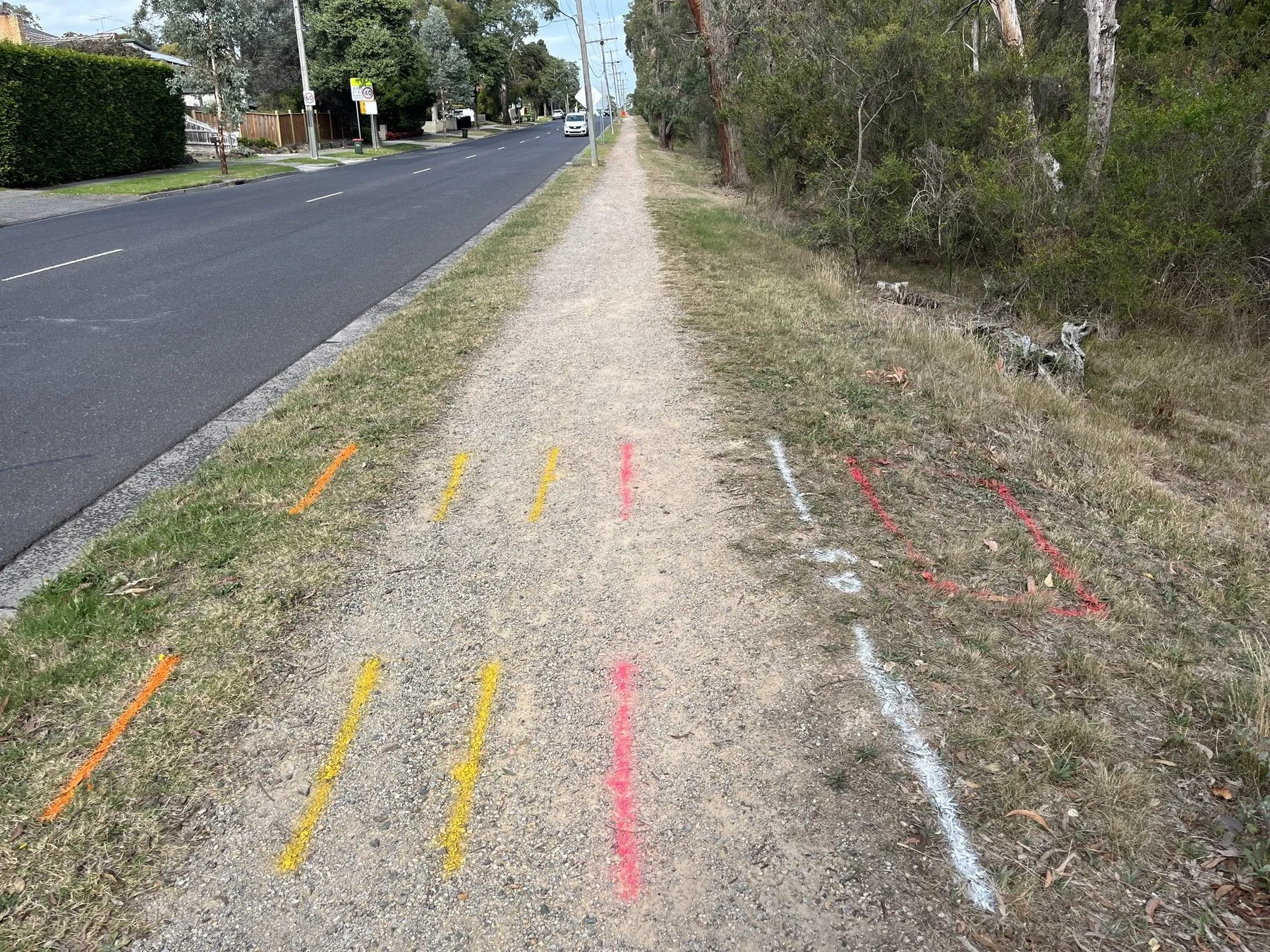
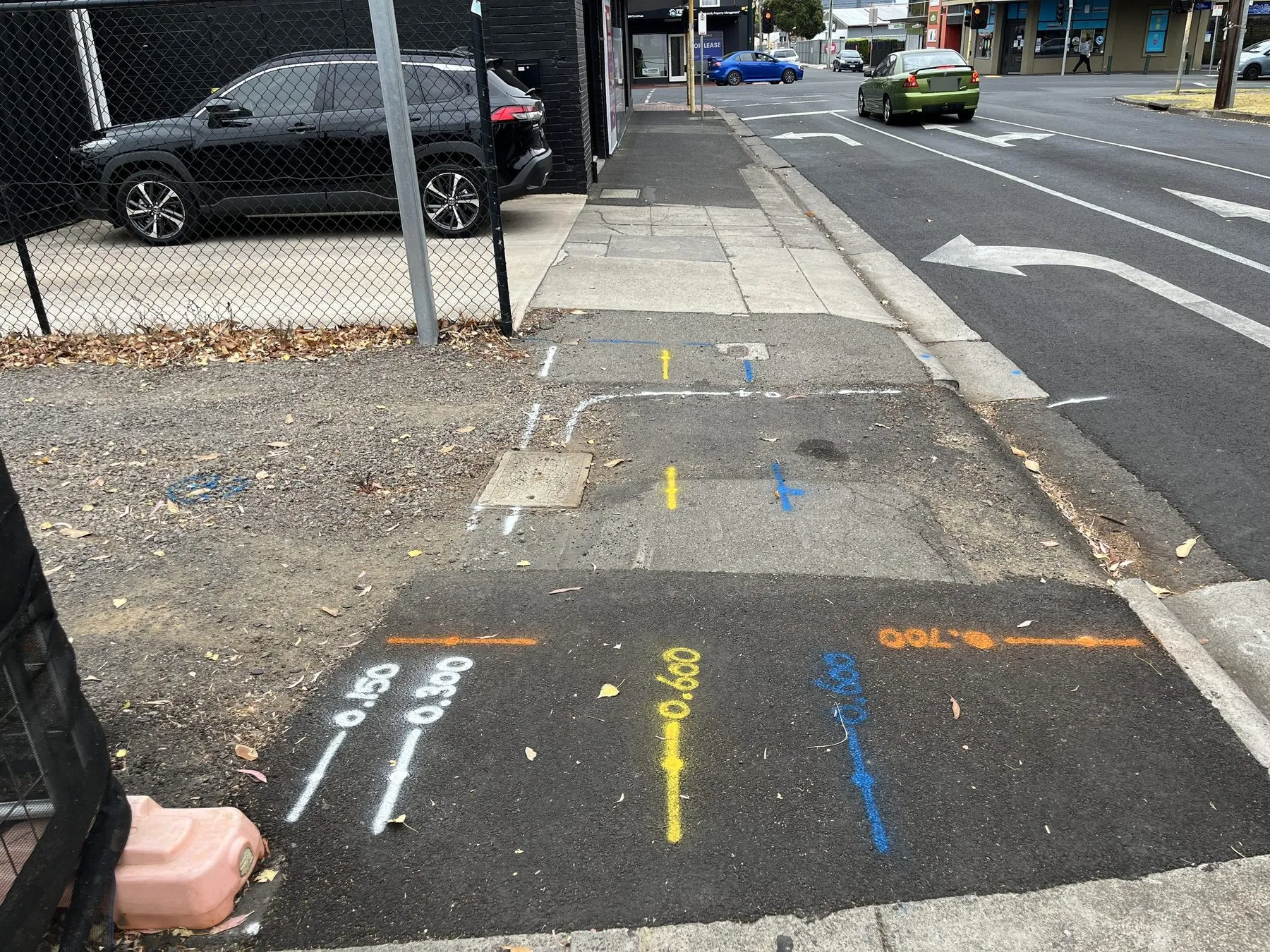
- Services marked on the ground in the standard AS 5488 colours
- Depth, material and diameter recorded wherever they can be determined
- A photo report or detailed plan so you have lasting documentation of what was found
No job too big or small
From tracing a single cable before a fence goes in to mapping an entire development site, there are no jobs too big or small.
Common questions.
How accurate is service locating?
An electromagnetic locator gives a service's position and an estimated depth. Accuracy depends on the ground, the type of service and what else is nearby, which is why our reports state a quality level for every service we record. If a service needs to be confirmed exactly, it can be exposed by non-destructive digging.
Do I need a locator if I already have BYDA plans?
Usually, yes. Before You Dig Australia (BYDA) plans show roughly where each asset owner thinks their services run, and they stop at your property boundary. A locator finds where the services actually are on the day, including private services such as power to a shed or a water line to a tank, which never appear on BYDA plans.
Can you find plastic pipes?
Often, yes. A cable locator can't trace plastic pipes unless they have a tracer wire, but ground penetrating radar can detect them in suitable ground. That's why we use both methods together.
How long does a locate take?
A typical residential locate takes one to two hours on site. Larger commercial or civil sites can take a day or more. We'll give you an idea of timing when you call.
What do the paint colours mean?
We mark services in the standard Australian colours from AS 5488: orange for electricity, yellow for gas, blue for water, green for storm water, brown for sewer, red for fire services, purple for recycled water, white for communications, and pink for a service we've found but can't identify. Depths are written beside the marks.
Is underground scanning the same as service locating?
Mostly, yes. Service locating, underground locating, utility scanning and tracing pipes and cables all describe finding what's buried before you dig. In practice we use two tools together: an electromagnetic locator to trace conductive cables and pipes, and ground penetrating radar to scan for plastic pipes, voids and other things a locator can't follow.
Related services.
Service Locating across Victoria.