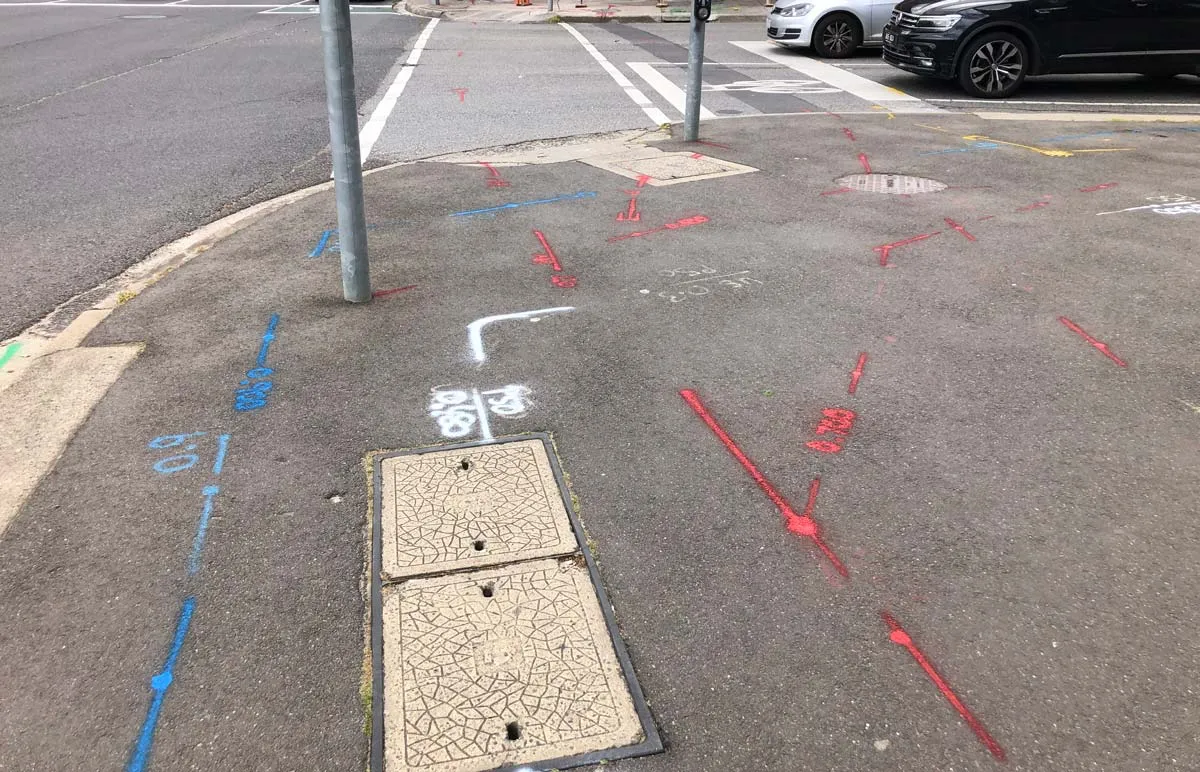

Underground service locating in Melbourne's east
The eastern suburbs are established, leafy and always being renovated. We locate services for pool builders, landscapers, builders, plumbers and engineers from Camberwell out to Croydon and Ferntree Gully.
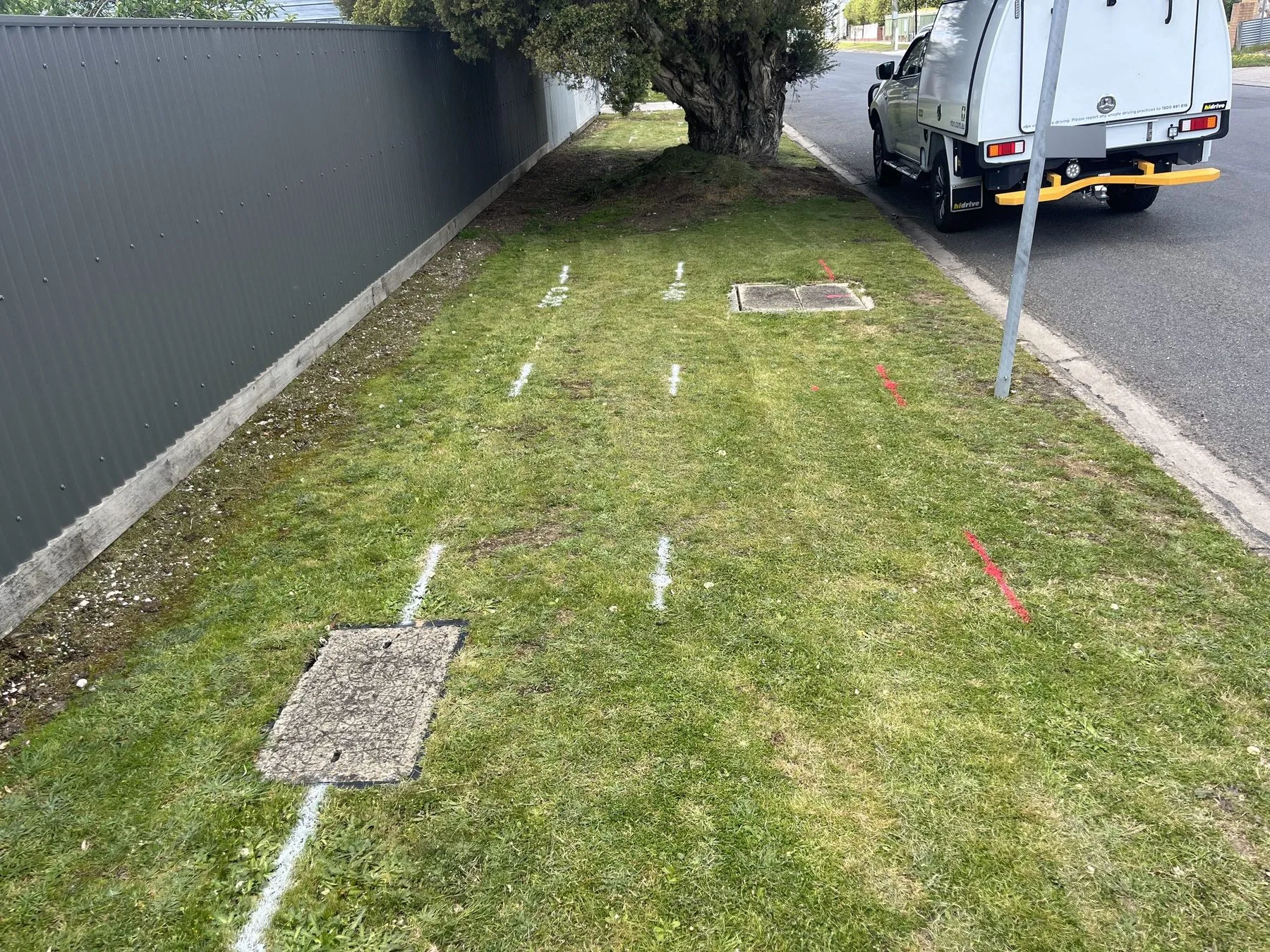
Aus-Scan provides underground service locating, GPR scanning and service plans across Melbourne's eastern suburbs, from Camberwell and Box Hill to Ringwood and Ferntree Gully. We check the Before You Dig Australia (BYDA) plans, locate and mark the services on site, and send a report at the end of every job.
The east is where a lot of Melbourne's residential locating happens. Suburbs like Camberwell, Blackburn, Burwood, Doncaster and Glen Waverley are full of established homes on generous blocks, and those blocks keep changing: pools go in, extensions go out the back, garages become studios, and old fences and retaining walls get replaced. Each of those jobs means digging in a backyard that has collected services over decades, often with no record of where they went. Renovators often don't know what the previous owners put in, and a sixty-year-old house can have had its services changed several times without anyone updating a plan.
Pool builders see this more than anyone. A pool excavation can cross the path of the sewer branch, the stormwater line to the street, the gas service to the house, power to a shed or pool pump, and irrigation. Most of that is private, so it's not on the BYDA plans. We locate the conductive services with an electromagnetic locator, use GPR for plastic pipes and anything without a signal, and mark the lot out before the excavator arrives so the dig can be planned around it. Locating before the design is finalised is even better, because the pool can sometimes be moved slightly to avoid a service altogether rather than relocating it. We also mark the route the excavator will take through the side passage or front garden, because that's where gas and water services to the house usually run.
Subdivision is the other big driver in the east. Across Whitehorse, Monash, Maroondah and Knox, older houses on large lots are being replaced with two or three townhouses. Those jobs need new sewer, water and stormwater connections run across the site and out to the street, and they often have to cross or sit beside the services feeding the neighbours. A service plan at the start lets designers and engineers lay out the new connections with the existing ones on the drawing, rather than finding them with the digger. The new driveways and crossovers that come with these developments also need a locate where they meet the nature strip and footpath. It also helps the plumber price the job properly, because they know before they start what they will have to work around.
The ground rises as you head east, and the hills around Doncaster, Ringwood, Croydon and Ferntree Gully bring retaining walls, stepped footings and cut-and-fill driveways. Mature gardens and big trees are part of the appeal of these suburbs, and they mean services are often hidden under established garden beds, paving and lawns. We mark out the full work area, including access paths for machinery, so services under the garden are found before the post-hole auger or the excavator finds them. On a sloping site, a service that sits shallow at one end of the block can be much deeper at the other, so we record depths along the run where we can measure them.
Box Hill, Glen Waverley and Ringwood have also become busy centres, with apartment towers, retail and commercial development alongside the residential streets, which brings crane pad scans and full-site service plans into the mix. Councils across the east include Boroondara, Whitehorse, Manningham, Monash, Maroondah and Knox, and water and power are supplied by different authorities depending on the suburb. We read the BYDA responses before we arrive and record everything we locate in the report. For pool builders and landscapers who work across the east all the time, a consistent mark-out and photo report on every job makes it easy to show the client and the council what was found before digging started.
Typical jobs in Melbourne East
- Pool excavations in established backyards across Boroondara, Whitehorse, Manningham and Monash
- Locates for rear extensions, granny flats and second storeys with new footings
- Two- and three-lot subdivisions where new sewer, water and stormwater connections need to cross existing services
- Retaining walls, fencing and landscaping on sloping blocks around Doncaster, Ringwood and Ferntree Gully
- Mark-outs for apartment and commercial projects around Box Hill, Glen Waverley and Ringwood
- GPR scans for plastic pipes and old private drains where an EM locator gets no signal
- Locates before tree removal, stump grinding and new garden beds on established blocks
- Driveway and crossover replacement across the footpath and nature strip
Getting to you
We work across Melbourne's east every week. Call with the site address and we'll give you the earliest time. Residential jobs usually suit a weekday visit, and we can mark out before the crew or machine arrives.
Ready to book? Talk to us about your site.
Call 0423 229 332What we locate here.
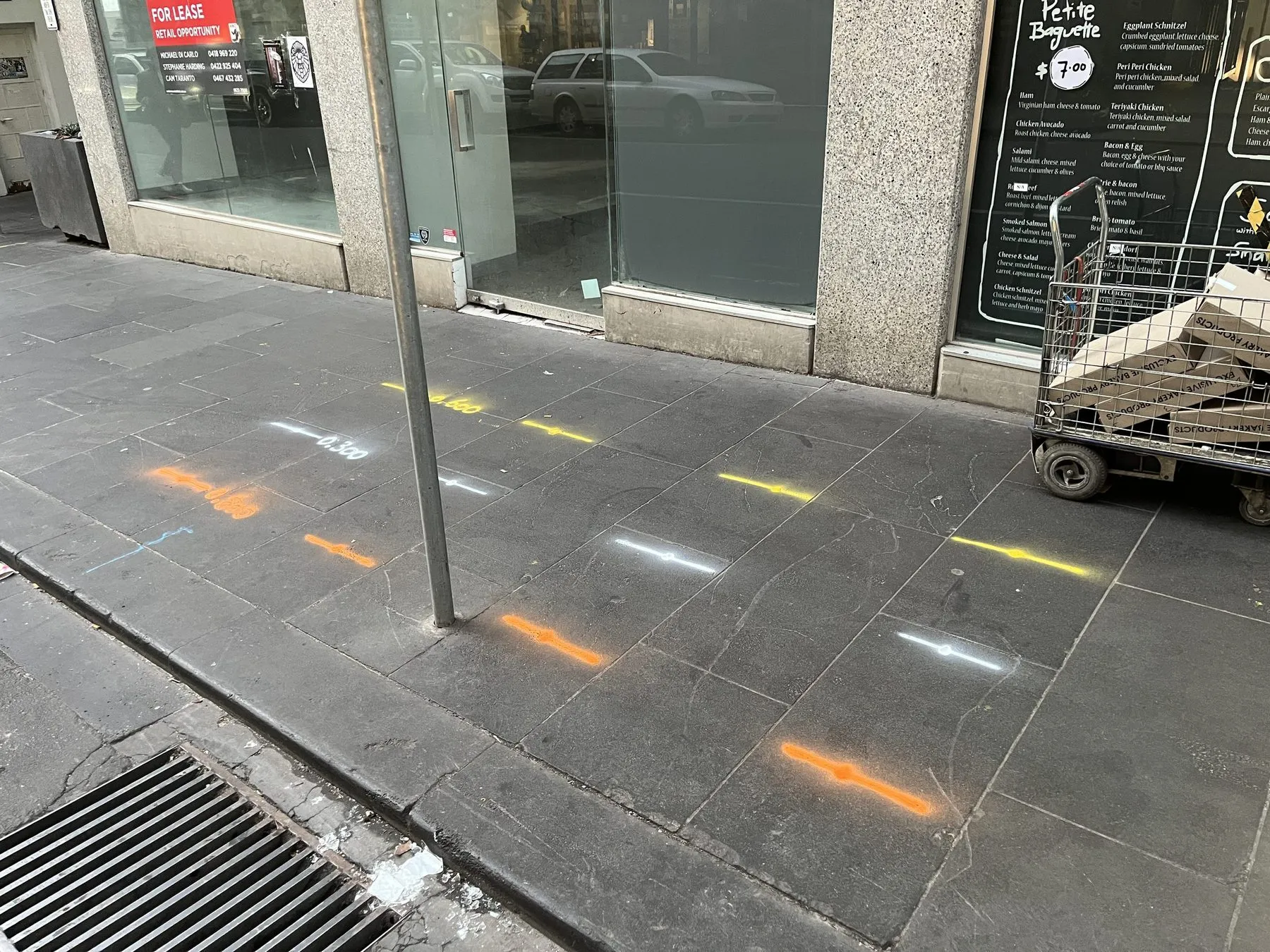
Service Locating
Trace live cables and pipes for position, depth and type.
Service Locating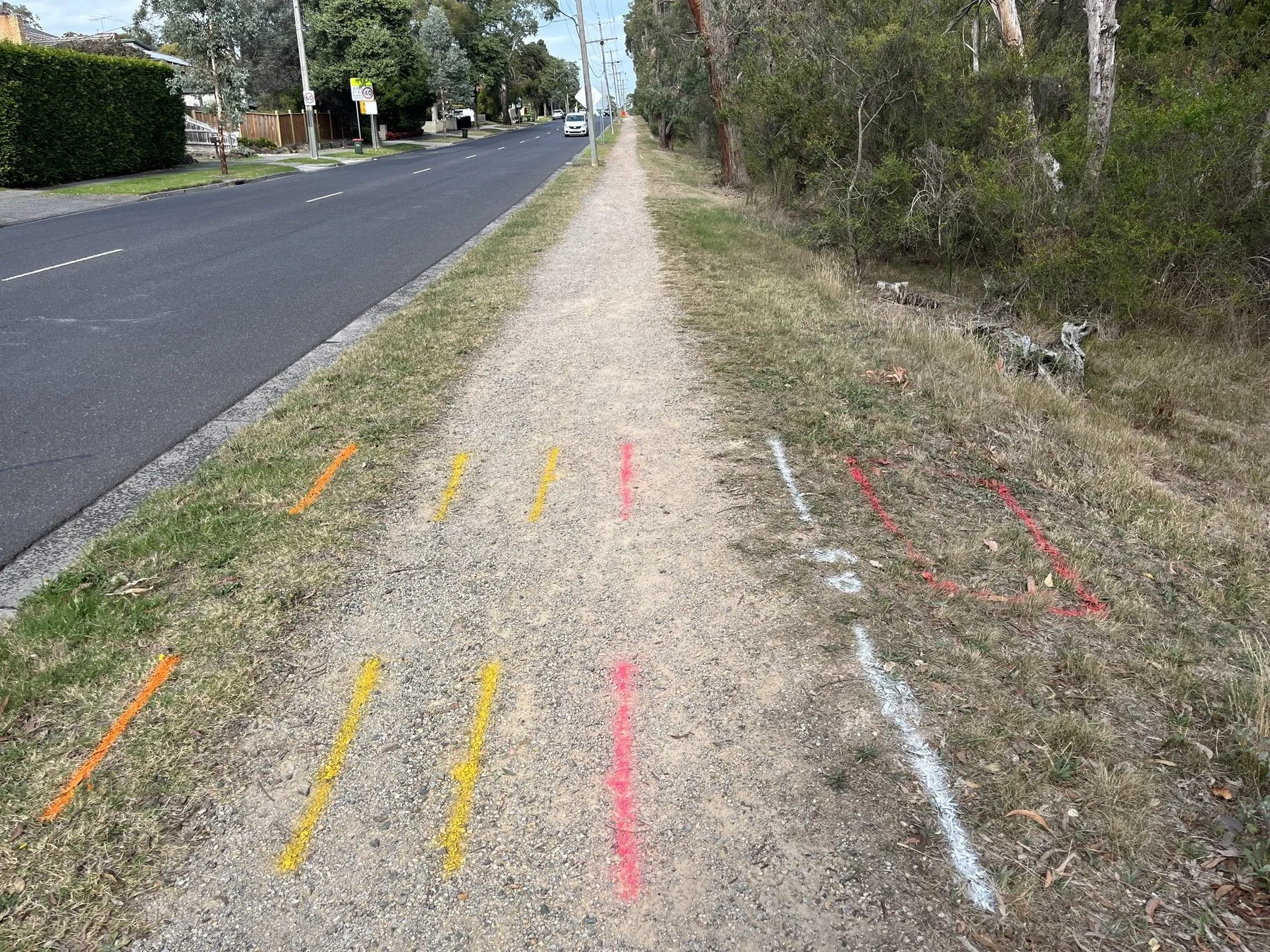
GPR Scanning
Find what EM can't: plastic pipes, footings, voids and wet ground.
GPR Scanning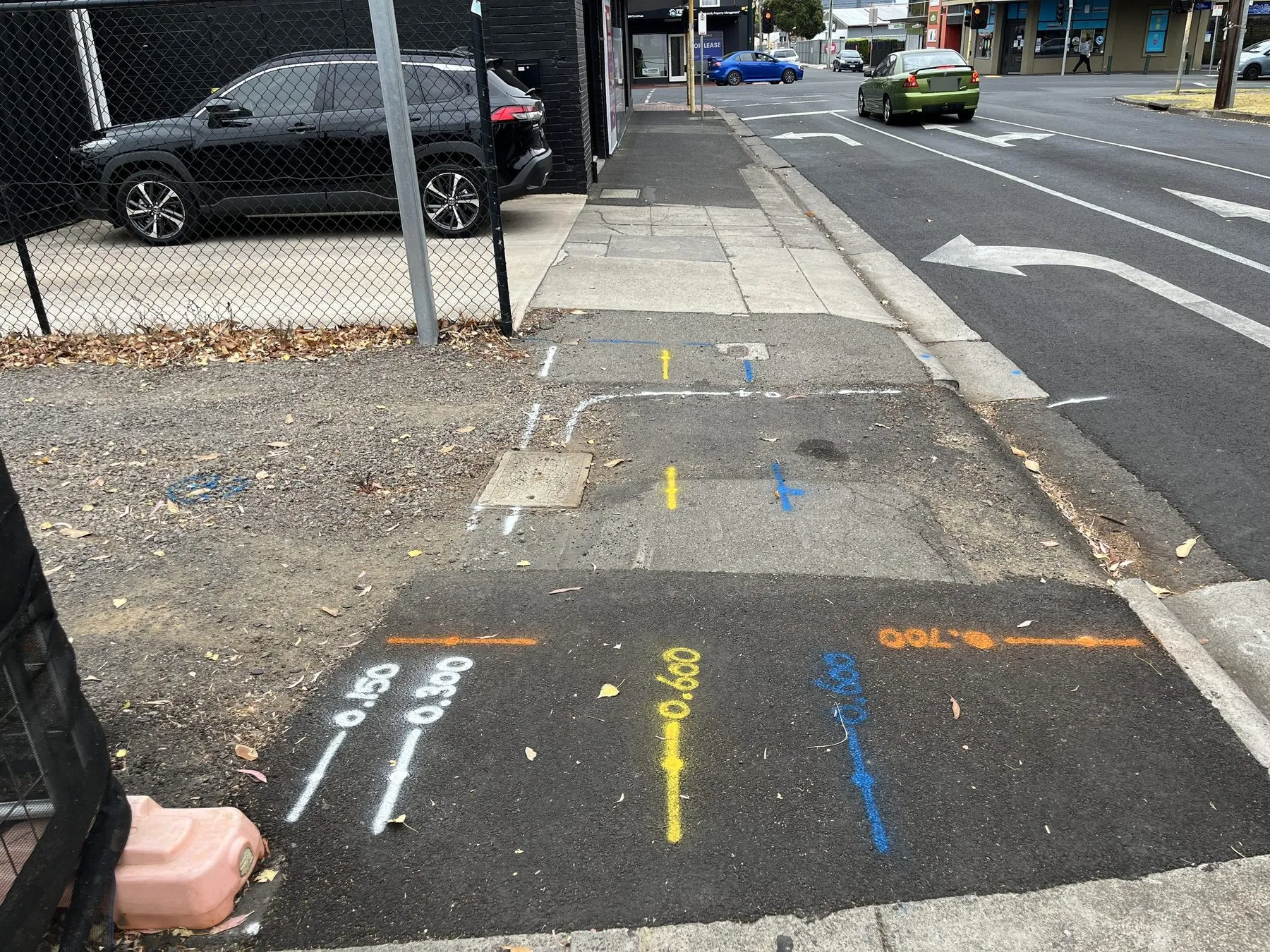
Plans & Reports
A photo report on every job, or a detailed plan with quality levels.
Plans & Reports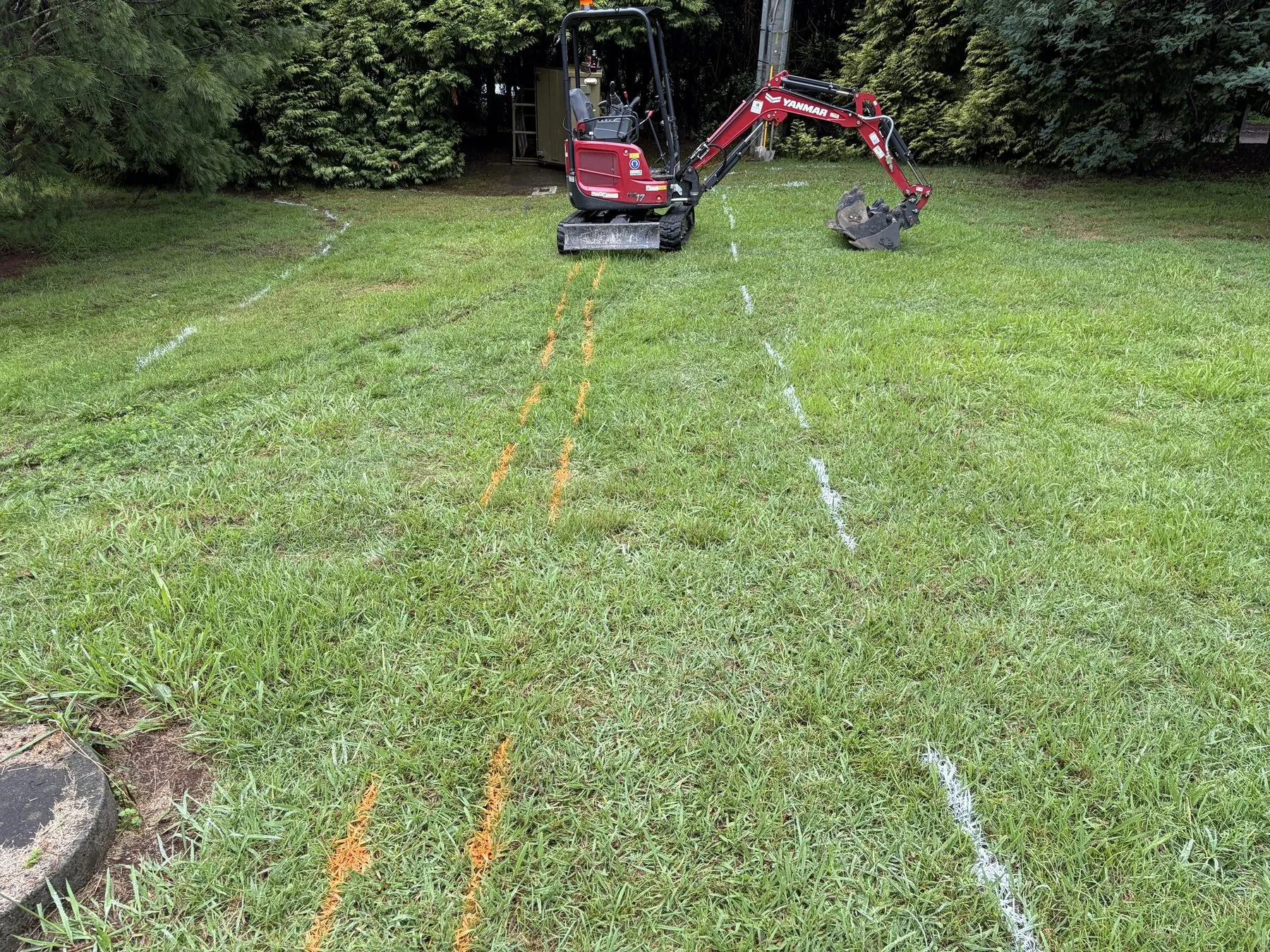
Crane Scans & Void Detection
Check outrigger pads for voids and soft ground before the lift.
Crane Scans & Void DetectionCommon questions.
Do I need a locator if I already have BYDA plans?
Usually, yes. Before You Dig Australia (BYDA) plans show roughly where each asset owner thinks their services run, and they stop at your property boundary. A locator finds where the services actually are on the day, including private services such as power to a shed or a water line to a tank, which never appear on BYDA plans.
What does service locating cost?
It depends on the size of the site, how many services there are, the method needed (EM locating, GPR or both), the type of report and travel time. Call us with the address and the scope of your works and we'll give you a price.
How long does a locate take?
A typical residential locate takes one to two hours on site. Larger commercial or civil sites can take a day or more. We'll give you an idea of timing when you call.
What do the paint colours mean?
We mark services in the standard Australian colours from AS 5488: orange for electricity, yellow for gas, blue for water, green for storm water, brown for sewer, red for fire services, purple for recycled water, white for communications, and pink for a service we've found but can't identify. Depths are written beside the marks.
What's in the report?
Every job ends with a report. As standard that's a photo report of the services marked on site. If you need it, we supply a detailed plan of the services located, with the depth, material and quality level of each one.
Is underground scanning the same as service locating?
Mostly, yes. Service locating, underground locating, utility scanning and tracing pipes and cables all describe finding what's buried before you dig. In practice we use two tools together: an electromagnetic locator to trace conductive cables and pipes, and ground penetrating radar to scan for plastic pipes, voids and other things a locator can't follow.
We also cover.