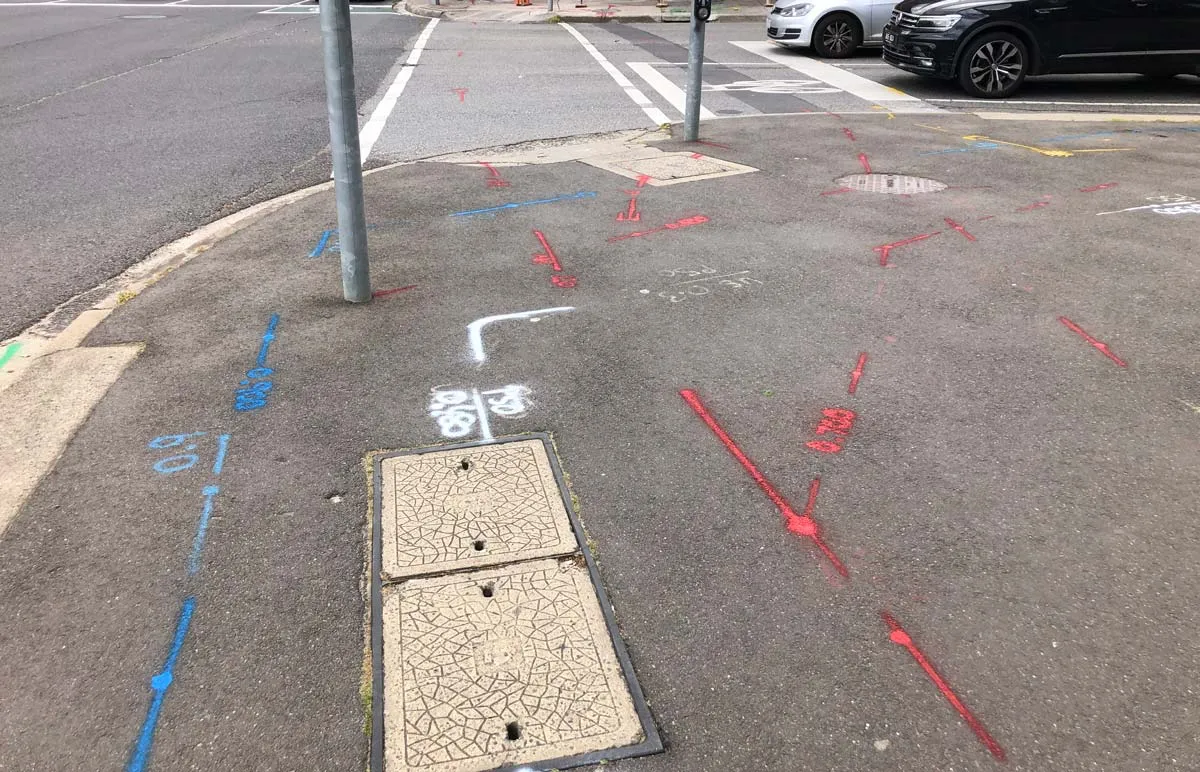

Underground service locating and scanning in Geelong
Aus-Scan is now based in Geelong. From November 2026 Geelong is our home base, and we're building up our local work across Greater Geelong while still covering Melbourne and the rest of Victoria. We locate cables, pipes, voids and tanks for builders, trades, engineers and homeowners.
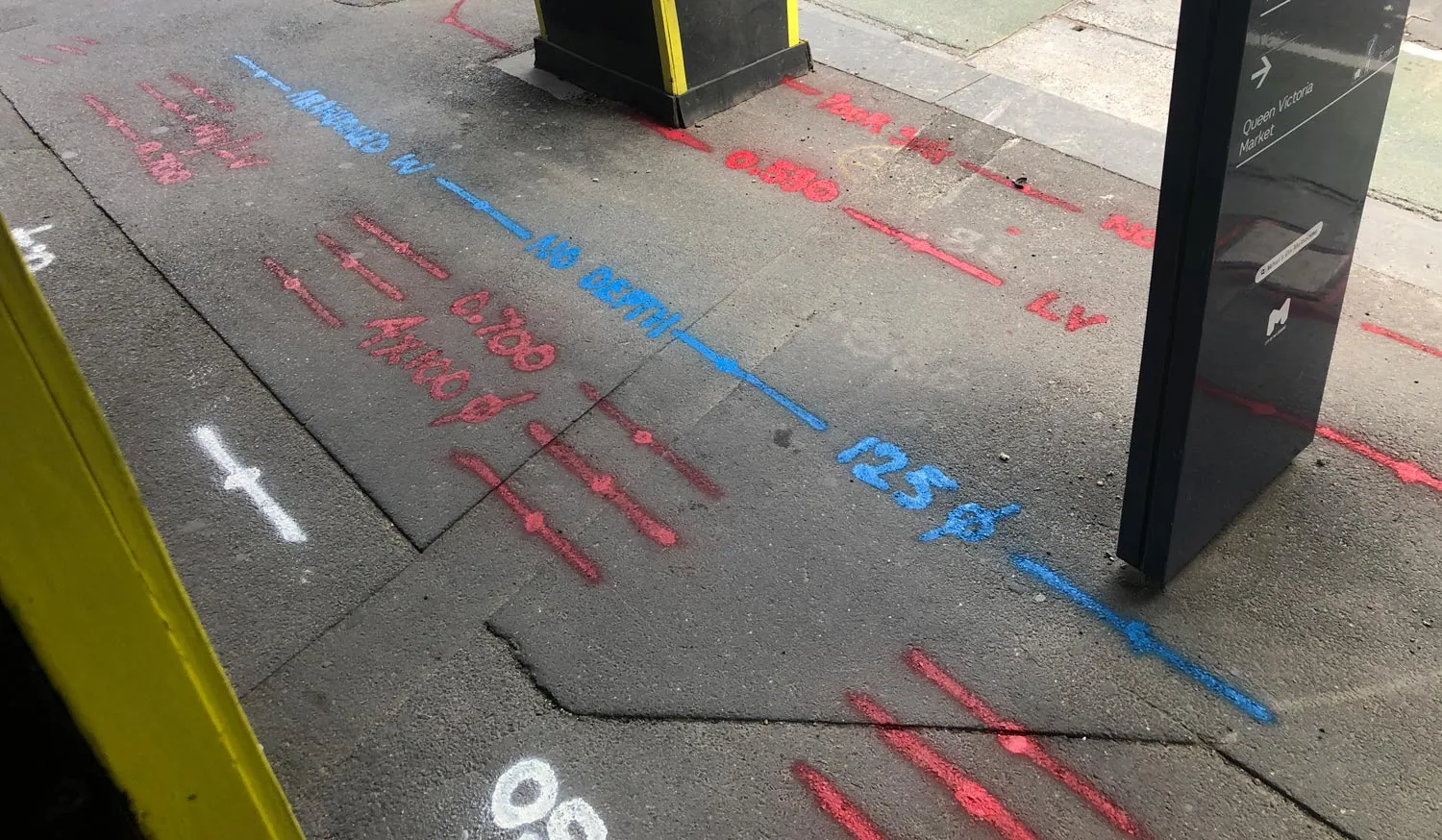
Aus-Scan provides underground service locating, GPR scanning and service plans across Greater Geelong, from the CBD and Geelong West to Lara, Waurn Ponds and Armstrong Creek. We order Before You Dig Australia (BYDA) plans for every job, mark services out on site in the standard colours and send a report when we're done.
We moved to Geelong in November 2026. Most of our work has come from Melbourne and its surrounds, and that hasn't changed, but Geelong is now where we start most days. Being based here means shorter trips to sites across Greater Geelong, the Surf Coast and the Bellarine, and it's where we're putting our effort into building up local work with builders, plumbers, electricians, pool and fencing contractors, surveyors and engineers. If you've been bringing a locator down the highway from Melbourne, we're now just up the road.
People search for this work in different ways: service locating, underground locating, underground scanning, utility scanning, or tracing pipes and cables. In Geelong it's all the same job for us. We trace conductive cables and pipes with an electromagnetic locator, scan for plastic and non-conductive services with ground penetrating radar, and mark everything on the ground before anyone digs, whether that's a single fence line in Belmont or a full site in North Geelong.
Greater Geelong mixes almost every kind of locating job in one region. The CBD and Geelong West keep redeveloping, with older services running under footpaths and laneways alongside newer ones. The northern industrial suburbs of Corio, Norlane and North Geelong see bores, trenches and plant upgrades on working sites. Established suburbs like Belmont, Highton and Newtown keep turning over pools, extensions, fences and units built behind existing houses. Out at Lara and Lovely Banks, newer estates sit next to older semi-rural blocks, so the same street can hold brand-new services and much older private runs to sheds, dams and tanks. Commercial jobs in the CBD mean working around traffic and pedestrians, on footpaths, kerbs and laneways that have been dug up and patched many times.
Armstrong Creek, along with Mount Duneed, Charlemont and Marshall, is the big growth area on the southern side of the city, between Grovedale and the Surf Coast. The estates there are still being built out, so the work ranges from subdivision civil works and new connections to the jobs that follow once people move in: fences, landscaping, pools, sheds and solar. New estates bring their own locating problems. Services go in stage by stage, records can lag behind what's actually been laid, and once a house is finished the owner or builder adds private services that will never show on BYDA plans. Where one stage meets the next, or where new estate services meet older rural services on the fringe, a mark-out on site is the only way to know what's there. Commercial and community sites are going up alongside the housing too, which means bigger trenches, more connections and more contractors working near each other.
In the older streets of Newtown, Geelong West, Belmont and around the CBD, services can sit somewhere other than where the records say, and some may have been replaced or abandoned over the years. Private services are a risk everywhere: power to a shed, gas to a barbecue, stormwater to a tank or water to a garden tap never appear on BYDA plans. That's why every job gets a proper locate on site, not just a look at the plans. We use an electromagnetic locator for metallic services and lines we can put a signal on, and GPR for plastic pipes and other services and features that can't be traced.
Across Greater Geelong, the council is the City of Greater Geelong, water and sewer belong to Barwon Water, and the electricity network is run by Powercor. Their assets show on the BYDA plans for a site, while anything on the private side of the meter or property boundary is the owner's responsibility. We locate and mark both. When you book, tell us what you're doing, whether it's a fence line, a pool, a trench to a shed, a bore or a crane set-up, and we'll scan the area you need cleared and send a photo report or a detailed plan, depending on what the job needs.
Typical jobs in Geelong
- Fences, landscaping, pools and sheds in the Armstrong Creek, Mount Duneed, Charlemont and Marshall estates
- Pools, extensions and solar trenches in established suburbs like Belmont, Highton, Newtown and Grovedale
- Commercial and residential redevelopment around the CBD and Geelong West
- Industrial bores and trenching in Corio, Norlane and North Geelong
- Crane pad and void scans for city building sites
- Service avoidance for geotechnical bore holes and test pits on subdivision sites
- Locating in Lara and Lovely Banks before driveways, sheds and tank connections
- Service plans for designers, surveyors and engineers
Getting to you
Geelong is our home base, so sites across Greater Geelong are the closest jobs we do, from Lara and Corio in the north to Waurn Ponds and Armstrong Creek in the south. Call with the site address and what you're doing, and we'll give you the earliest time we can get there.
Ready to book? Talk to us about your site.
Call 0423 229 332What we locate here.
Service Locating
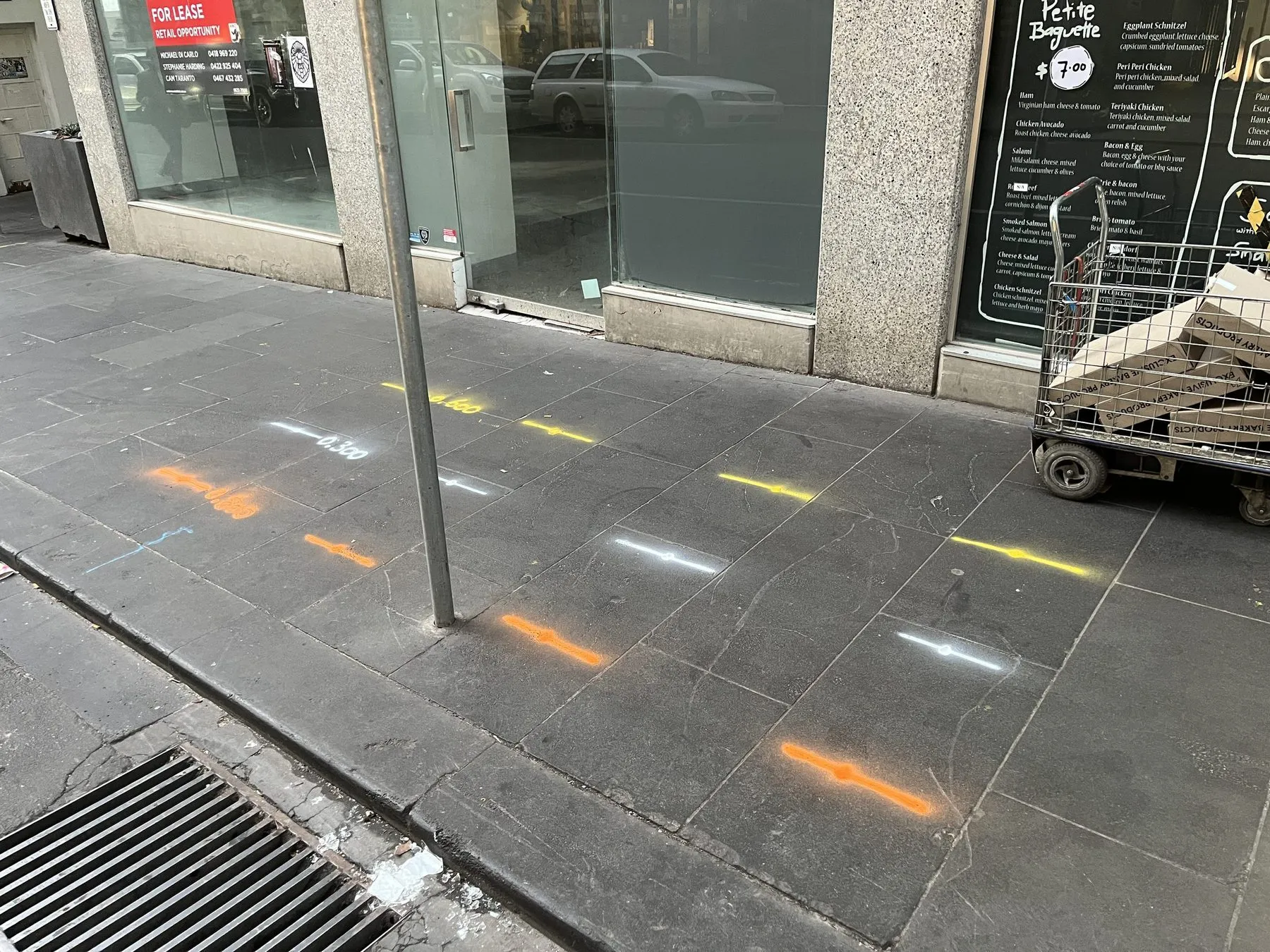
Trace live cables and pipes for position, depth and type.
Service Locating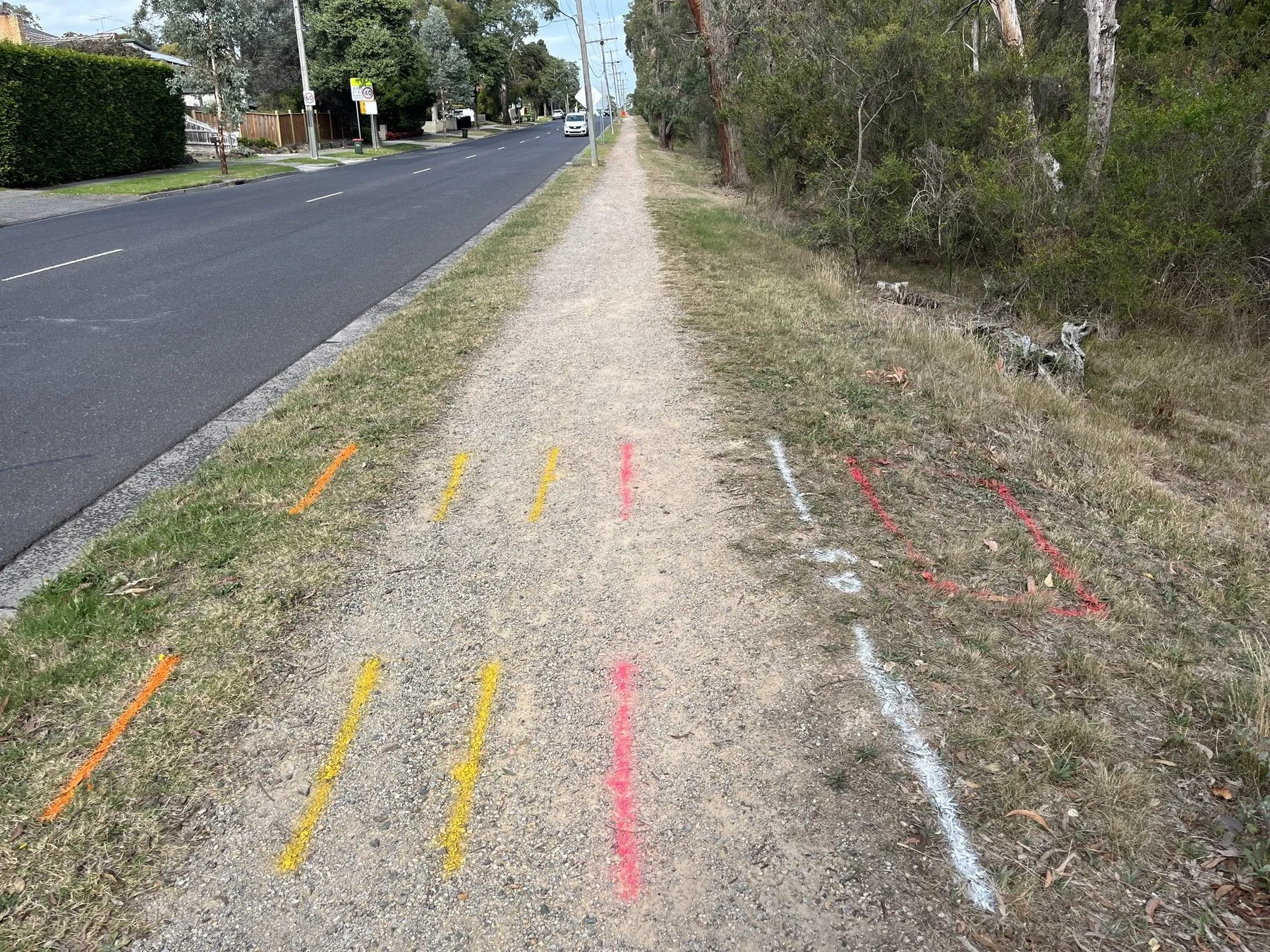
GPR Scanning
Find what EM can't: plastic pipes, footings, voids and wet ground.
GPR Scanning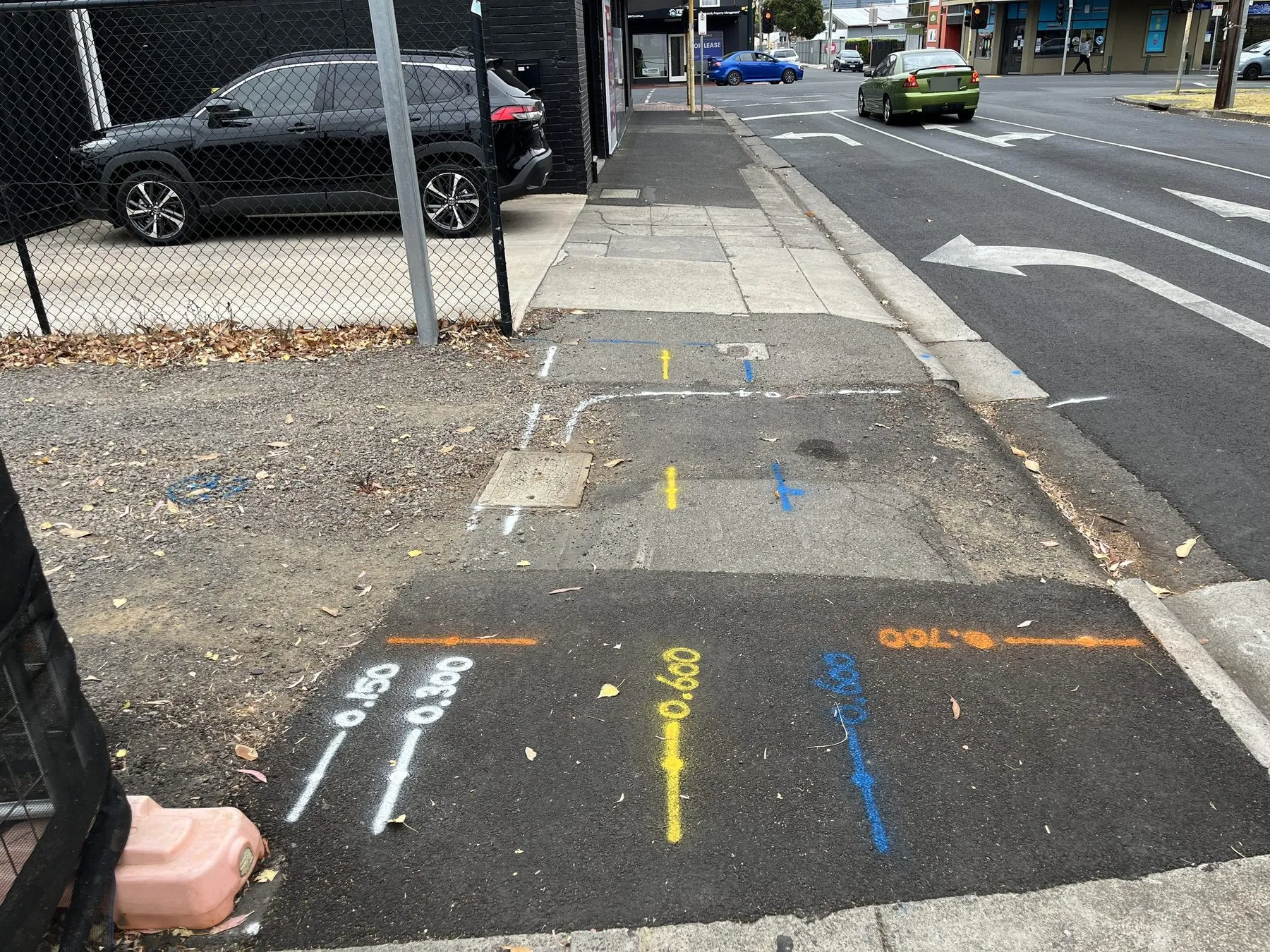
Plans & Reports
A photo report on every job, or a detailed plan with quality levels.
Plans & Reports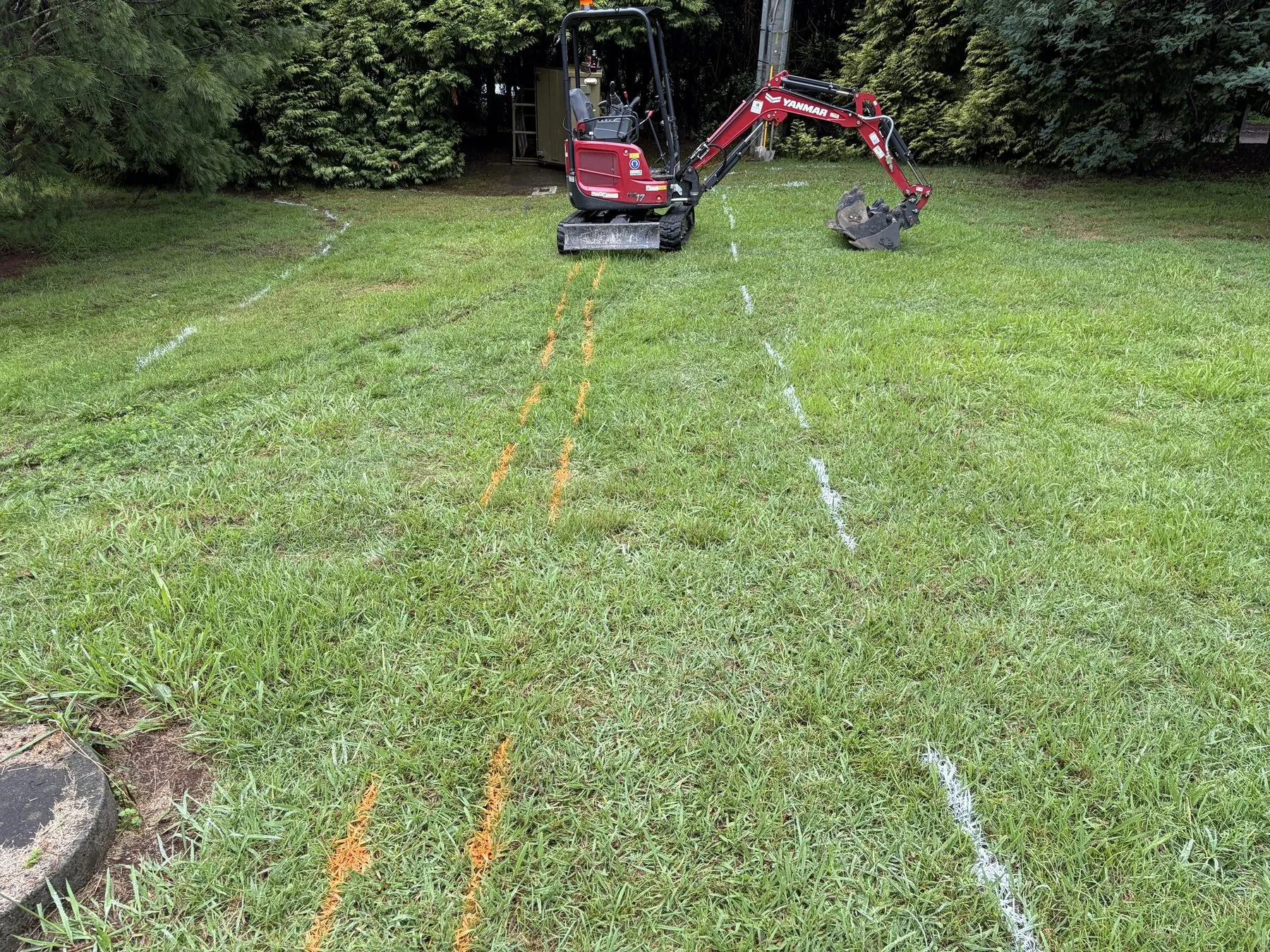
Crane Scans & Void Detection
Check outrigger pads for voids and soft ground before the lift.
Crane Scans & Void Detection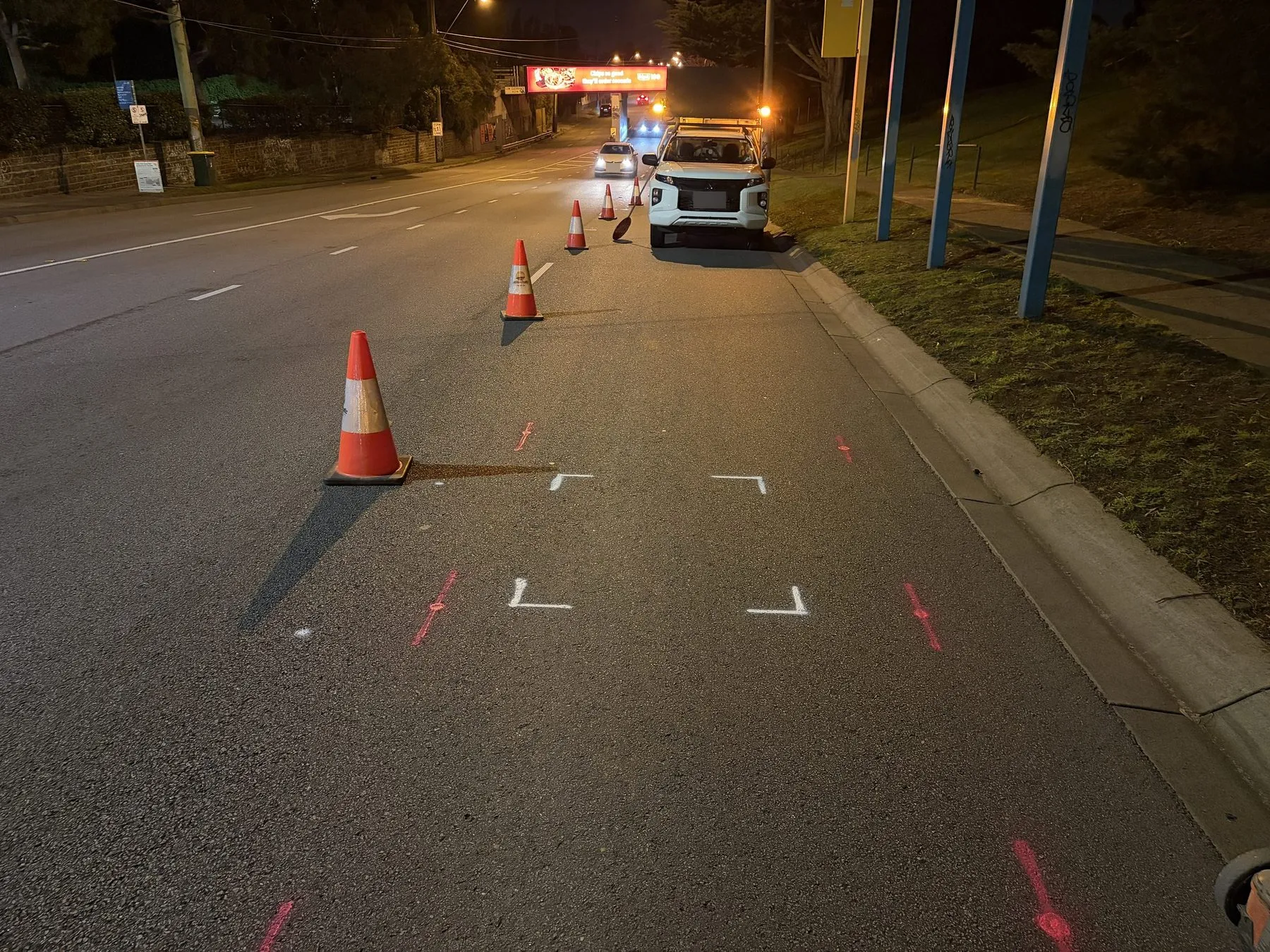
Service Avoidance
Service-clear spots for bore holes, test pits and DCP tests.
Service AvoidanceCommon questions.
Do I need a locator if I already have BYDA plans?
Usually, yes. Before You Dig Australia (BYDA) plans show roughly where each asset owner thinks their services run, and they stop at your property boundary. A locator finds where the services actually are on the day, including private services such as power to a shed or a water line to a tank, which never appear on BYDA plans.
What does service locating cost?
It depends on the size of the site, how many services there are, the method needed (EM locating, GPR or both), the type of report and travel time. Call us with the address and the scope of your works and we'll give you a price.
How long does a locate take?
A typical residential locate takes one to two hours on site. Larger commercial or civil sites can take a day or more. We'll give you an idea of timing when you call.
What do the paint colours mean?
We mark services in the standard Australian colours from AS 5488: orange for electricity, yellow for gas, blue for water, green for storm water, brown for sewer, red for fire services, purple for recycled water, white for communications, and pink for a service we've found but can't identify. Depths are written beside the marks.
What's in the report?
Every job ends with a report. As standard that's a photo report of the services marked on site. If you need it, we supply a detailed plan of the services located, with the depth, material and quality level of each one.
Is underground scanning the same as service locating?
Mostly, yes. Service locating, underground locating, utility scanning and tracing pipes and cables all describe finding what's buried before you dig. In practice we use two tools together: an electromagnetic locator to trace conductive cables and pipes, and ground penetrating radar to scan for plastic pipes, voids and other things a locator can't follow.
We also cover.