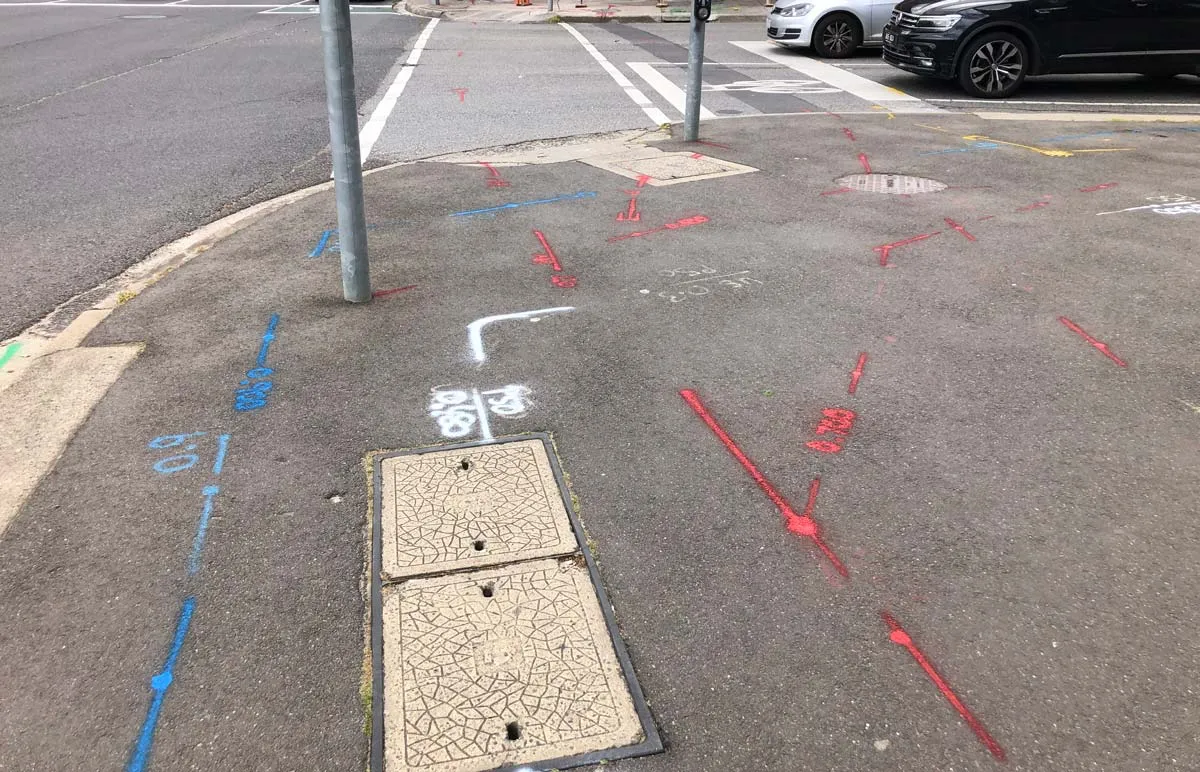

Underground cable locating in Melbourne
Power and communications cables are the services most likely to hurt someone when they're hit, and they're often packed side by side under the same footpath. We trace each one and mark it so your crew can work around it.
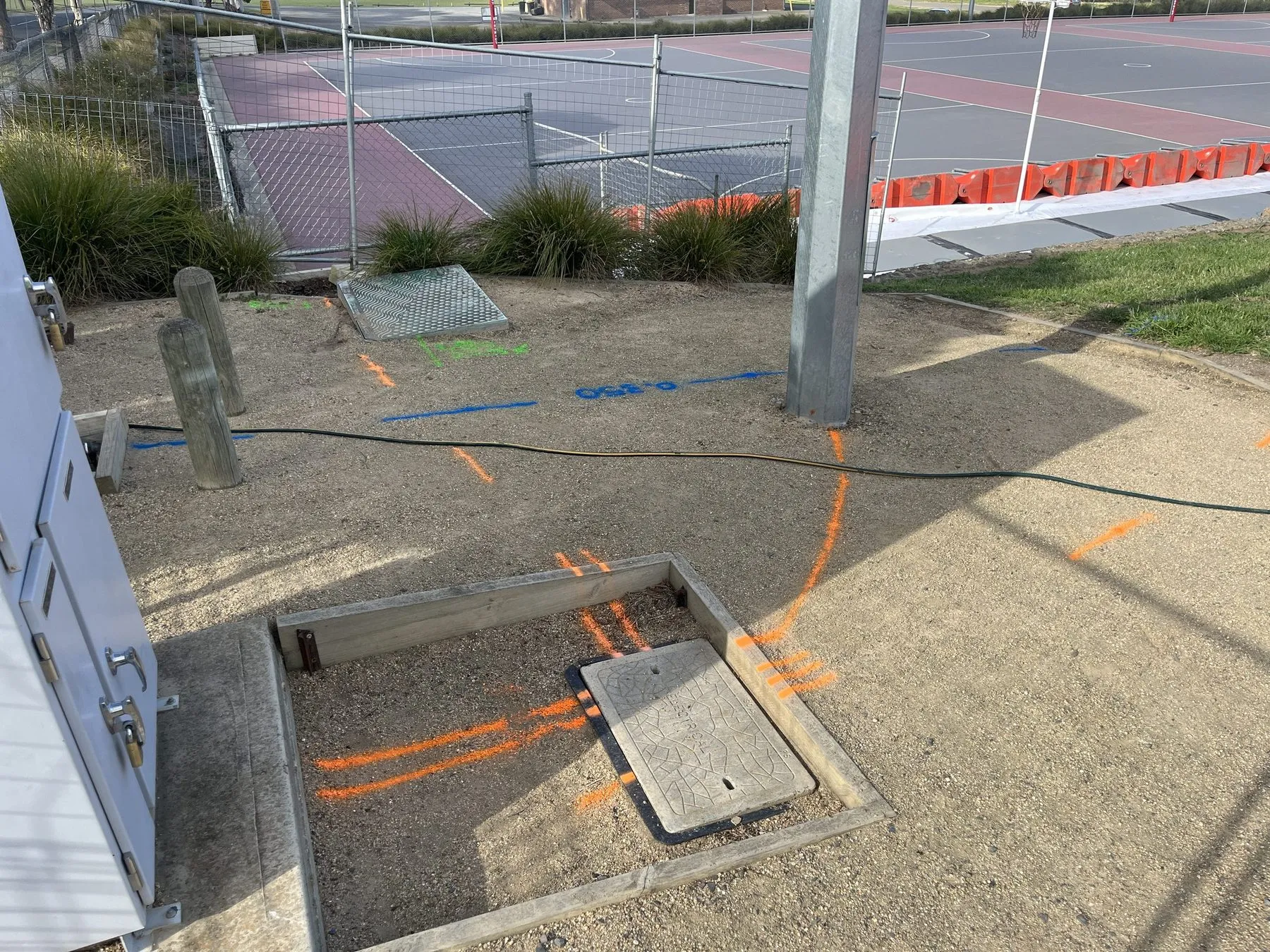
Aus-Scan provides cable locating services across metropolitan Melbourne. We trace electrical and communications cables with a Radiodetection RD8200, using direct connection, a signal clamp or induction depending on access, and mark each cable on the ground in the AS 5488 colours with its estimated depth.
Why it matters
- Mains power, street lighting, traffic signals and several telcos' cables can all run under the same footpath or nature strip
- Before You Dig Australia (BYDA) plans show cables in an indicative position only, and telecommunications plans don't record depth
- Consumer mains, power to sheds and outbuildings, and data cabling between buildings sit on the private side and usually aren't on any plan
- Optical fibre with no metal in it can't be traced electromagnetically, so it has to be found another way
- A cable that looks abandoned can still be live, and you can't tell from the surface
Done properly, start to finish.
Direct connection
Where there's a safe connection point, such as an exposed sheath, an earth or a tracer wire, we connect the RD8200 transmitter to it. A signal on that one service is the clearest way to separate it from the cables around it.
Signal clamp
Where a cable can be reached in a pit or at a pole or pillar but not connected to, we put a clamp around it. The clamp induces a signal onto that cable without touching the conductors.
Induction and passive sweeps
With no access at all, the transmitter sits on the ground and induces a signal into cables beneath it. The receiver also picks up the signal many live power cables already carry, which is how we sweep for cables nobody knew were there.
Marked in colour and treated as live
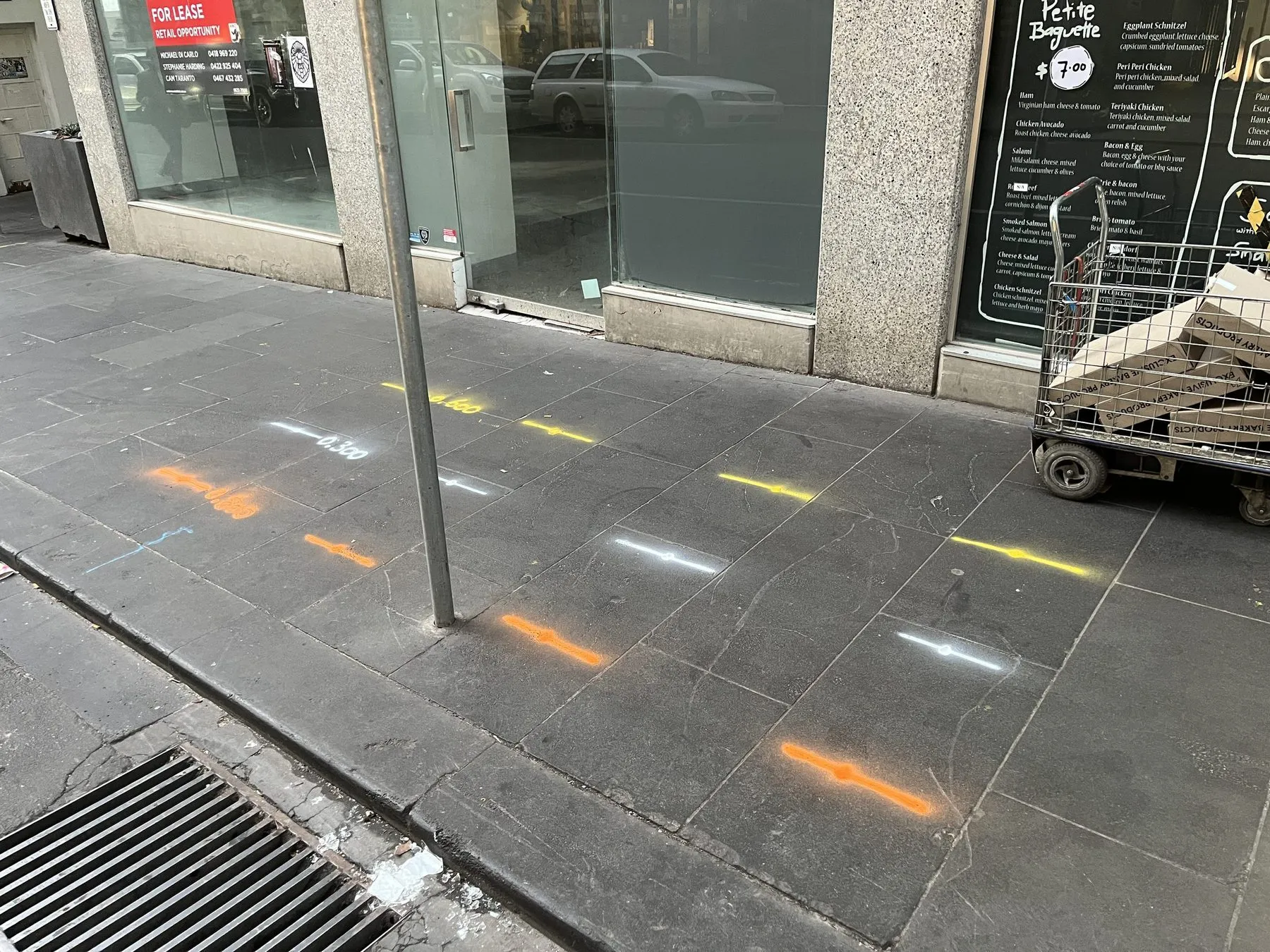
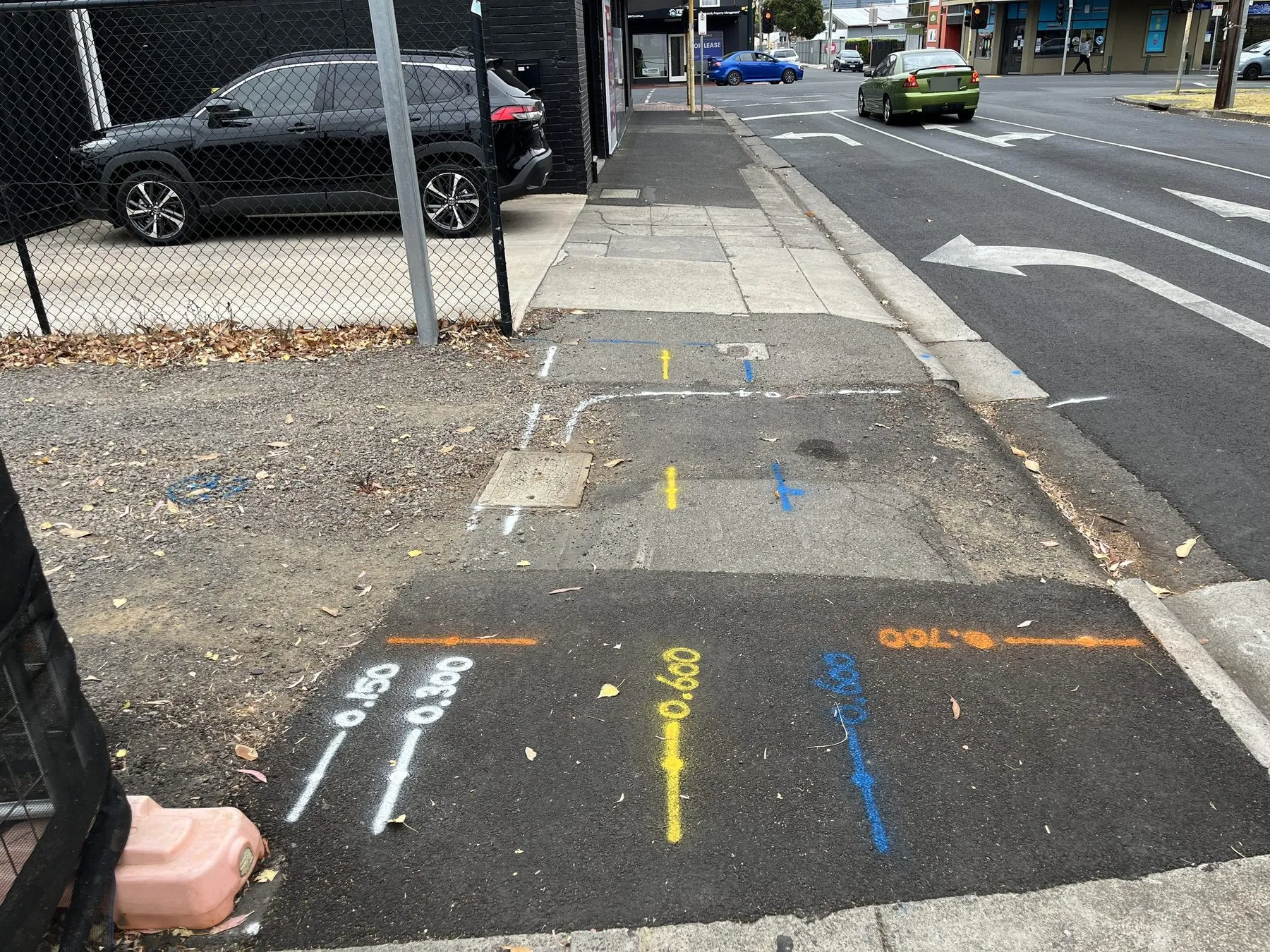
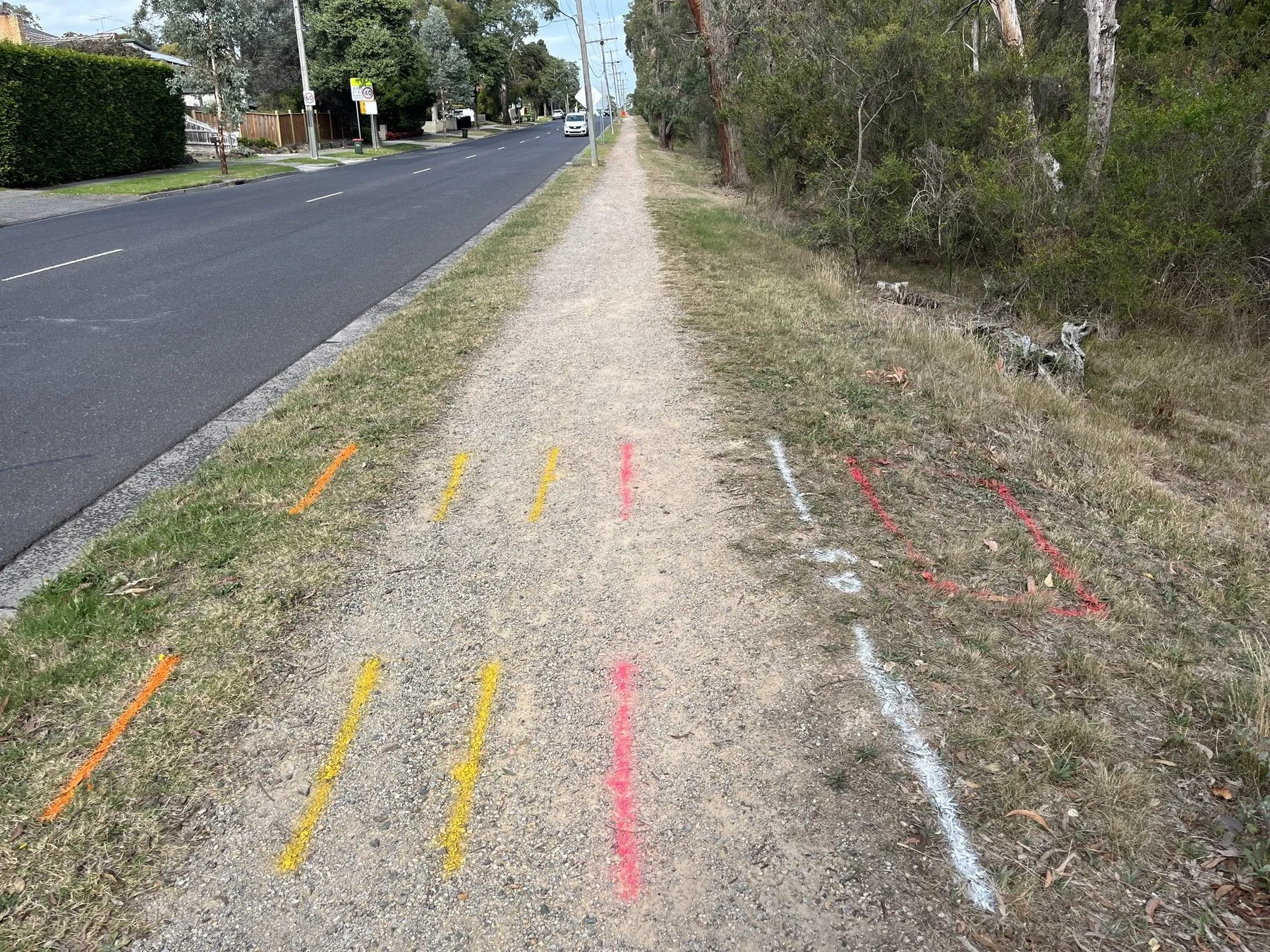
Electrical cables are marked in orange and communications in white, with estimated depths beside them. Anything we can't identify is marked pink, and every cable is treated as live until its owner confirms otherwise.
Ready to book? Talk to us about your site.
Call 0423 229 332What we'll use.
More on what we find.
Common questions.
How accurate is service locating?
An electromagnetic locator gives a service's position and an estimated depth. Accuracy depends on the ground, the type of service and what else is nearby, which is why our reports state a quality level for every service we record. If a service needs to be confirmed exactly, it can be exposed by non-destructive digging.
Do I need a locator if I already have BYDA plans?
Usually, yes. Before You Dig Australia (BYDA) plans show roughly where each asset owner thinks their services run, and they mostly stop at your property boundary. A locator finds where the services actually are on the day, including private services such as power to a shed or a water line to a tank, which don't typically appear on BYDA plans.
Can you find plastic pipes?
Often, yes. A cable locator can't trace plastic pipes unless they have a tracer wire, but ground penetrating radar can detect them in suitable ground. That's why we use both methods together.
How long does a locate take?
A typical residential locate takes one to two hours on site. Larger commercial or civil sites can take a day or more. We'll give you an idea of timing when you call.
What do the paint colours mean?
We mark services in the standard Australian colours from AS 5488: orange for electricity, yellow for gas, blue for water, green for storm water, brown for sewer, red for fire services, purple for recycled water, white for communications, and pink for a service we've found but can't identify. Depths are written beside the marks.
Is underground scanning the same as service locating?
Mostly, yes. Service locating, underground locating, utility scanning and tracing pipes and cables all describe finding what's buried before you dig. In practice we use two tools together: an electromagnetic locator to trace conductive cables and pipes, and ground penetrating radar to scan for plastic pipes, voids and other things a locator can't follow.