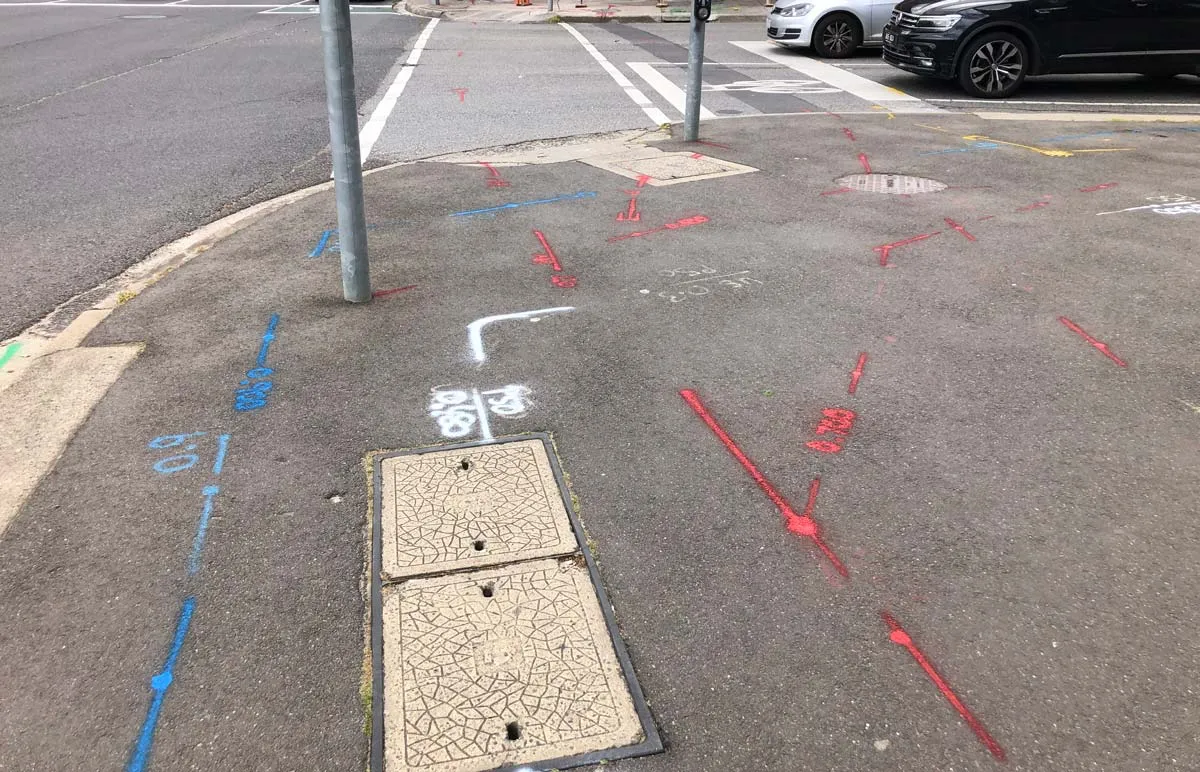

Pipe locating across Melbourne
Pipes don't all behave the same way underground. A copper water service, a PE gas line and a clay sewer each need a different approach, so we choose the method to suit the pipe.
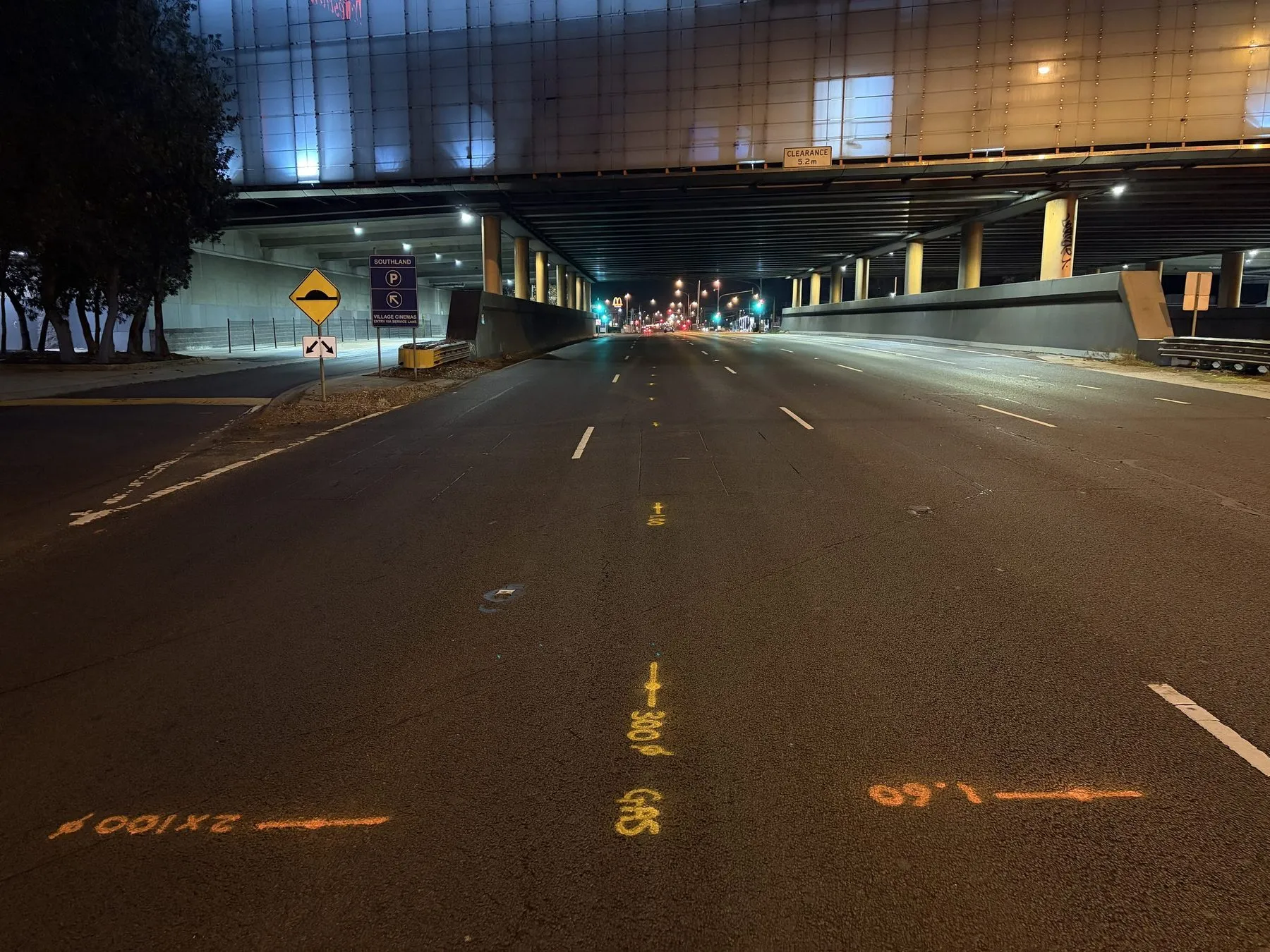
Aus-Scan provides a pipe locator service across metropolitan Melbourne. We trace metal pipes with a Radiodetection RD8200, scan for plastic and other non-conductive pipes with a GSSI GPR, mark each pipe on the ground in its AS 5488 colour, and record its depth and material wherever they can be determined.
Why it matters
- Water, gas, sewer and stormwater pipes can share the same strip of ground, at different depths and in different materials
- Metal pipes carry a signal a locator can follow, but PVC, PE, clay and asbestos cement pipes don't unless a tracer wire was laid with them
- Before You Dig Australia (BYDA) plans give an indicative position for mains and usually no depth, and private pipes inside the boundary often aren't shown
- Sewer and stormwater branches to each property are often drawn roughly or not at all, and older lines may have been rerouted or abandoned
- A cracked sewer or a damaged gas line costs far more to fix than it costs to find first
Done properly, start to finish.
Metal pipes traced with EM
Copper and steel water services, cast iron mains and metal gas pipes can be traced with our RD8200, either by connecting to an exposed fitting or by inducing a signal from the surface. We follow the pipe and estimate its depth as we go.
Plastic pipes found with GPR
PE water and gas, PVC sewer and stormwater, and asbestos cement pipes carry no signal. Our GSSI GPR picks them up as reflections in the ground, and works best in drier, sandier soils.
Where a pipe can be accessed
If there's a pit, cleanout or open end, a small transmitter can sometimes be passed inside the pipe so we can follow it from above. We'll tell you on the day whether that's an option for your line.
Depth and material on record
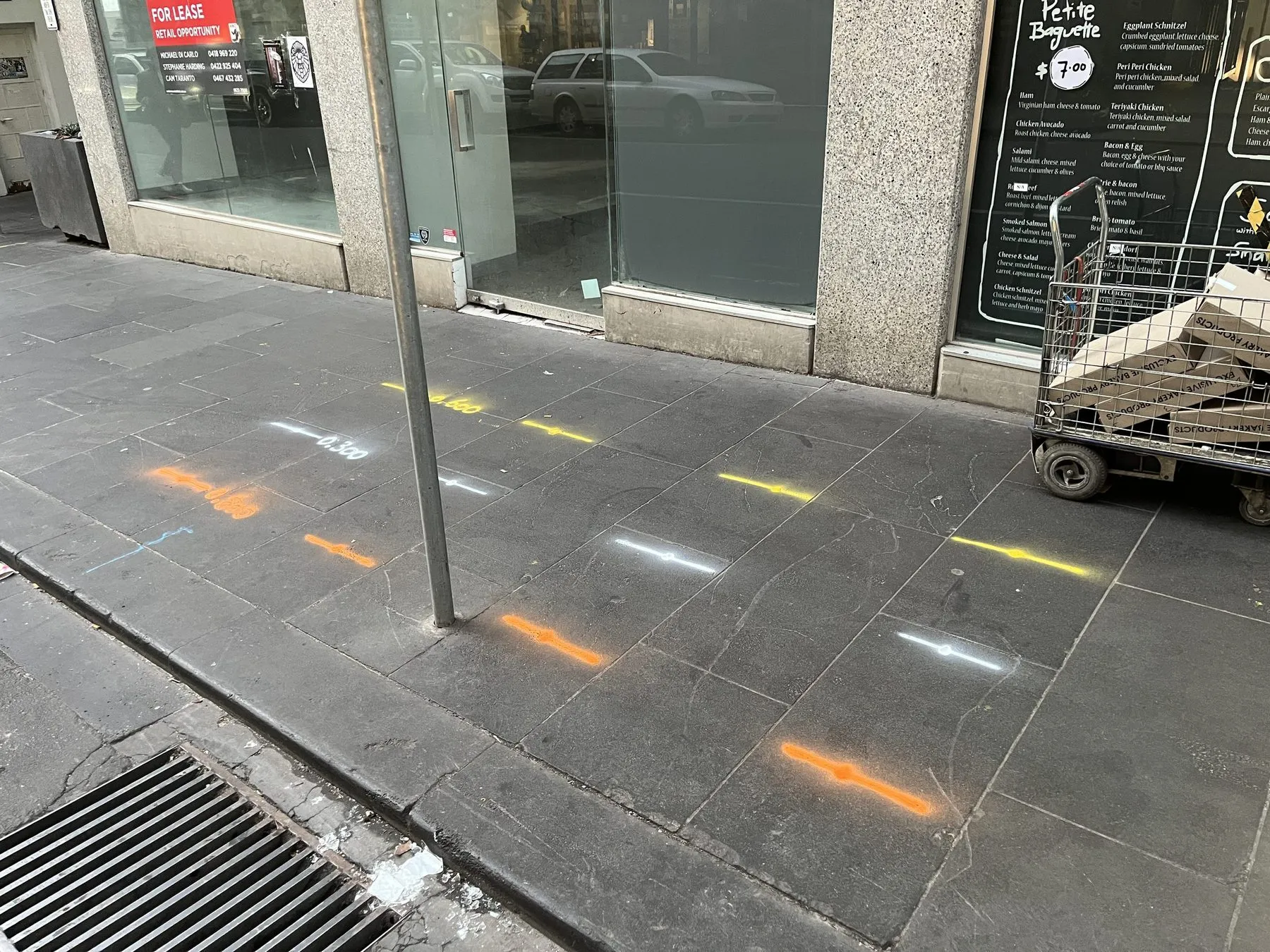
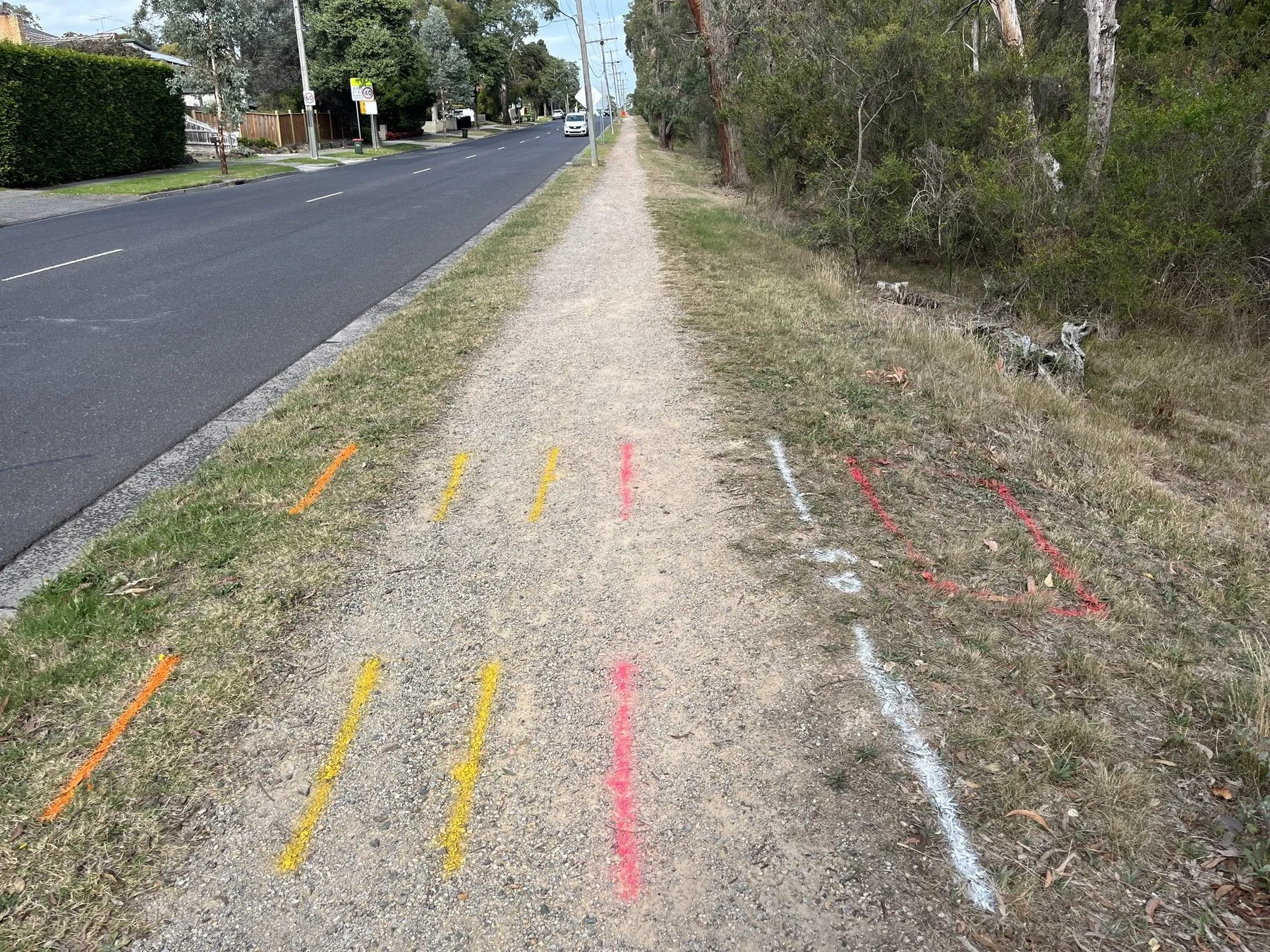
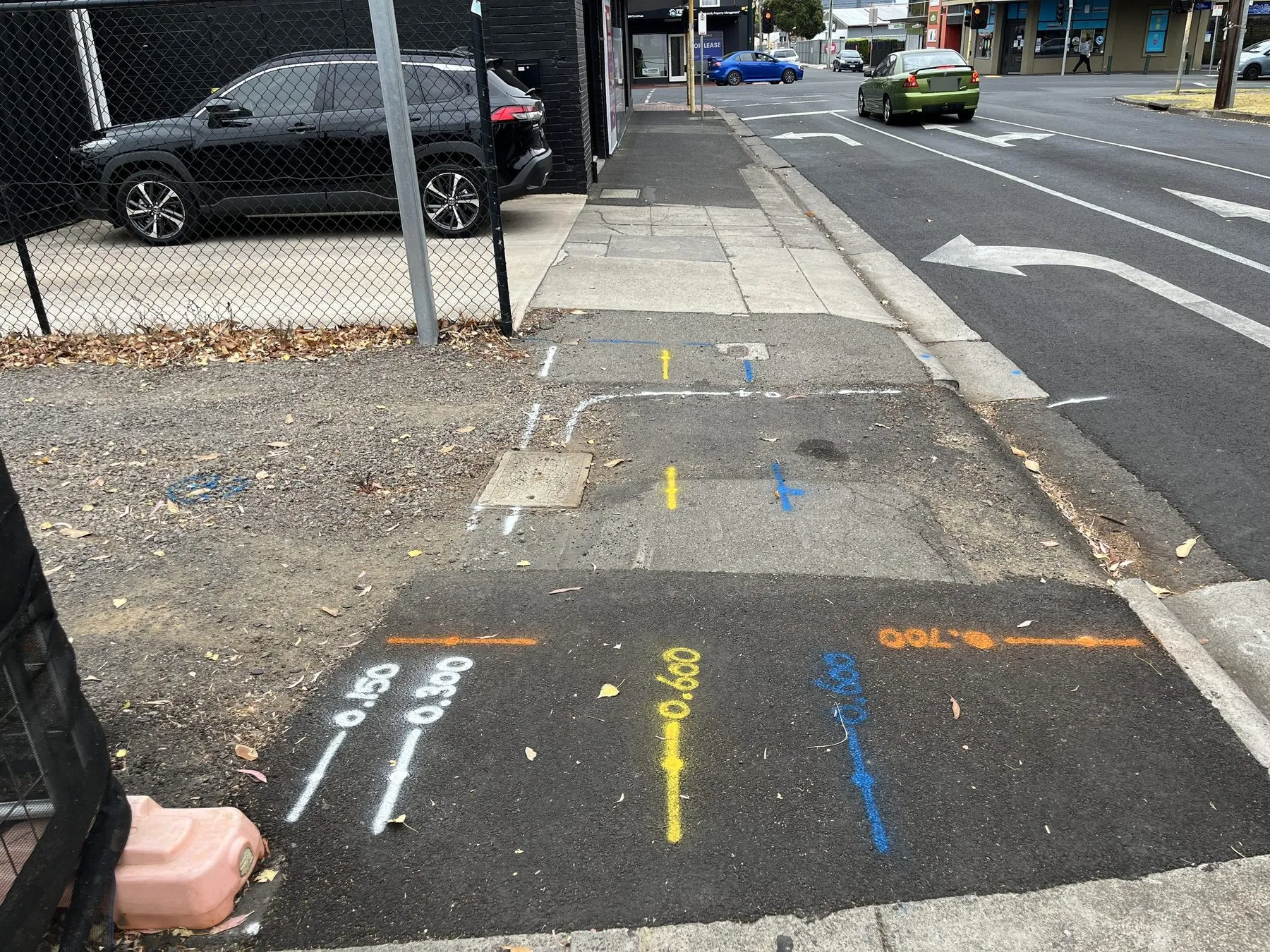
Each pipe is marked in its colour: blue for water, yellow for gas, brown for sewer, green for stormwater. Where we can determine depth, material or diameter we paint it beside the line and record it in your report.
Ready to book? Talk to us about your site.
Call 0423 229 332What we'll use.
More on what we find.
Common questions.
How accurate is service locating?
An electromagnetic locator gives a service's position and an estimated depth. Accuracy depends on the ground, the type of service and what else is nearby, which is why our reports state a quality level for every service we record. If a service needs to be confirmed exactly, it can be exposed by non-destructive digging.
Do I need a locator if I already have BYDA plans?
Usually, yes. Before You Dig Australia (BYDA) plans show roughly where each asset owner thinks their services run, and they mostly stop at your property boundary. A locator finds where the services actually are on the day, including private services such as power to a shed or a water line to a tank, which don't typically appear on BYDA plans.
Can you find plastic pipes?
Often, yes. A cable locator can't trace plastic pipes unless they have a tracer wire, but ground penetrating radar can detect them in suitable ground. That's why we use both methods together.
How long does a locate take?
A typical residential locate takes one to two hours on site. Larger commercial or civil sites can take a day or more. We'll give you an idea of timing when you call.
What do the paint colours mean?
We mark services in the standard Australian colours from AS 5488: orange for electricity, yellow for gas, blue for water, green for storm water, brown for sewer, red for fire services, purple for recycled water, white for communications, and pink for a service we've found but can't identify. Depths are written beside the marks.
Is underground scanning the same as service locating?
Mostly, yes. Service locating, underground locating, utility scanning and tracing pipes and cables all describe finding what's buried before you dig. In practice we use two tools together: an electromagnetic locator to trace conductive cables and pipes, and ground penetrating radar to scan for plastic pipes, voids and other things a locator can't follow.