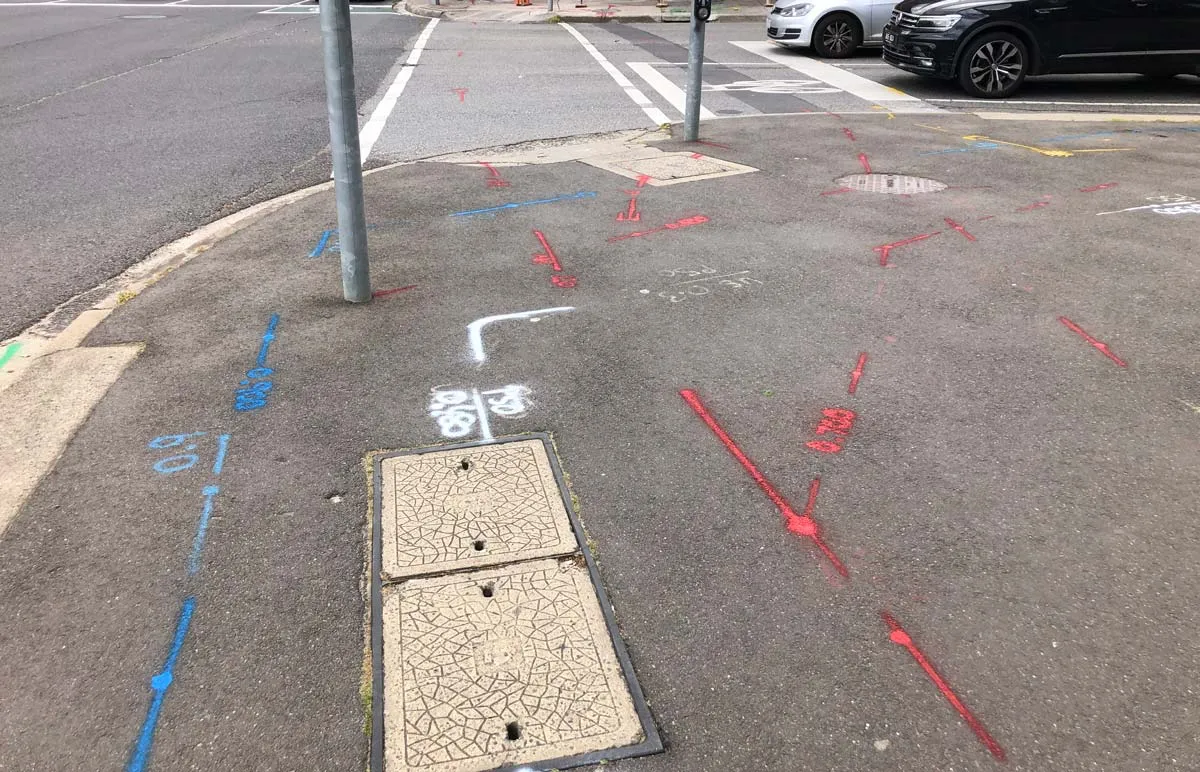

Underground scanning services before you dig
Scanning the ground before you dig isn't one tool. We pair an electromagnetic locator for cables and metal pipes with ground penetrating radar for everything that carries no signal, then mark it all out on site.
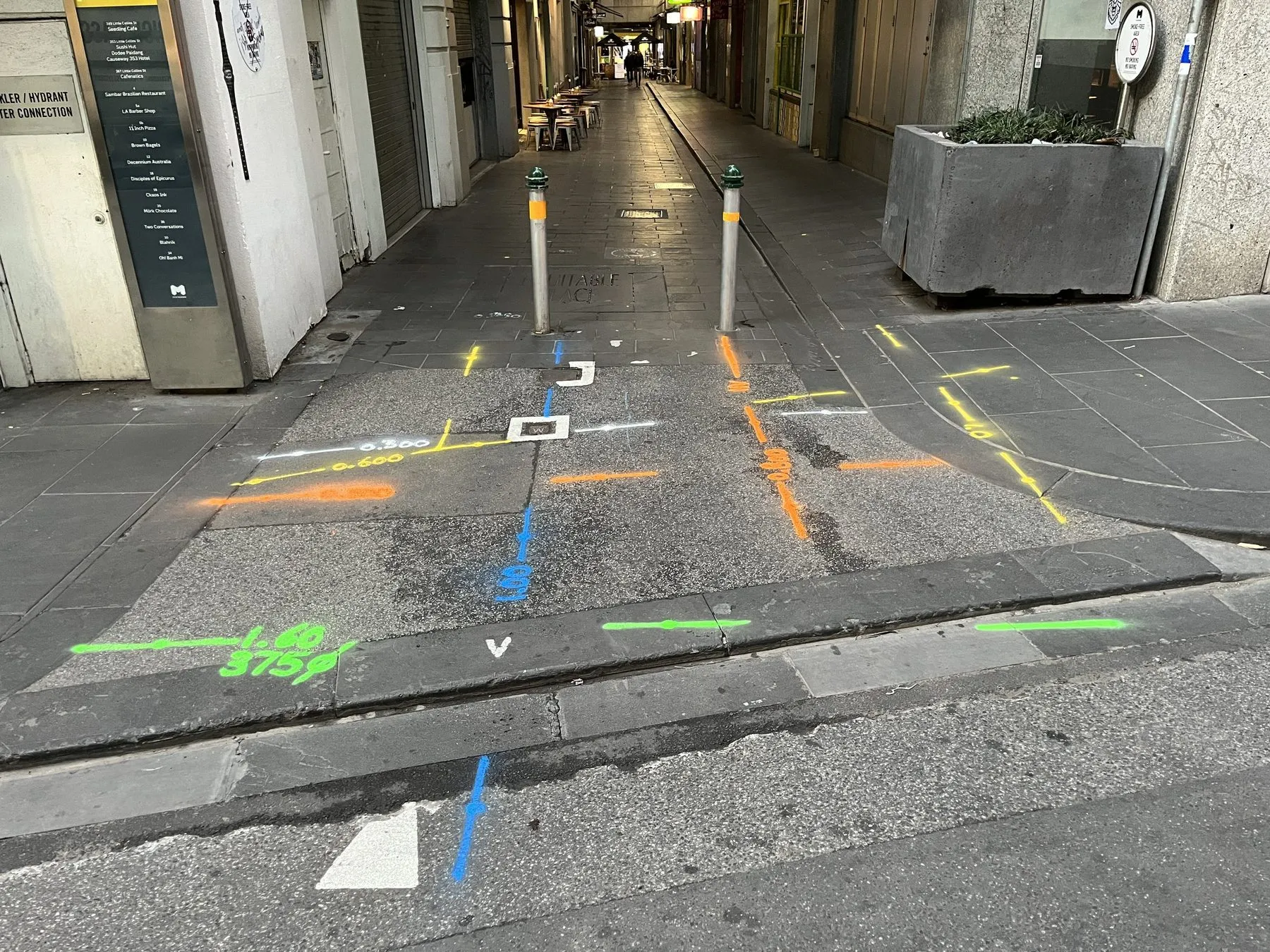
Aus-Scan provides underground scanning services across Melbourne, Geelong and Victoria. We scan with a Radiodetection RD8200 electromagnetic (EM) locator for conductive cables and pipes and a GSSI ground penetrating radar (GPR) for plastic pipes, voids, footings and tanks, mark every service on site in the AS 5488 colours and supply a report.
Why it matters
- Service scanning, ground scanning and underground scanning get used for different things, and a scan done with only one tool can miss a whole class of service
- An EM locator traces conductive cables and metal pipes, but walks straight past PVC, PE and asbestos cement pipes that have no tracer wire
- Radar on its own struggles in wet clay and on cluttered ground, so it shouldn't be the only check either
- Before You Dig Australia (BYDA) plans show roughly where the asset owners' networks run, not the private services inside the boundary
- Once the excavator, auger or concrete saw is on site, it's too late to find out what's under it
Done properly, start to finish.
EM scanning for conductive services
Our Radiodetection RD8200 traces power and comms cables and metal water and gas pipes. We follow each one across the site and estimate its depth as we go.
GPR for everything without a signal
Our GSSI GPR scans for what EM can't trace: plastic and asbestos cement pipes, voids and soft spots, old footings and slabs, and underground tanks.
Marked out where you'll work
Every service we find is sprayed on the ground in the AS 5488 colours, with depths where we can measure them, across the area your crew will dig, bore or cut.
Reported for the job file
You get a photo report or a detailed service plan showing what we found and anything we couldn't confirm, so the result outlasts the paint.
Where scanning fits before excavation
Scan once the BYDA plans are in and before any cutting, boring or digging starts. Where an exact position or depth matters, our marks then guide a potholing or non-destructive digging contractor to expose the service before machine work.
Ready to book? Talk to us about your site.
Call 0423 229 332What we'll use.
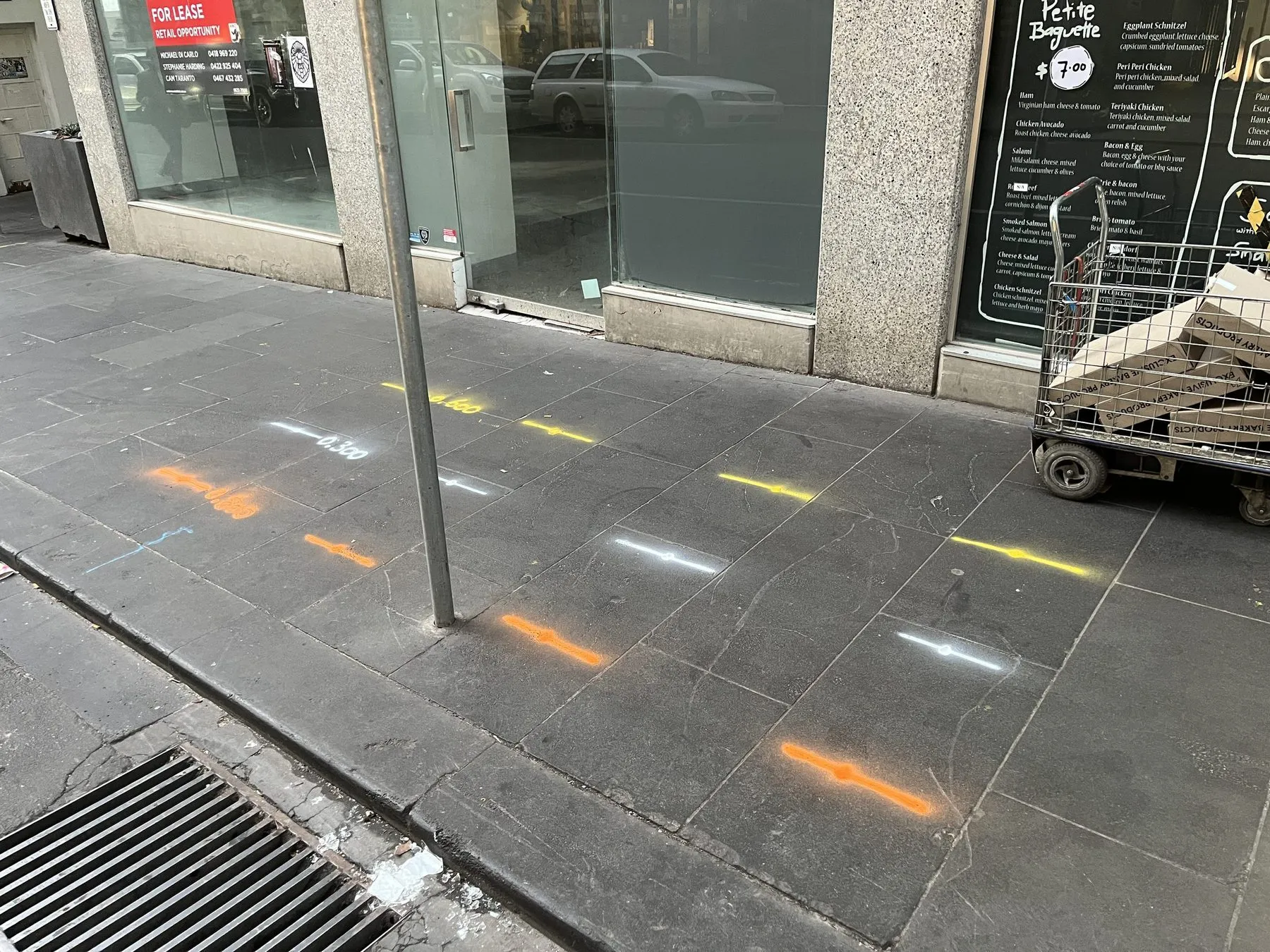
Service Locating
Trace live cables and pipes for position, depth and type.
Service Locating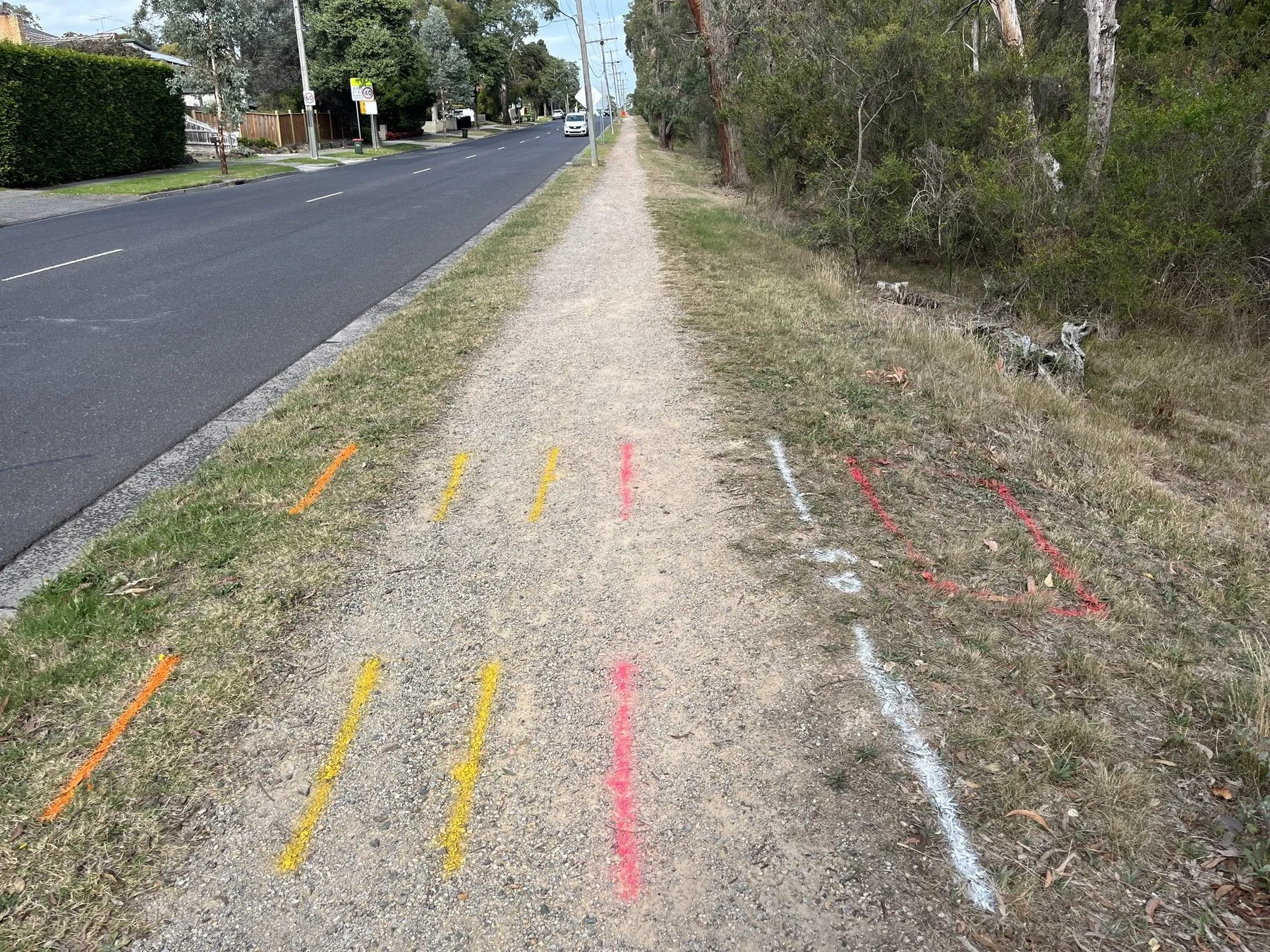
GPR Scanning
Find what EM can't: plastic pipes, footings, voids and wet ground.
GPR Scanning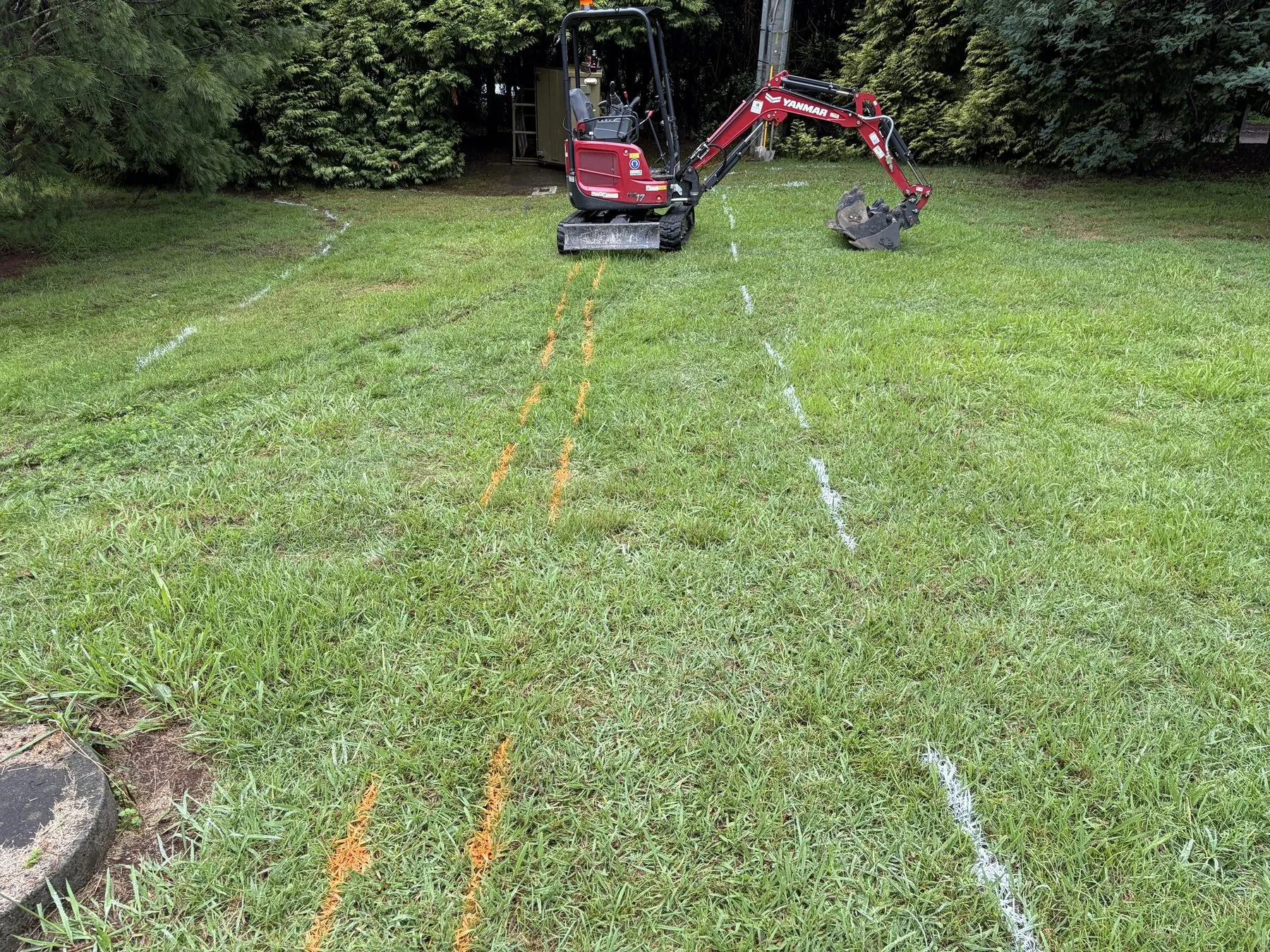
Crane Scans & Void Detection
Check outrigger pads for voids and soft ground before the lift.
Crane Scans & Void Detection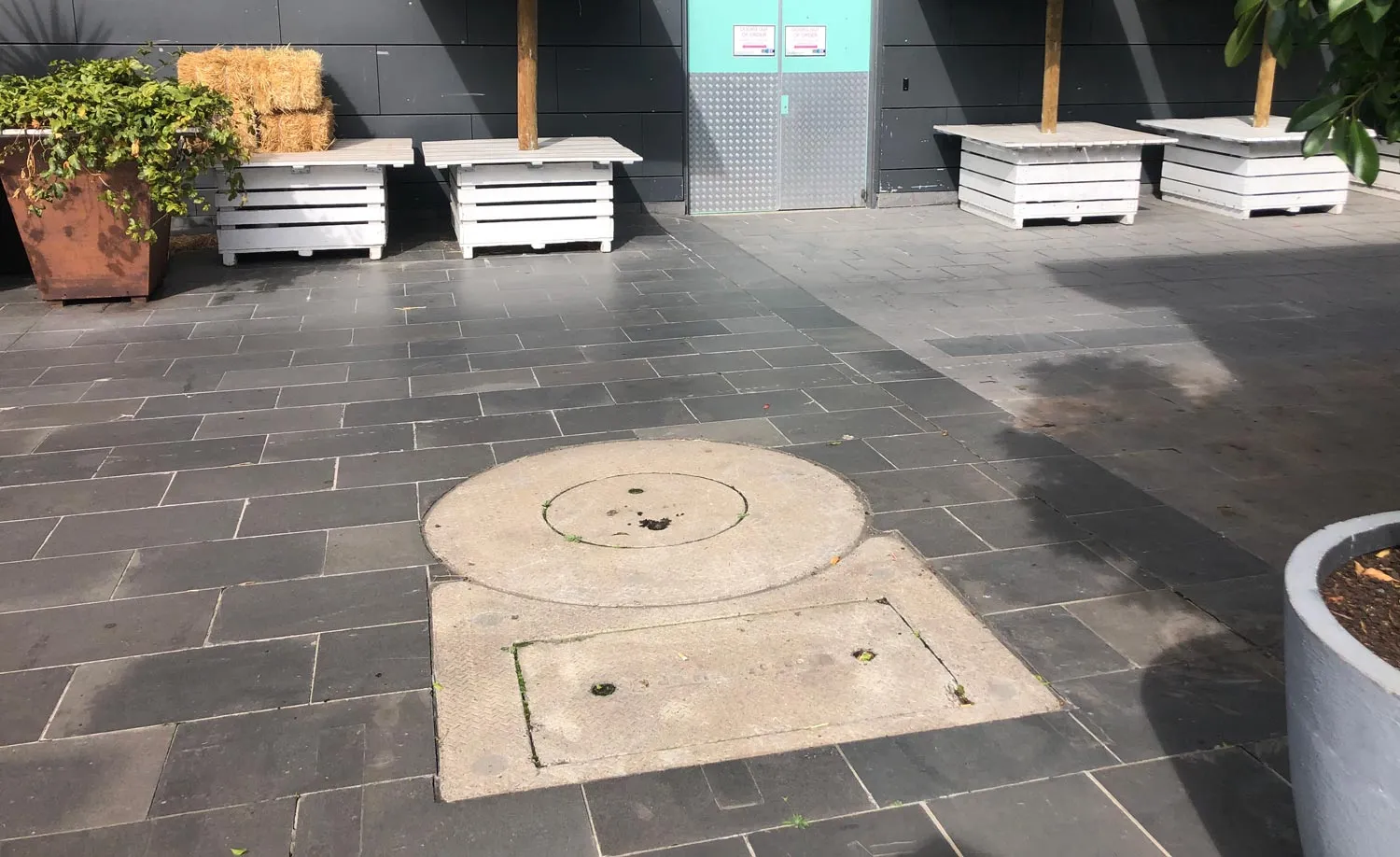
Underground Tank Detection
Find the position, depth and extent of old fuel and oil tanks.
Underground Tank Detection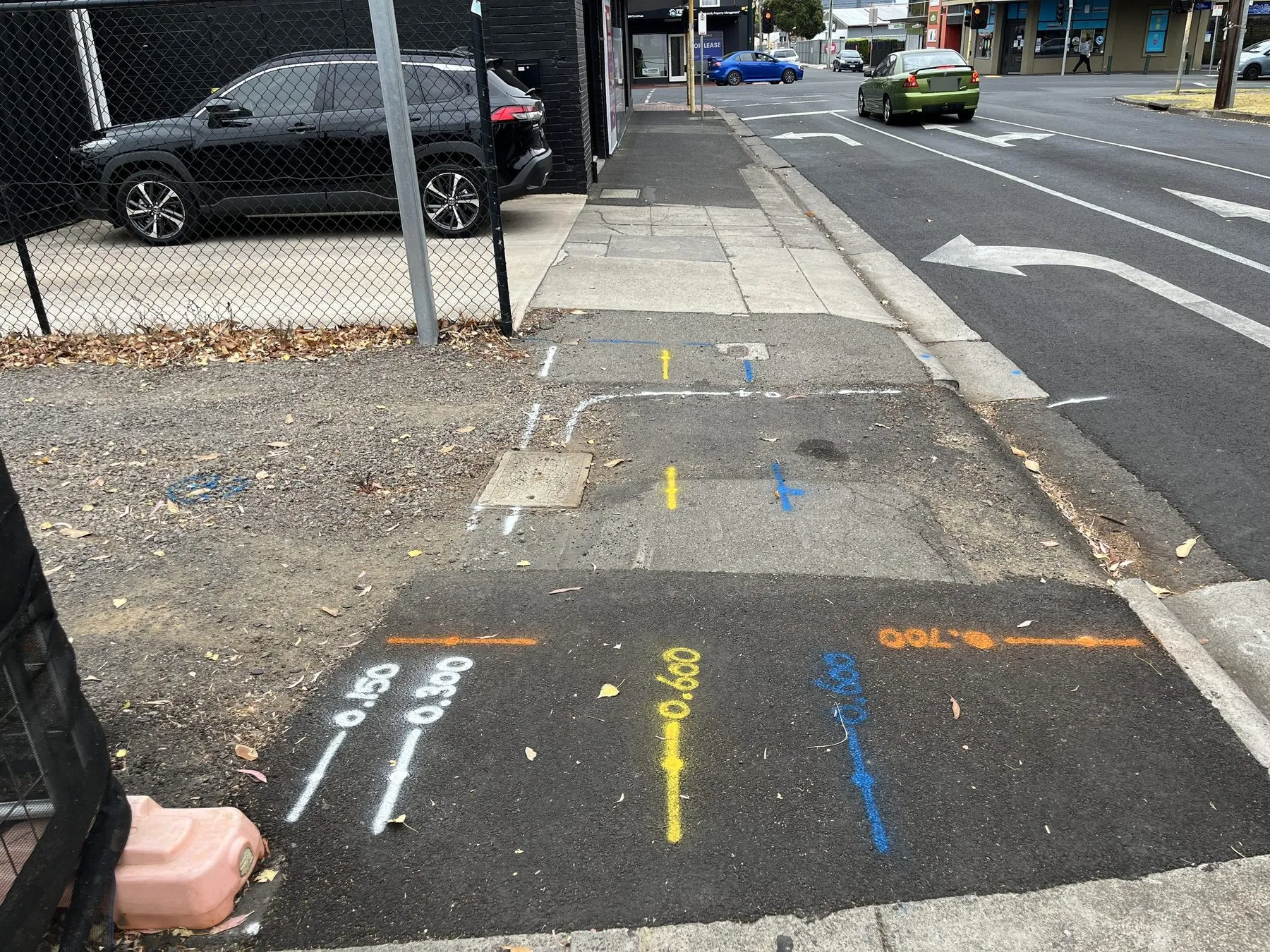
Plans & Reports
A photo report on every job, or a detailed plan with quality levels.
Plans & ReportsMore on what we find.
Common questions.
How accurate is service locating?
An electromagnetic locator gives a service's position and an estimated depth. Accuracy depends on the ground, the type of service and what else is nearby, which is why our reports state a quality level for every service we record. If a service needs to be confirmed exactly, it can be exposed by non-destructive digging.
Do I need a locator if I already have BYDA plans?
Usually, yes. Before You Dig Australia (BYDA) plans show roughly where each asset owner thinks their services run, and they mostly stop at your property boundary. A locator finds where the services actually are on the day, including private services such as power to a shed or a water line to a tank, which don't typically appear on BYDA plans.
Can you find plastic pipes?
Often, yes. A cable locator can't trace plastic pipes unless they have a tracer wire, but ground penetrating radar can detect them in suitable ground. That's why we use both methods together.
How long does a locate take?
A typical residential locate takes one to two hours on site. Larger commercial or civil sites can take a day or more. We'll give you an idea of timing when you call.
What do the paint colours mean?
We mark services in the standard Australian colours from AS 5488: orange for electricity, yellow for gas, blue for water, green for storm water, brown for sewer, red for fire services, purple for recycled water, white for communications, and pink for a service we've found but can't identify. Depths are written beside the marks.
Is underground scanning the same as service locating?
Mostly, yes. Service locating, underground locating, utility scanning and tracing pipes and cables all describe finding what's buried before you dig. In practice we use two tools together: an electromagnetic locator to trace conductive cables and pipes, and ground penetrating radar to scan for plastic pipes, voids and other things a locator can't follow.