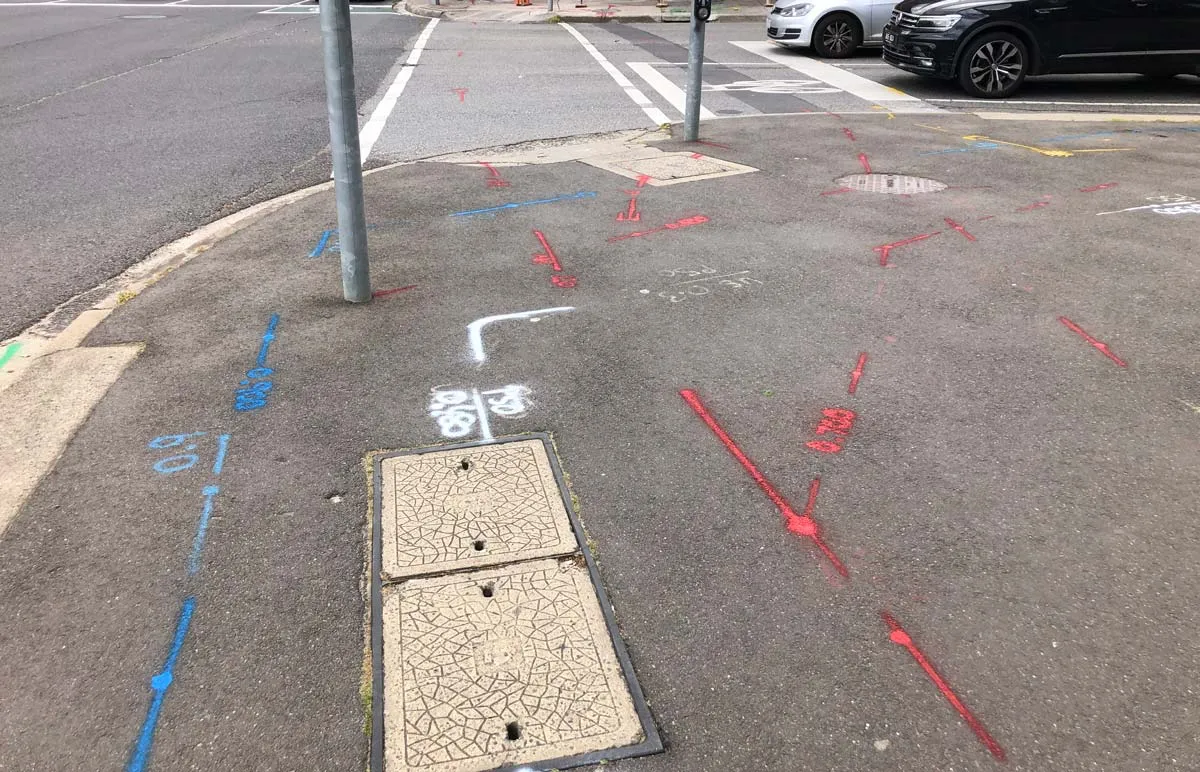

GPR scanning on tight Melbourne sites
Footpaths, laneways and old inner-city lots carry layers of services, and plenty of them are plastic or asbestos cement. We use ground penetrating radar to find what a cable locator walks straight past.
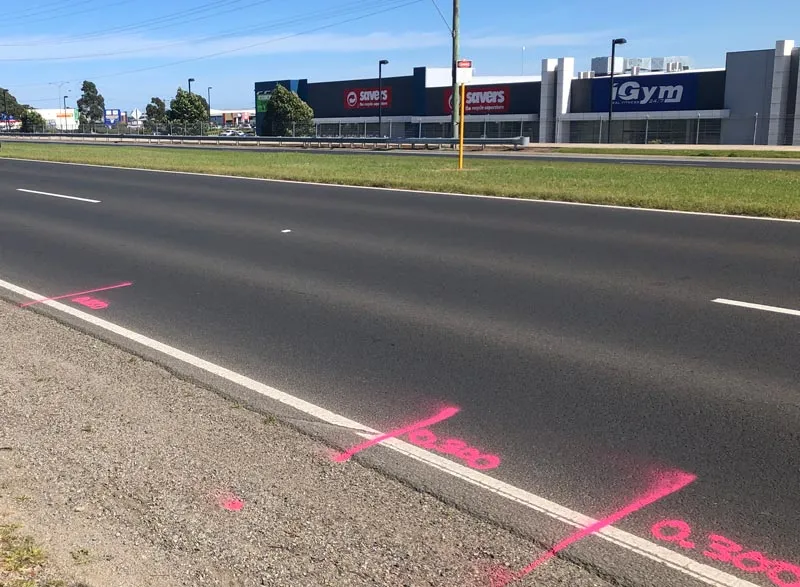
Aus-Scan provides GPR scanning across metro Melbourne for builders and engineers. We use a GSSI GPR alongside a Radiodetection RD8200 to find non-conductive pipes, footings and voids, mark them out on site and supply a report.
Why it matters
- Melbourne footpaths and laneways are crowded with services, and Before You Dig Australia (BYDA) plans only show roughly where they run
- Plastic water and gas lines, PVC conduits and asbestos cement pipes carry no signal unless they have a tracer wire
- Old footings, basements and filled excavations sit under many inner-city lots and only turn up when the excavator hits them
- Tight access leaves little room to move a dig if something unexpected is found
- Crane pads and hoardings on building sites go down over ground no one has checked for voids
Done properly, start to finish.
Radar for non-conductive services
Our GSSI GPR picks up PVC, PE and asbestos cement pipes, footings and voids. We run it alongside the RD8200 so conductive cables and pipes are traced as well.
Built for small footprints
We scan footpaths, laneways, driveways and narrow lots where the work zone is tight, and mark every service in the AS 5488 colours right where your crew will dig.
Building and crane sites
On building sites we scan the excavation area and check crane and outrigger pad positions for voids and soft ground, then record it all in a photo report or plan.
Ready to book? Talk to us about your site.
Call 0423 229 332What we'll use.
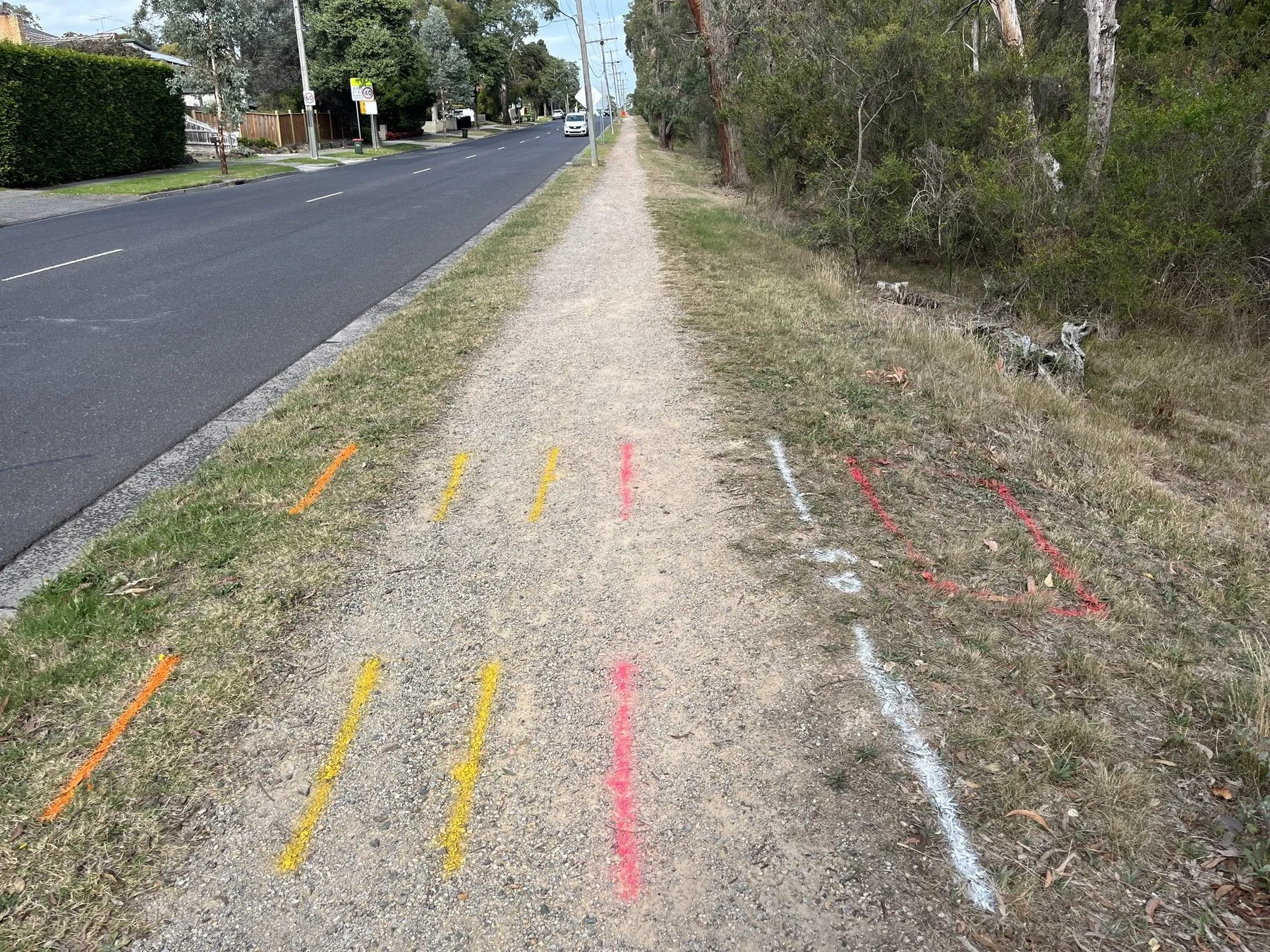
GPR Scanning
Find what EM can't: plastic pipes, footings, voids and wet ground.
GPR Scanning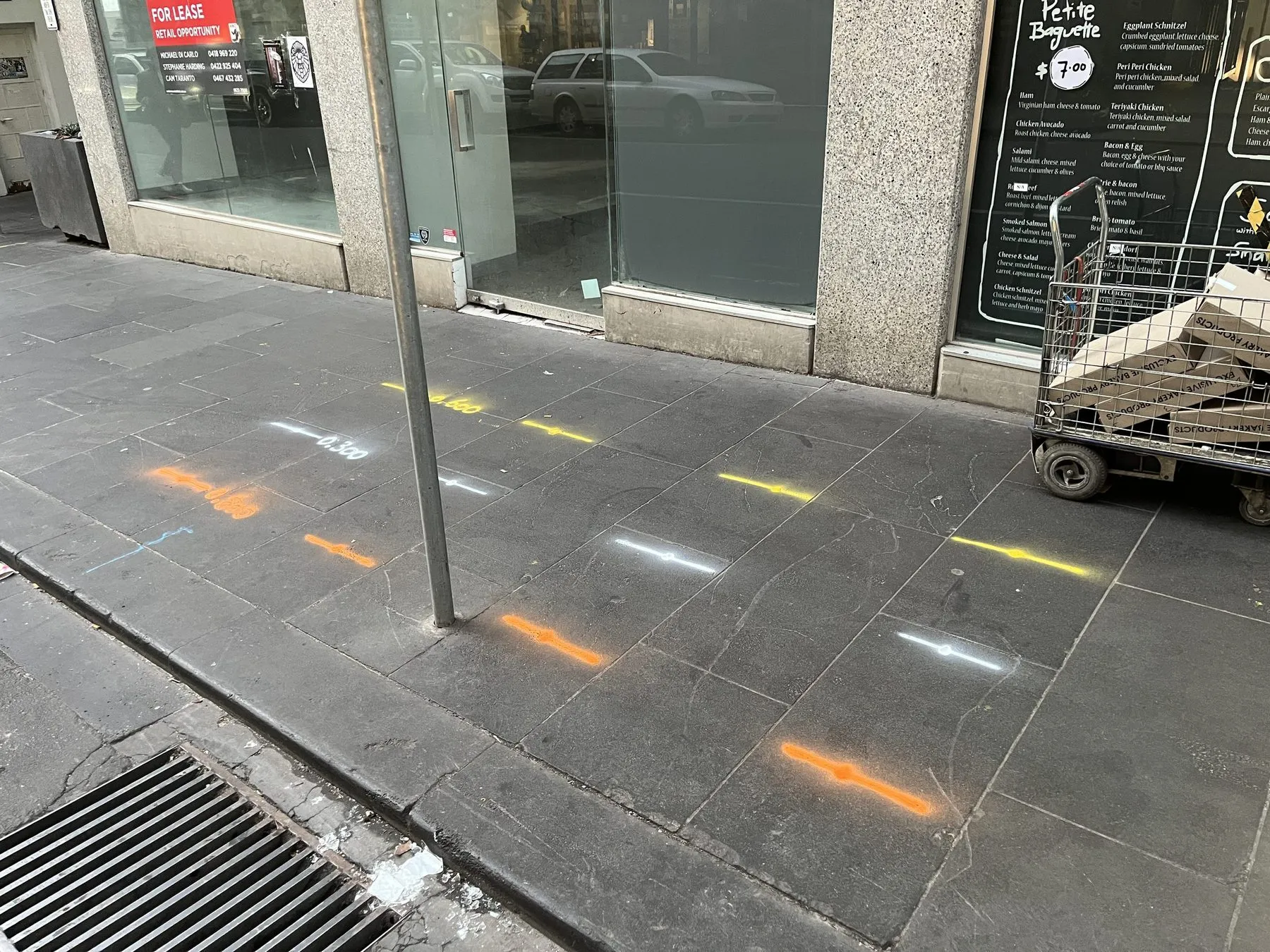
Service Locating
Trace live cables and pipes for position, depth and type.
Service Locating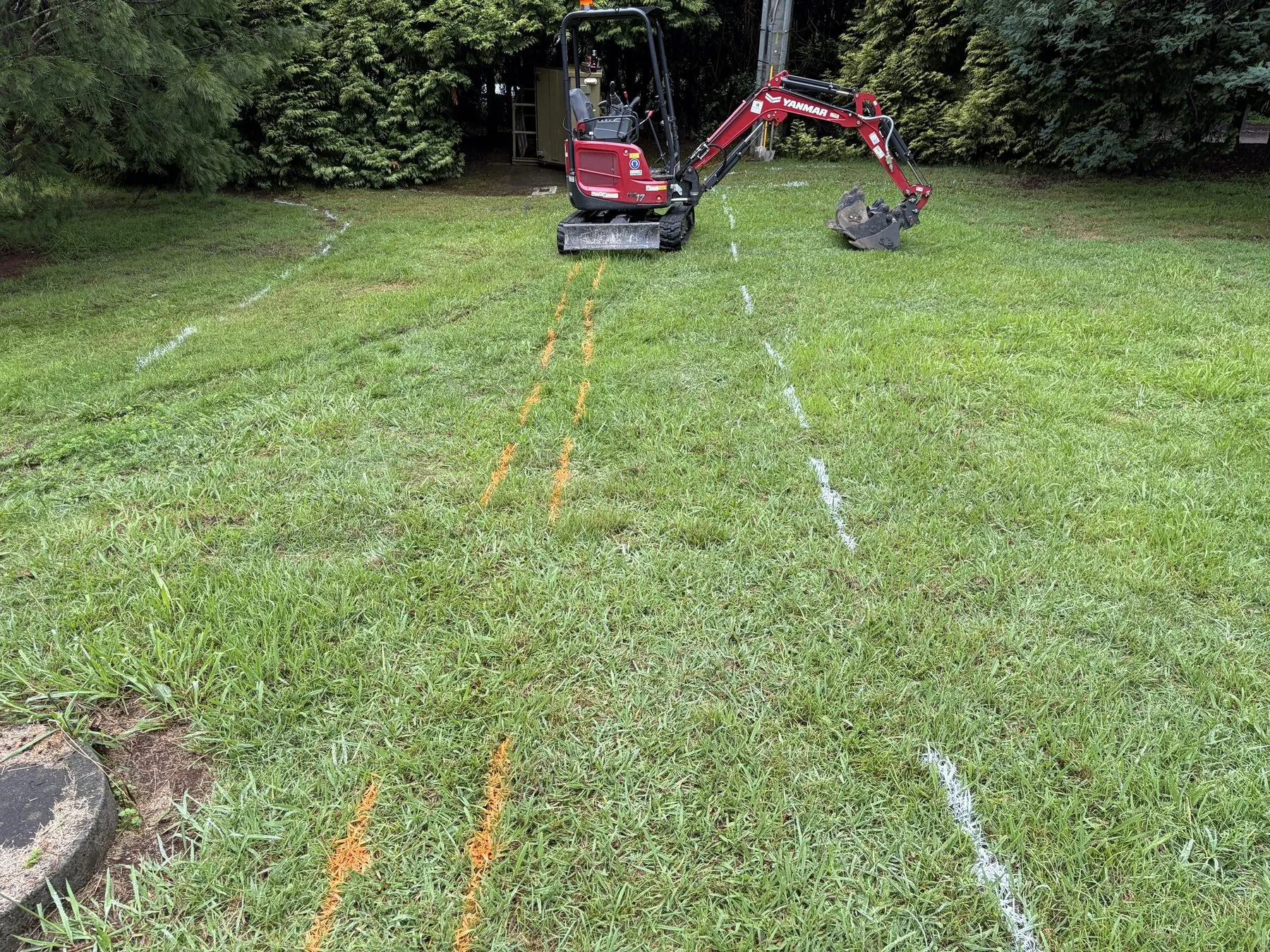
Crane Scans & Void Detection
Check outrigger pads for voids and soft ground before the lift.
Crane Scans & Void Detection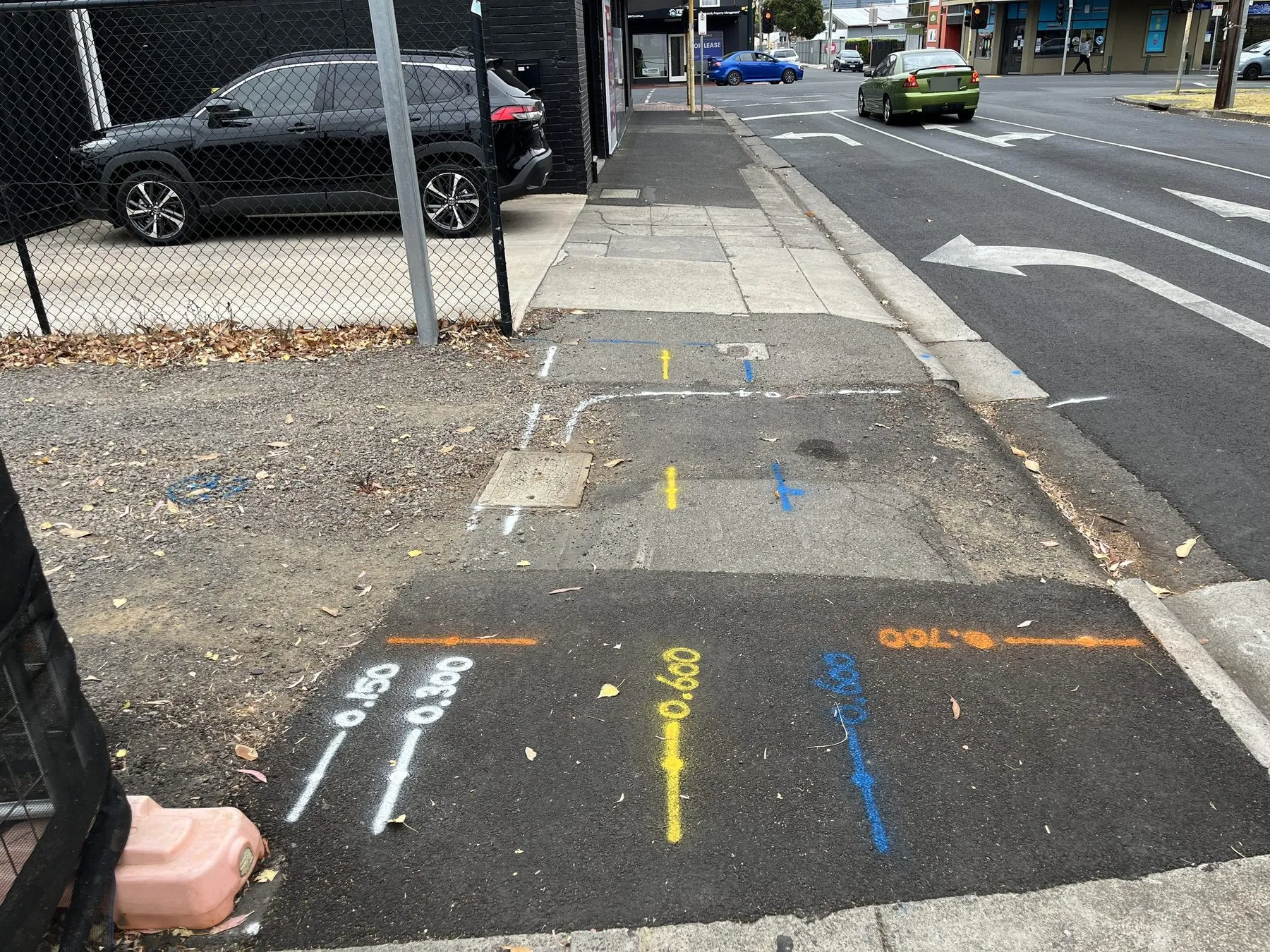
Plans & Reports
A photo report on every job, or a detailed plan with quality levels.
Plans & ReportsCommon questions.
How deep can GPR see?
It depends on the ground. In dry, sandy soil GPR can see a few metres down. In wet ground or heavy clay the signal is absorbed much faster and the useful depth drops a long way. We'll tell you upfront if your site's conditions are likely to limit it.
Why doesn't GPR work everywhere?
Radar signals are absorbed by moisture and clay, and scattered by rubble and reinforcing. GPR isn't suited to every site, but it's an essential tool alongside electromagnetic locating.
Can you find plastic pipes?
Often, yes. A cable locator can't trace plastic pipes unless they have a tracer wire, but ground penetrating radar can detect them in suitable ground. That's why we use both methods together.
Is underground scanning the same as service locating?
Mostly, yes. Service locating, underground locating, utility scanning and tracing pipes and cables all describe finding what's buried before you dig. In practice we use two tools together: an electromagnetic locator to trace conductive cables and pipes, and ground penetrating radar to scan for plastic pipes, voids and other things a locator can't follow.
Why scan before a crane setup?
Voids, soft spots and wet ground under outrigger pads can't be seen from the surface. A GPR scan before the crane arrives checks the set-up area so the lift is safe for the crew and the public.
How accurate is service locating?
An electromagnetic locator gives a service's position and an estimated depth. Accuracy depends on the ground, the type of service and what else is nearby, which is why our reports state a quality level for every service we record. If a service needs to be confirmed exactly, it can be exposed by non-destructive digging.