
Before You Dig Australia (BYDA) is where every excavation should start. You lodge an enquiry, the asset owners in the area send back their plans, and you get a picture of what’s meant to be under the ground.
The catch is in the words “meant to be”. BYDA plans are a record of what the asset owners know, drawn the way they’ve chosen to draw it. They’re essential, but they’re not a locate. Here’s what they don’t tell you.
Plans stop at the property boundary
This is the big one. Asset owners generally only show their own network, and their responsibility usually ends at the property boundary or the meter.
Everything on the private side is the property owner’s. That includes the line from the meter to the house, power out to a shed or garage, a water line to a tank, and private stormwater and sewer drains. None of it appears on BYDA plans.
On a residential or commercial site, most of what you’re likely to hit while digging is on the private side.
Private services nobody recorded
Private services are often the least documented services on a site. They were put in by whoever owned the place at the time, sometimes by a licensed trade, sometimes not. There may never have been a drawing, and if there was, it’s rarely handed on when the property changes hands.
Common examples we find:
- Power to sheds, outbuildings, pumps, gates and garden lighting
- Irrigation lines and water to tanks or troughs
- Gas lines to barbecues, heaters or outbuildings
- Data and security cabling between buildings
- Old services that were abandoned but never removed
An abandoned service might be dead, or it might not be. You can’t tell from the surface, so it needs to be treated as live until proven otherwise.
Positions are indicative
Even for services that are on the plans, the lines show an approximate position. Most asset owners say so on the plans themselves. Read the notes and disclaimers that come with each response.
There are plenty of reasons the real position can differ. The ground surface may have changed since the service went in. Kerbs and fences move. A service may have been laid around an obstacle that’s no longer there. Records drawn decades ago may have been transferred between systems along the way.
The plans give you a starting point to search from. They don’t give you a position you can dig to.
Depth usually isn’t shown
Most BYDA plans give little or no depth information, and where depth is shown it’s often a nominal figure from when the service was installed. Since then the surface may have been built up, cut down or resurfaced.
If you’re trenching, boring or excavating, depth matters as much as position.
Not every asset owner is a member
BYDA covers the major networks, but some infrastructure belongs to owners who may not respond to an enquiry, such as private networks within large sites, older industrial estates or private roads. A “no assets affected” response only covers the owner who sent it.
Why a locate is still needed
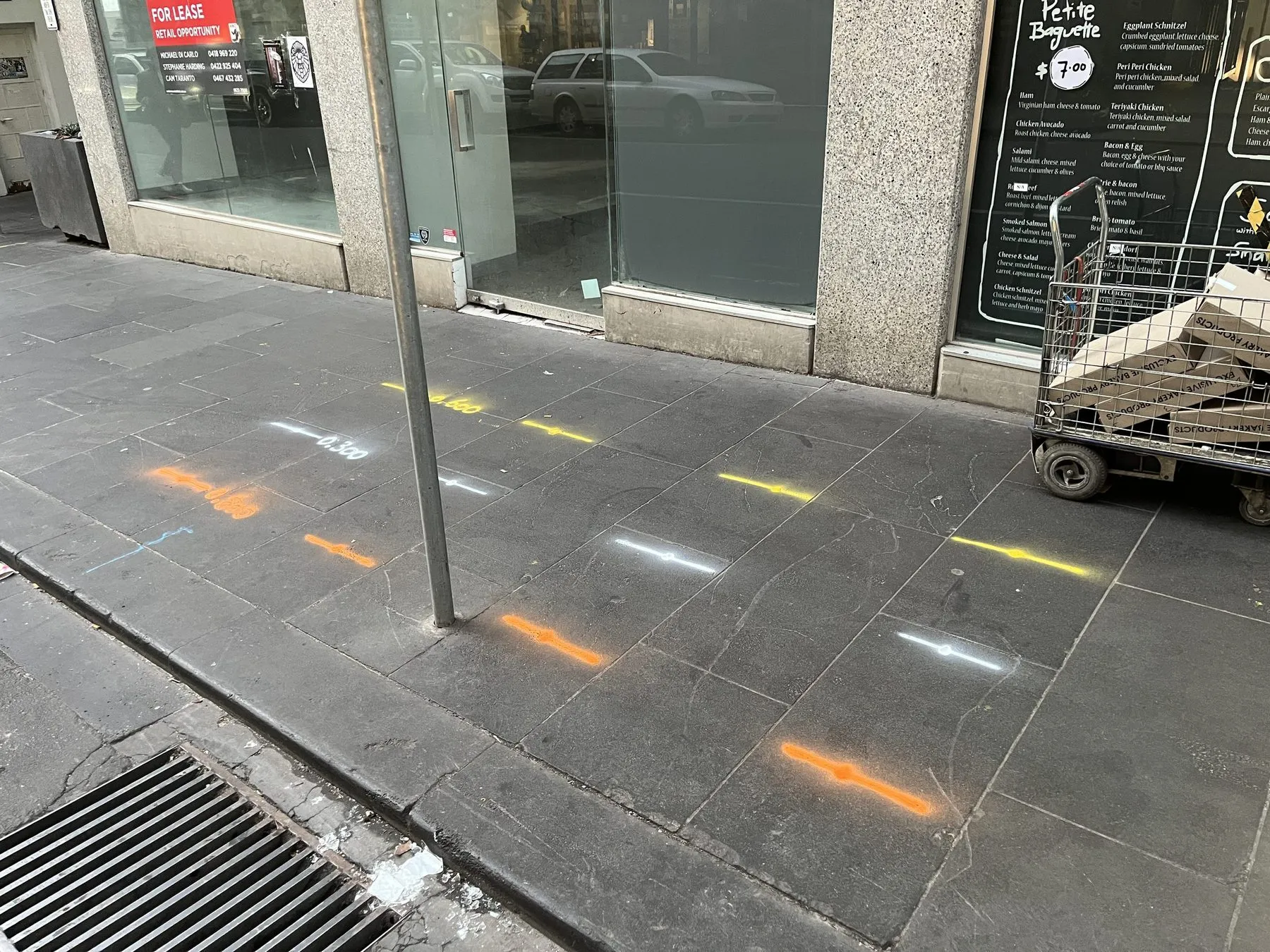
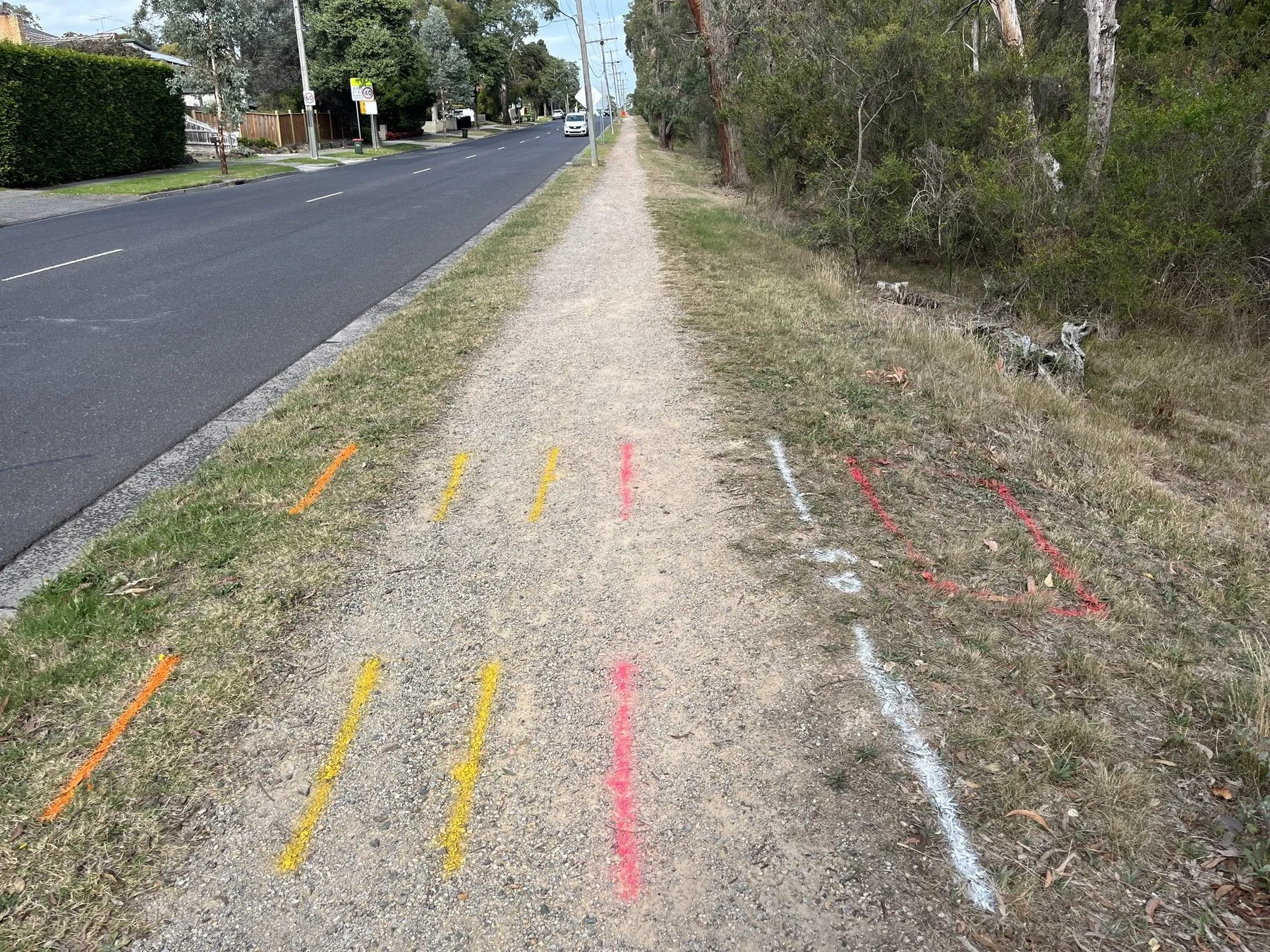
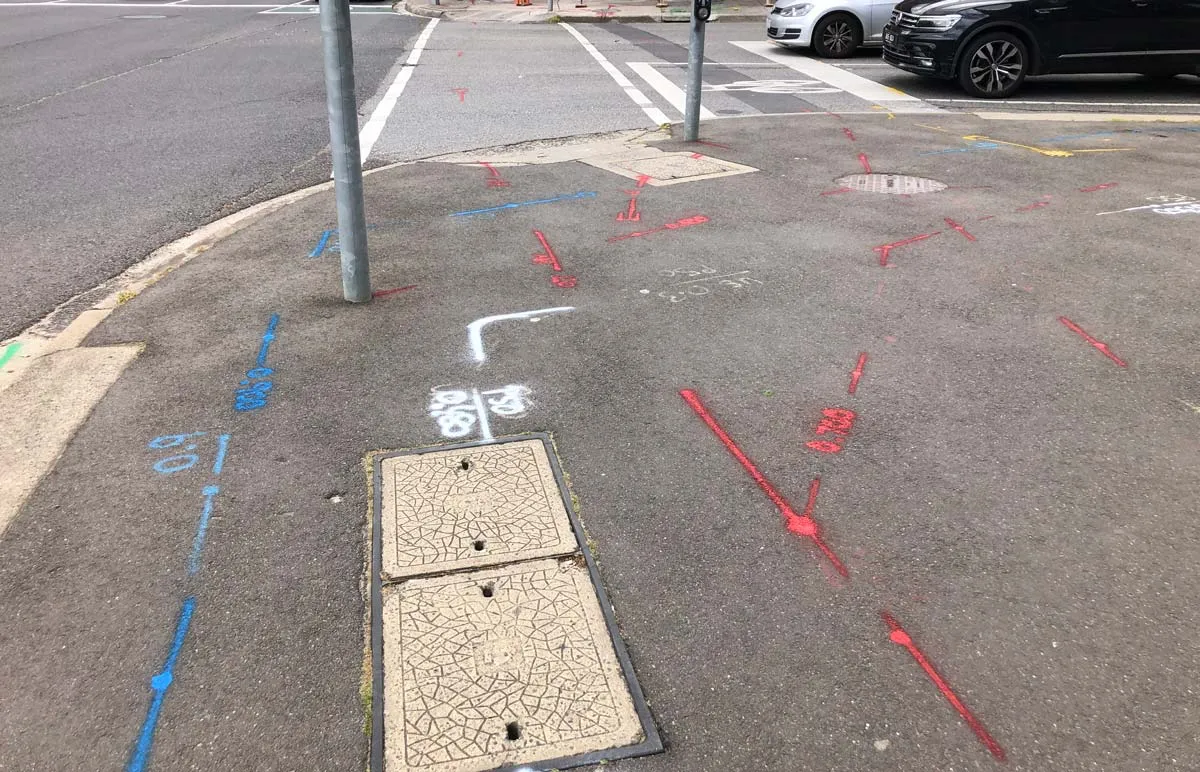
A locator’s job is to find where services actually are on the day, not where the records say they should be. We use the BYDA plans as our guide, then trace each service on site with electromagnetic locating and mark its position and depth on the ground.
Where services can’t be traced with EM, such as plastic pipes with no tracer wire, we use ground penetrating radar to look for them. We also look for the services that aren’t on the plans at all, which is where most of the risk sits.
What to do before you dig
- Lodge a BYDA enquiry for the full area you’ll be working in, and read every response, including the notes
- Ask the property owner what private services they know about, and where they run
- Look for clues on site: meters, pits, switchboards, sheds with power, taps away from the house, tanks
- Get the area located before excavation, and keep the report with your job records
- Where an exact position or depth is critical, have the service exposed by non-destructive digging before machine work starts
Plans and a locate work together
BYDA plans tell you what to look for. A locate tells you where it actually is. You need both.
If you’ve got a dig coming up, call us or request a callback.