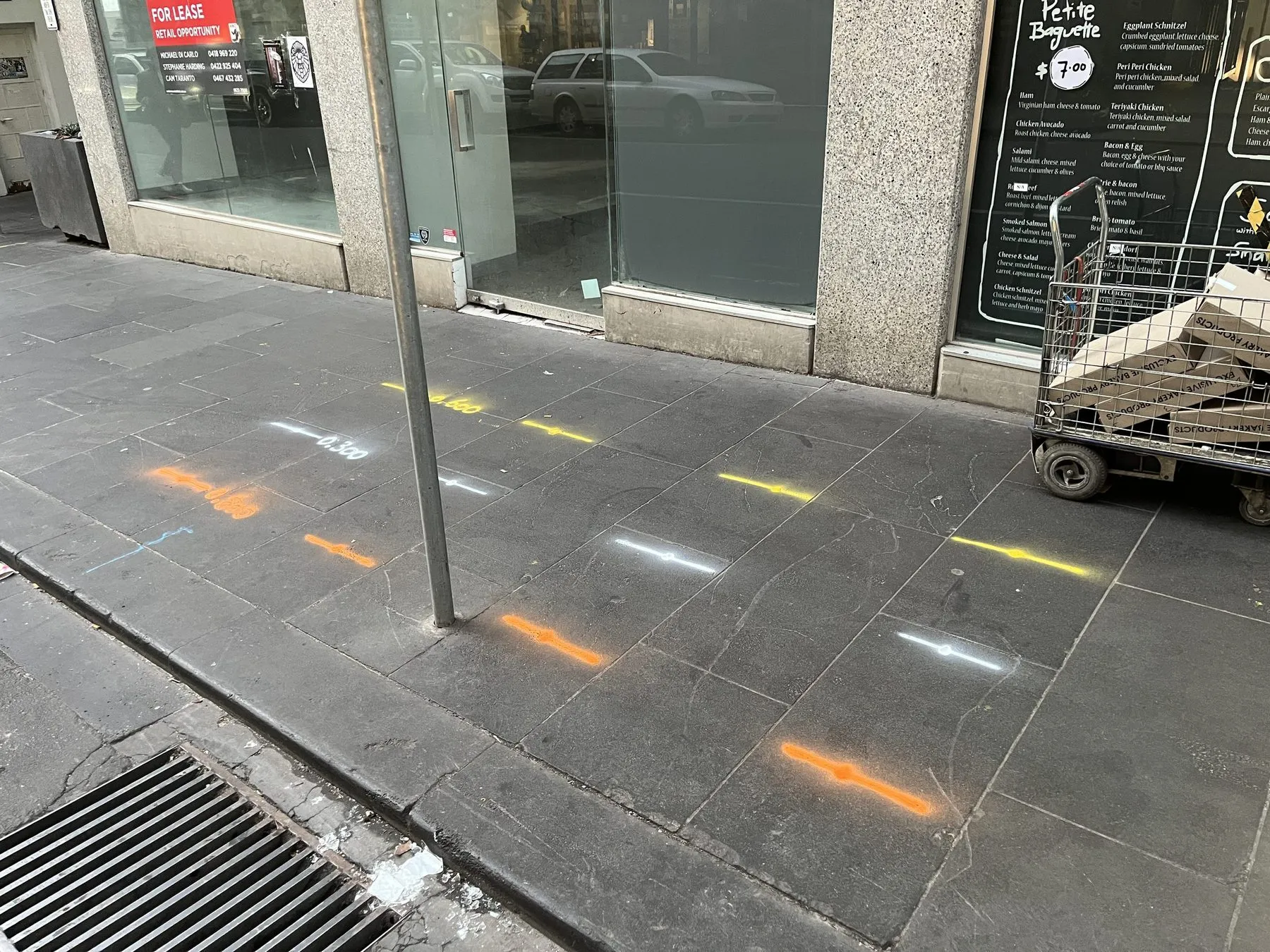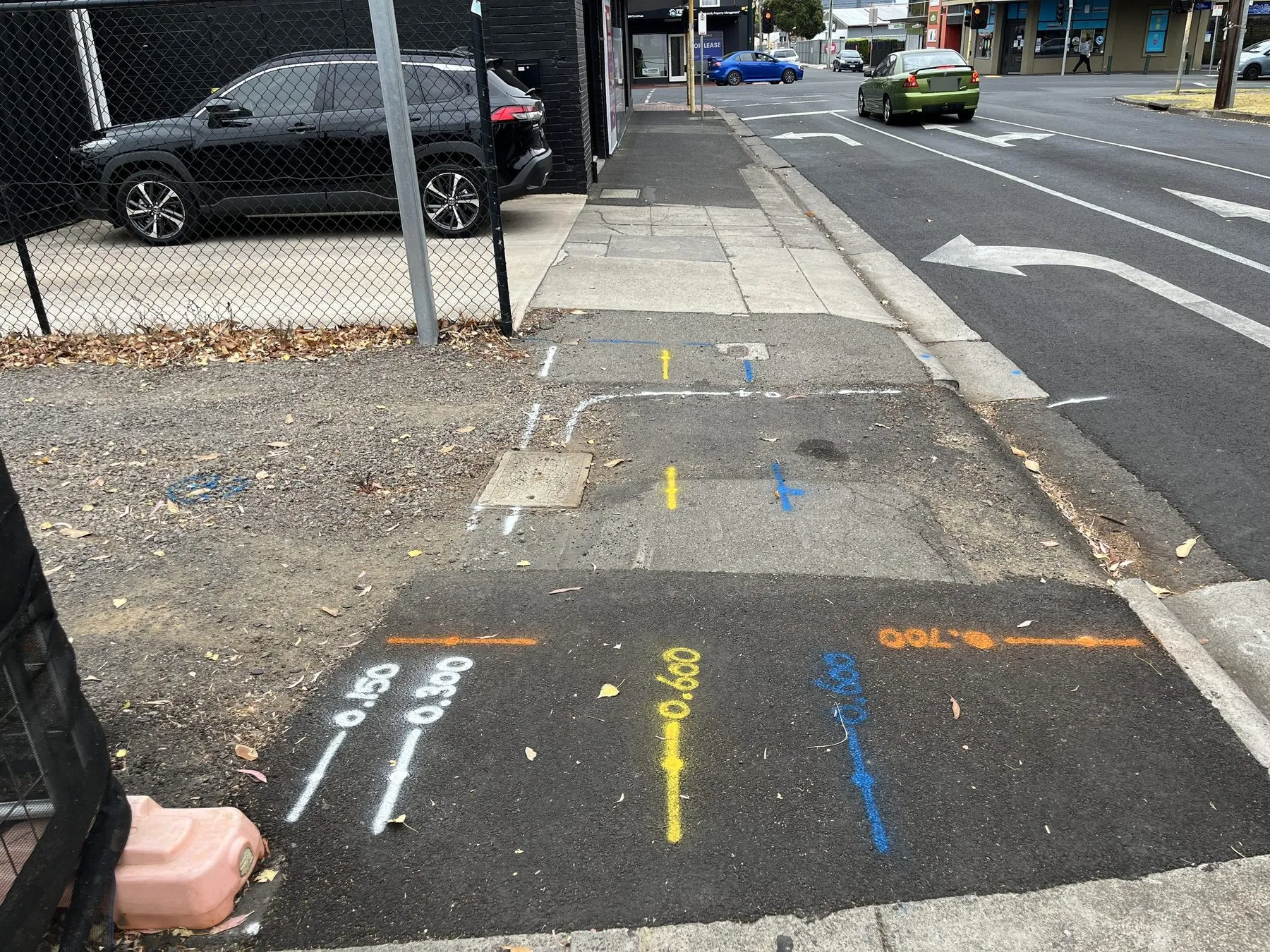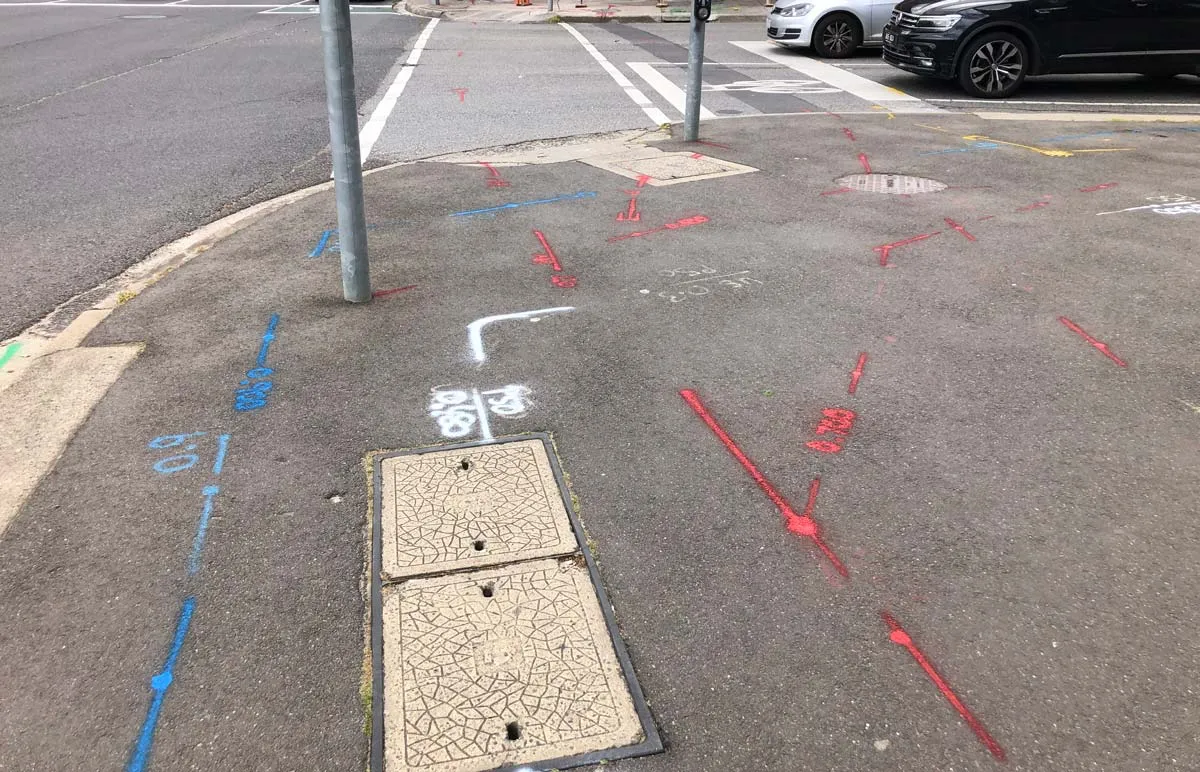

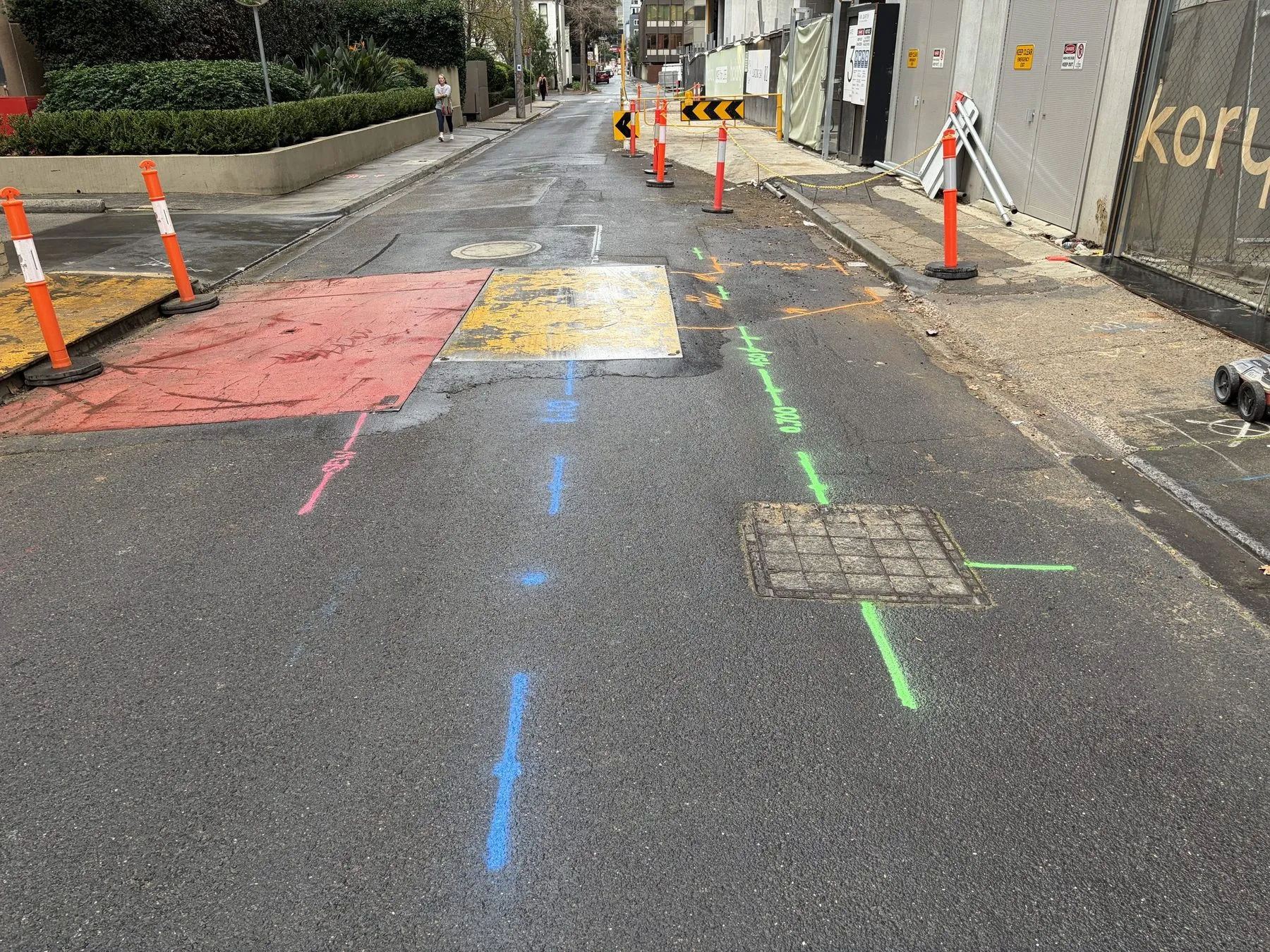
The Before You Dig Australia (BYDA) plans are in. Now someone has to do something with them before the excavator turns up.
This is the checklist we’d want every project manager and site supervisor to run through. It’s written from what we see on Melbourne and Geelong sites, and it lines up with BYDA’s own guidance and the WorkSafe Victoria and Energy Safe Victoria guidebook on working near underground services.
What should I check first when BYDA plans arrive?
Check that you’ve got a response from every asset owner on your confirmation sheet, that each plan covers your whole work area, and that none have expired. Then read every owner’s conditions before you read the drawings in detail. Our guide to reading BYDA plans covers legends, scale and depth.
In order:
- All responses in. Tick each owner off against the enquiry confirmation sheet. BYDA says you must wait for all plans from affected owners before excavating. Chase any that are missing using the contact details on the sheet.
- Right site, right area. Check the address and the extent of each plan. If the work area has grown since you lodged, the plans may not cover it.
- Expiry dates. Each owner sets its own, and BYDA says it’s shown on the plans or information pack. Note the earliest one.
- Conditions and permits. BYDA says asset owners provide duty of care statements with their plans, and to note any required permits. Victorian guidance says electrical and gas services in particular will require written permission before excavation.
- High-risk assets. Look for anything flagged as critical, high pressure or high voltage, and any instruction to contact the owner before work.
What do I do with all the PDFs I get back from a BYDA enquiry?
Put them all in one place, named so anyone can find them, and get a copy to site. A pile of unopened attachments in one person’s inbox is how plans get missed.
What works for us:
- Save every response into the job folder, including the “no assets affected” letters. They’re part of the record.
- Rename each file with the asset owner and expiry date, so the folder reads like a checklist.
- Keep the confirmation sheet with them. BYDA asks you to keep a copy on site while you work.
- Make sure the supervisor and crew can open them on site, on a phone or tablet or as printed copies. BYDA says either is fine as long as they’re legible.
If the scope changes, or the plans expire, lodge a new enquiry and replace the set. Our guide to lodging a BYDA enquiry covers renewing.
Who is responsible for checking BYDA plans on site?
Everyone doing the work. BYDA says all individuals have a duty of care when working near infrastructure networks, and that lodging an enquiry doesn’t remove it.
In practice, responsibility gets split by role. Someone has to own the plans and conditions for the job, someone has to brief the crew, and the person operating the machine has to know what’s under the bucket. If no one has been given the job of checking the plans, assume no one has.
What should a project manager do with BYDA plans before excavation starts?
Make sure the plans are current, complete and acted on before work is programmed. That means the permits, the locate and any potholing are booked, and the plans’ conditions are built into the safe work method statement.
The Victorian guidebook sets out four planning steps: search the records (including BYDA), assess the site, document a safe system of work (including any permits the service owners require), and locate the services. A project manager’s BYDA checklist follows the same order:
- All responses in and filed, with the earliest expiry date in the program
- Asset owner conditions and permits identified and applied for
- A locate booked for the full work area, including private services
- Potholing by a separate contractor scheduled where exact positions are needed
- The locate report and photos filed with the plans. Our post on what’s in a locating report shows what to expect
How do site supervisors use BYDA plans on site?
Supervisors use them to brief the crew and to check the ground against the paper. The plans tell you what should be there. The site tells you whether that’s right.
Walk the area with the plans before work starts. BYDA’s 5Ps guidance says to look for clues on site such as pit lids, marker posts and meters. Match each one to a plan. A pit with no matching service on any plan, or a meter with no visible supply, is a sign something isn’t recorded.
Brief the crew on what’s there, which owners have conditions, and where the No Go Zones from the Victorian guidebook apply. Keep the plans and the locate marks together. If the marks have faded or been disturbed, don’t dig from the plans alone. Get them re-marked.
What is the difference between BYDA plans and a utility locate?
BYDA plans are the asset owners’ records of what’s in the area. A utility locate is a locator on site finding where services actually are on the day and marking them on the ground.
BYDA says plans are indicative only and that, in most cases, depths and alignments aren’t supplied. The Victorian guidebook says the exact location of services must be found before work starts, and that the plans shouldn’t be the only exploration. A locate fills that gap. We use the plans as our guide, then trace each service with electromagnetic locating and mark its position and estimated depth. We also look for services that aren’t on any plan.
What is a good potholing and verification workflow after getting BYDA plans?
BYDA plans first, then a locate, then exposing the services by potholing wherever exact position or depth matters. Only then does machine excavation start.
This follows BYDA’s 5Ps: plan, prepare, pothole, protect, proceed.
- Plan. Lodge the enquiry and read every response.
- Prepare. BYDA recommends engaging a skilled locator to locate assets electronically before potholing. We mark each service and its depth on the ground.
- Pothole. A potholing or non-destructive digging contractor exposes the service where it’s permitted, using the method the asset owner specifies on the plans. BYDA lists hand digging and hydro vacuum extraction as methods. The Victorian guidebook recommends potholing at each service crossing and at regular spacing along services.
- Protect. Mark or barricade exposed services so they aren’t damaged.
- Proceed. BYDA says to proceed only after you’ve planned, prepared, potholed (unless prohibited) and have protection in place.
We don’t do the potholing ourselves. We locate and mark out first, so the potholing contractor knows exactly where to dig.
Does BYDA cover private pipes and cables on private property?
Mostly, no. BYDA says domestic services don’t typically appear on its plans, which mainly show network services, and that plans generally don’t show the full domestic connection, only the service delivered to the property.
That leaves power to sheds, water to tanks, private stormwater and sewer drains, gas to outbuildings and data cabling between buildings. The Victorian guidebook also notes that gas services entering properties may not be identified, and that private LPG lines may not be on BYDA plans. A locator has to find these on site. Our post on what BYDA plans don’t show goes through the usual suspects.
What happens if I dig without BYDA plans?
You’re digging blind, and you carry the consequences. BYDA’s FAQs say court proceedings may be brought against individuals or companies to recover repair costs where negligence appears to have contributed. They also say a property owner’s insurance may not cover damage if it can be shown no BYDA enquiry was lodged.
There’s also the safety risk. Striking a power cable or gas main can injure or kill. If you damage an underground asset, BYDA says you must tell the asset owner immediately. If anyone is hurt or there’s an immediate danger, call 000.
If you’ve got your plans and want the site located before anyone digs, call us or request a callback.