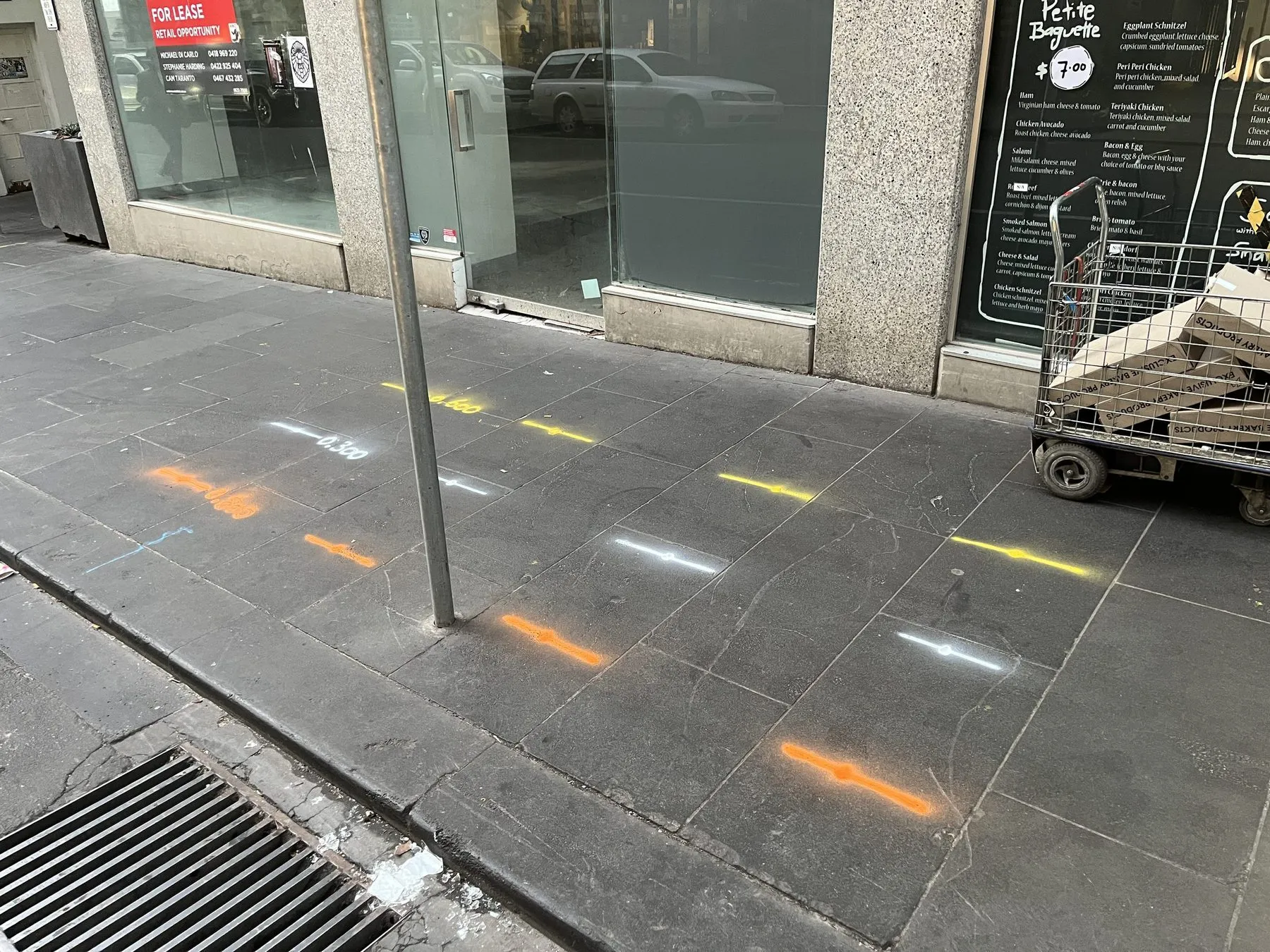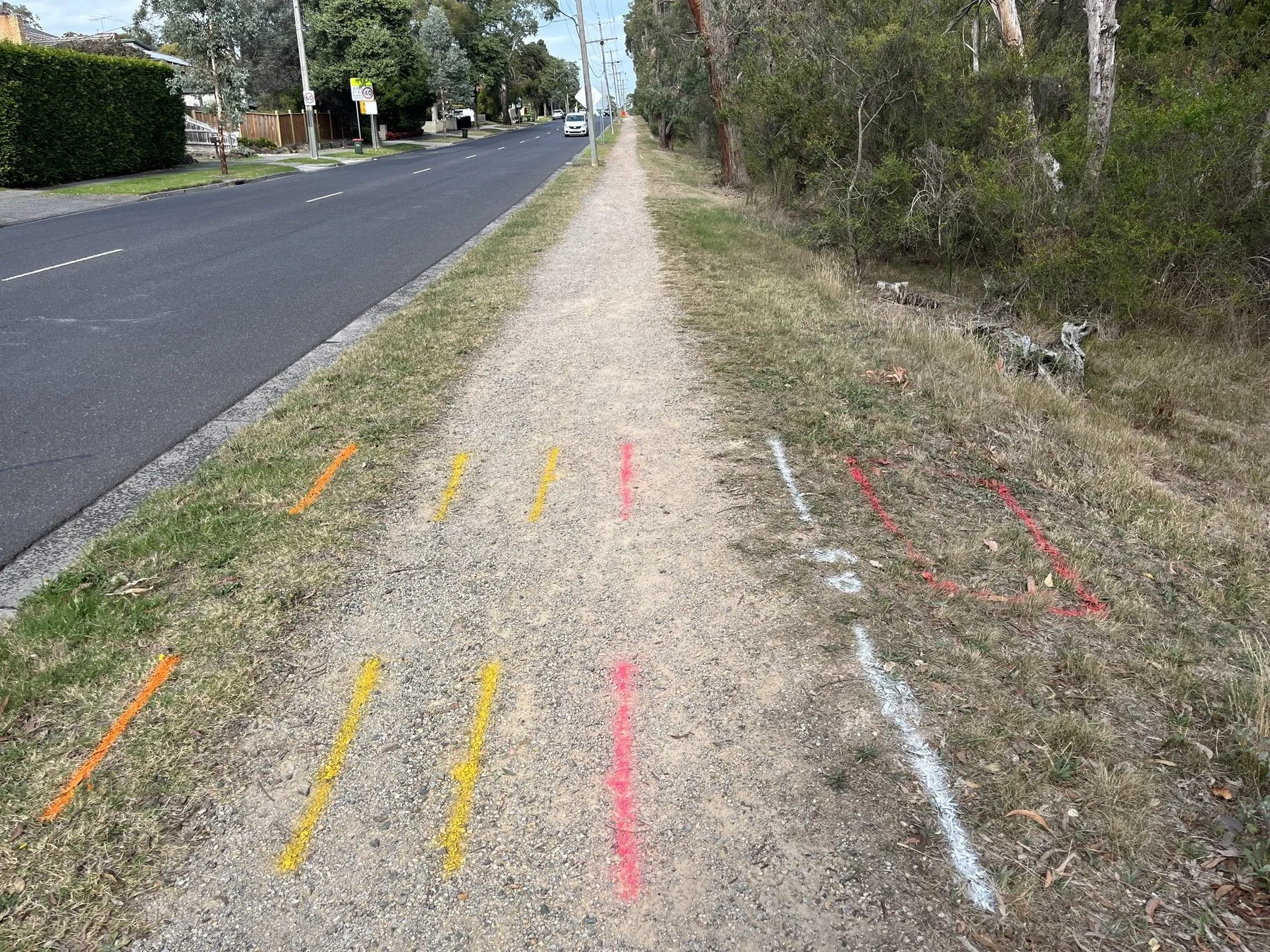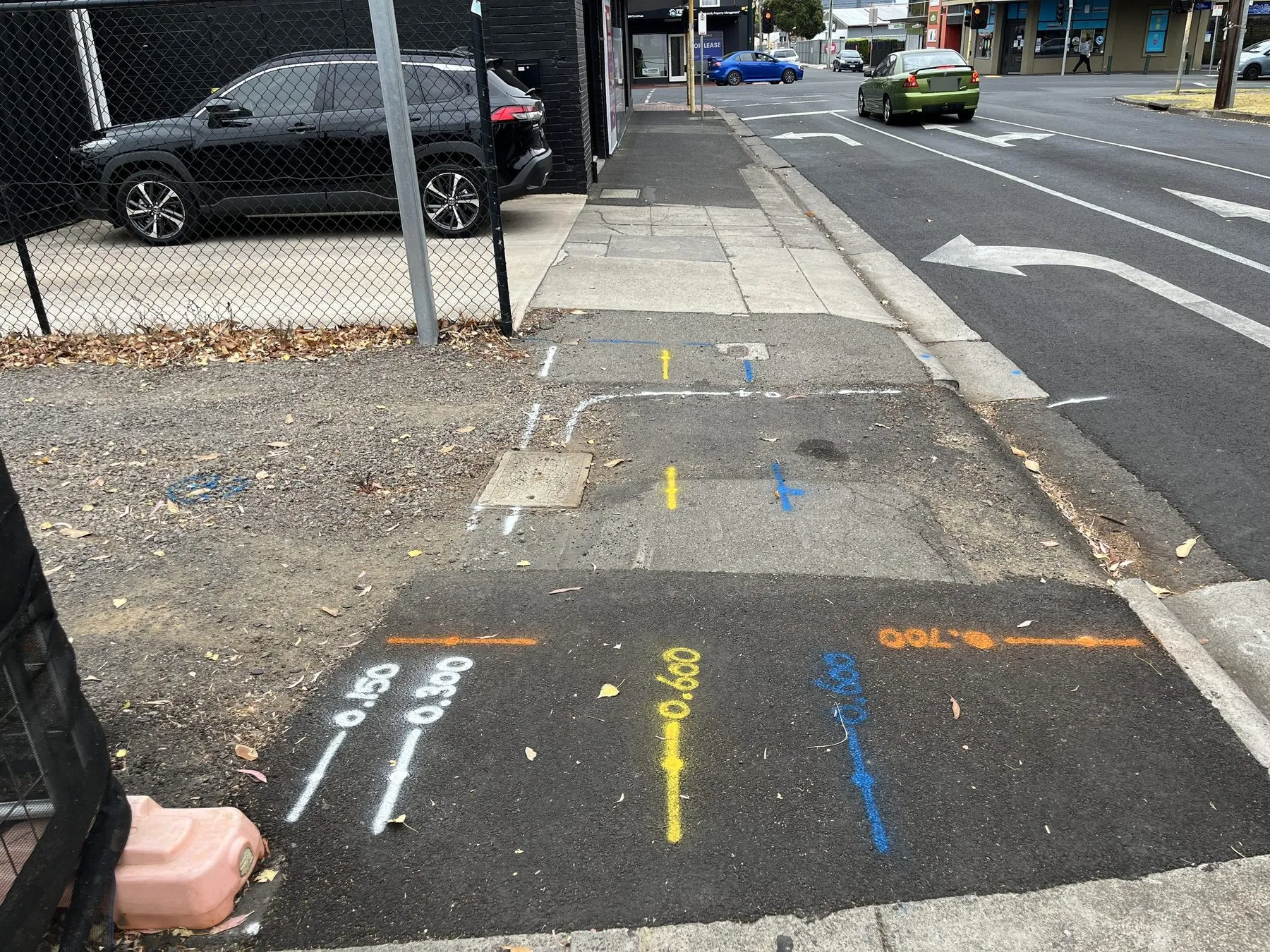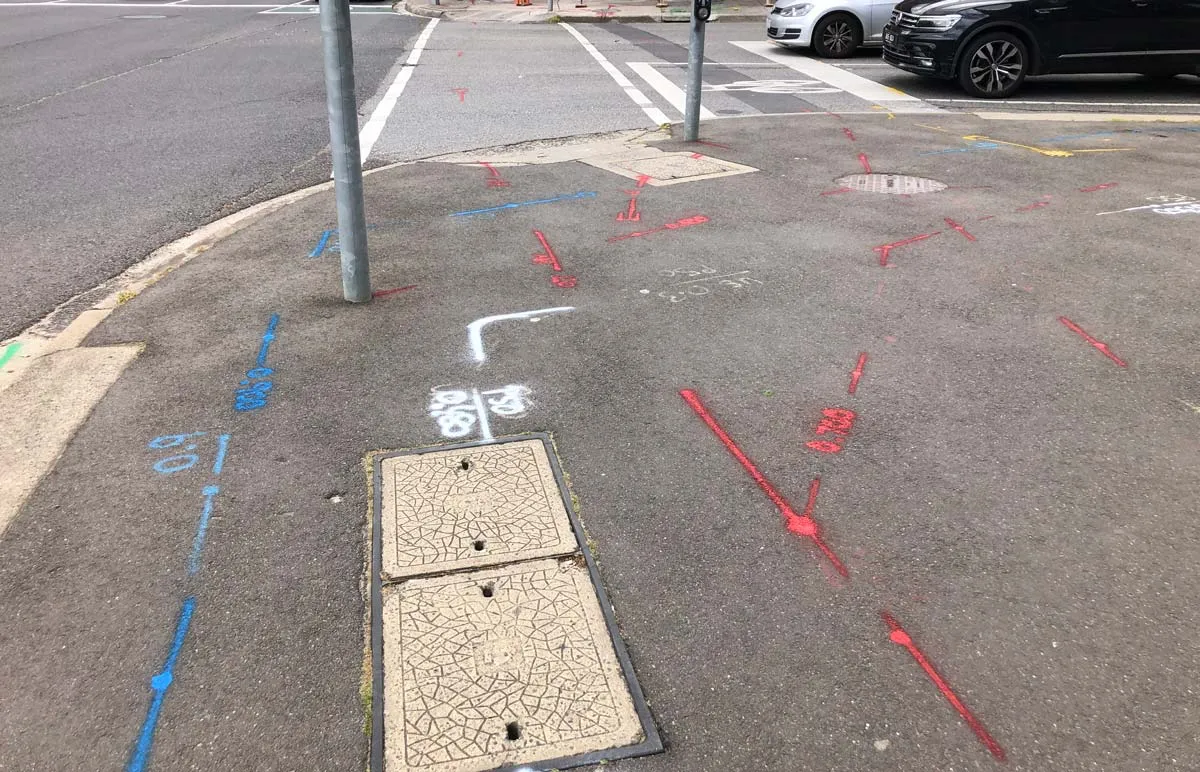

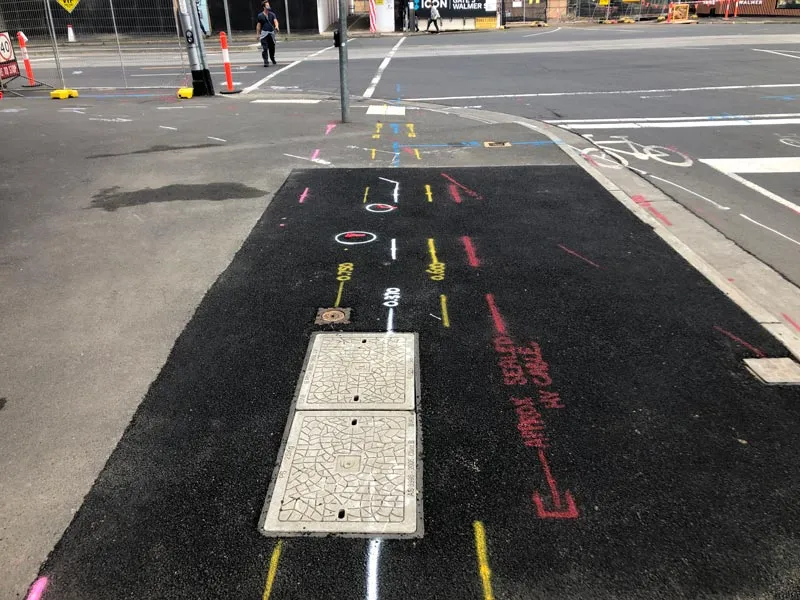
It’s the first question most people ask when they call, and it’s a fair one. The honest answer is that it depends on the job. Two sites in the same street can take very different amounts of work to locate properly.
Rather than quote a number that won’t fit your site, here’s what actually drives the price. If you know these things when you call, we can give you an accurate quote quickly.
The size of the area
The bigger the area to be located, the longer it takes. A single trench line for a fence or a new water connection is a small job. A whole development block, a road reserve or a car park is a much bigger one.
What matters is the area you’ll actually be disturbing, not the size of the property. If you’re only digging along one side of a house, tell us that. If the excavation might move or grow, it’s worth including the extra area now so you’re not calling us back later.
How many services are in the ground
A quiet suburban backyard might have a power supply, a water service, sewer, stormwater and a phone or NBN line. A city intersection or an industrial site can have many times that, with services crossing, running in parallel and sharing pits.
Every service has to be traced, identified and marked. Busy ground takes longer, because closely spaced services can interfere with each other’s signal and each one needs to be separated out and checked.
EM locating, GPR or both
Most jobs start with electromagnetic (EM) cable and pipe locating. It’s the right tool for conductive services such as power, metal water pipes, gas lines with tracer wire and telecommunications cables.
Some services can’t be traced that way. Plastic water and gas lines without tracer wire, old clay or concrete stormwater pipes, and non-service features like footings or tanks need ground penetrating radar. Adding GPR takes more time on site, so it affects the price.
We’ll tell you which methods your job needs. If you’re digging where plastic services are likely, using both is usually the sensible choice.
The type of report
Every job we do ends with a report. As standard, that’s a photo report of the services marked on site, with the depths we found.
If you need more than that, such as a detailed plan for a designer, engineer or client, it takes extra time to draw up and costs more. Plans record each service’s position, depth, material where we can determine it, and its AS 5488 quality level. Have a think about who will use the information before you book, and whether a photo report is enough.
Travel and timing
We work across Melbourne, Geelong and all of Victoria. Travel time is part of the cost, so a site further out will usually cost a little more than one close by.
Timing can matter too. If you need us outside normal hours, for example on a busy road where work can only happen at night, let us know when you call.
Site access and conditions
A few things on site can slow a locate down:
- Locked gates, pits we can’t open or areas we can’t reach
- Parked cars, stockpiles or materials over the area to be located
- Long grass, mud or standing water
- Traffic management requirements on roads and footpaths
Most of these are easy to sort out before we arrive. Clear access means we spend our time locating, not waiting.
What we need from you to quote
To give you a firm price, it helps to have:
- The site address
- What you’re doing, and roughly where and how deep you’ll dig
- The size of the area to be located
- Whether you need a photo report or a detailed plan
- When you need it done
- Your Before You Dig Australia (BYDA) plans, if you already have them. If not, we can order them for the job.
A photo of the area or a marked-up site plan is helpful on larger jobs.
Why the cheapest locate isn’t always the best value
A locate that only traces what’s easy to find can leave plastic services and private lines unmarked. That’s the kind of gap that leads to a strike, and a damaged service costs far more than doing the locate properly in the first place.
When you compare quotes, check what’s included: which methods will be used, whether private services are covered, and what kind of report you’ll get at the end.
Get a price for your site
Every site is different, so the best way to find out is to ask. Tell us the address and the scope of your works and we’ll give you a price.
Call us for a price or request a callback.