
A crane’s outrigger pads put a lot of load onto a small patch of ground. If something under that patch gives way, the consequences can be serious for the crew, the public and the crane.
That’s why crane companies and lift planners ask for a scan of the set-up area before the crane arrives. Here’s what a ground penetrating radar scan can tell you, where it hits its limits, and what you should expect in the report.
What we’re looking for
From the surface, a set-up area might look solid. The problems are underneath:
- Voids: gaps under a slab or pavement where fill has washed out or settled, often around leaking pipes or old excavations
- Old pits and chambers: disused pits, manholes or tanks that were covered over rather than removed
- Soft or wet ground: areas where the ground holds water or has been backfilled poorly
- Old excavations: trenches and holes that were filled in but never compacted properly
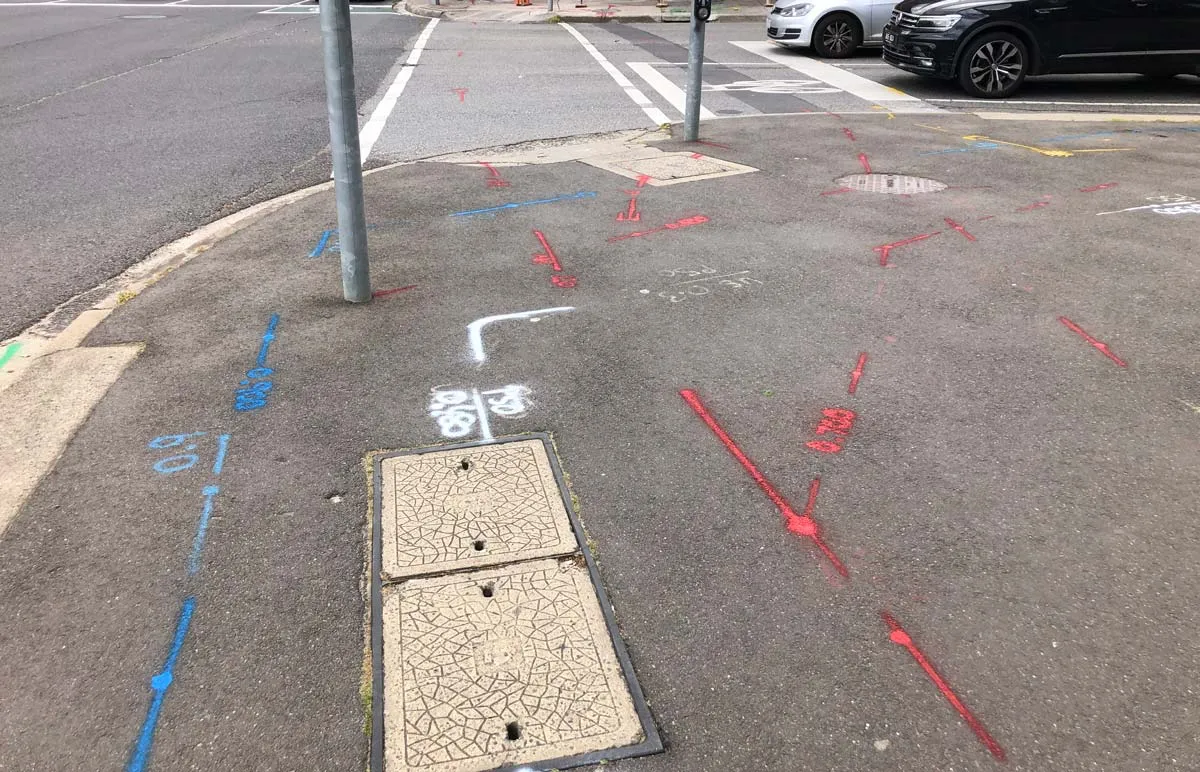
- Buried services: pipes and cables under the pad positions, which can be damaged by load as well as by digging
What GPR can tell you
GPR sends radar pulses into the ground and records the reflections. Changes in the ground show up as changes in the signal.
A void or air gap gives a distinctive reflection. So do buried structures like pits and tanks. Disturbed or backfilled ground often looks different from the undisturbed ground around it, and wet areas change how the signal behaves.
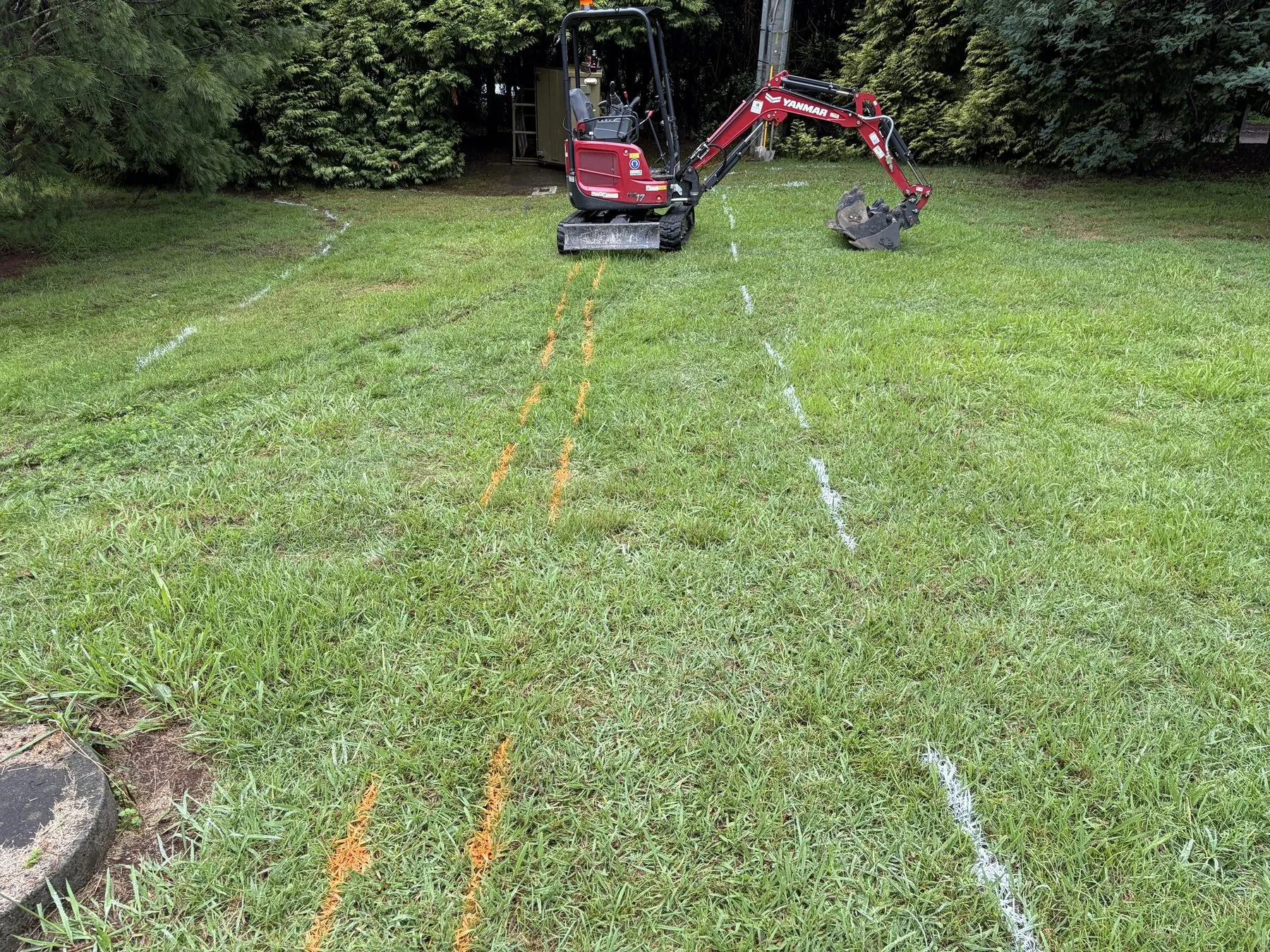
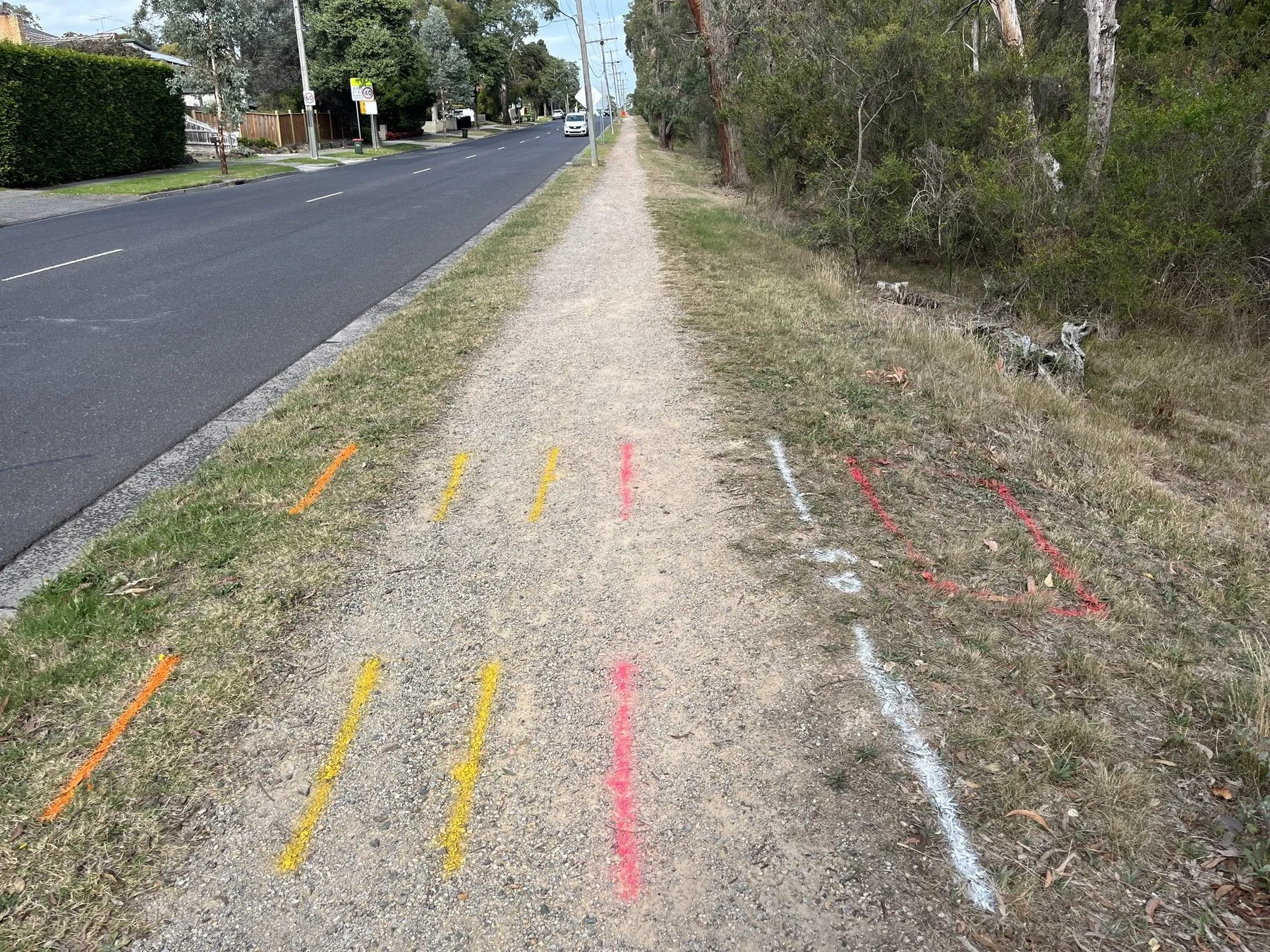
By scanning in a grid across each pad position, we can build up a picture of what’s under it and flag anything that looks wrong. We also sweep for services in the area, using GPR for non-metallic pipes and an electromagnetic locator for metal pipes and cables.
What GPR can’t tell you
It’s just as important to understand the limits.
Depth depends on the ground. In dry, sandy ground GPR can see a reasonable distance down. In wet ground or heavy clay the signal is absorbed much faster, and the useful depth can drop a long way. If your site’s conditions are likely to limit the scan, we’ll tell you before we start.
Reinforcing and rubble get in the way. Steel mesh in a slab, or rubble and building waste in fill, scatter the signal and can hide what’s below.
It doesn’t measure bearing capacity. GPR finds anomalies. It doesn’t tell you how much load the ground can carry. That’s a geotechnical question, answered by testing and engineering judgement.
It shows that something is there, not exactly what it is. A reflection might be a void, an old pit or a change in fill. We interpret what we see, and say so when something needs further investigation.
A clean scan means we didn’t detect any problems within the depth the ground allowed us to see. It’s an important part of the lift plan, but it’s one part of it.
When to book
Book the scan once you know where the crane will set up and where each outrigger pad will land. If the position might shift on the day, scan a slightly wider area so there’s room to move.
It’s also worth thinking about how the crane gets to its set-up position. Heavy vehicles tracking over footpaths, verges and driveways can find the same voids and soft spots.
What goes in the report
At the end of a crane scan, you get:
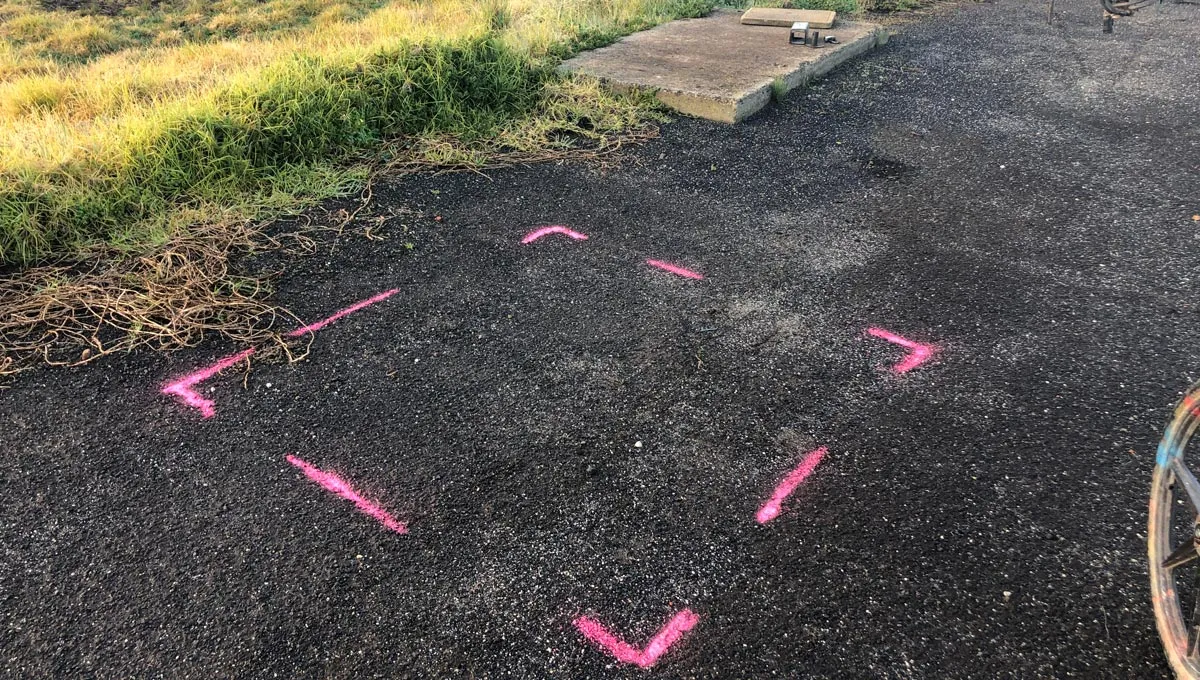
- Each pad position marked on site
- A short written report you can attach to the lift plan
- Notes on anything we found at or near each pad position, such as voids, soft ground, old pits or services
- Any limits on the scan, such as reduced depth from ground conditions or areas we couldn’t access
If we find something that concerns us, we’ll tell you on site. It’s then up to the crane company, the lift planner or an engineer to decide whether to move the set-up, use larger pads or mats, or investigate further.
Get the scan in early
A scan booked a few days ahead gives everyone time to act on what we find. A scan on the morning of the lift leaves fewer options if something turns up.
To book a crane pad scan, call us or request a callback.